Two Abandoned Surat Children Adopted by Gujarati Couple Residing in US
A Gujarati couple residing in New York has legally adopted two young children rescued from the streets of Surat, completing an extensive inter-country adoption process overseen by district welfare authorities in Gujarat.
In this piece
Two young children found wandering abandoned in Surat have been adopted by an Indian-origin couple living in New York. Following clearances from child welfare…
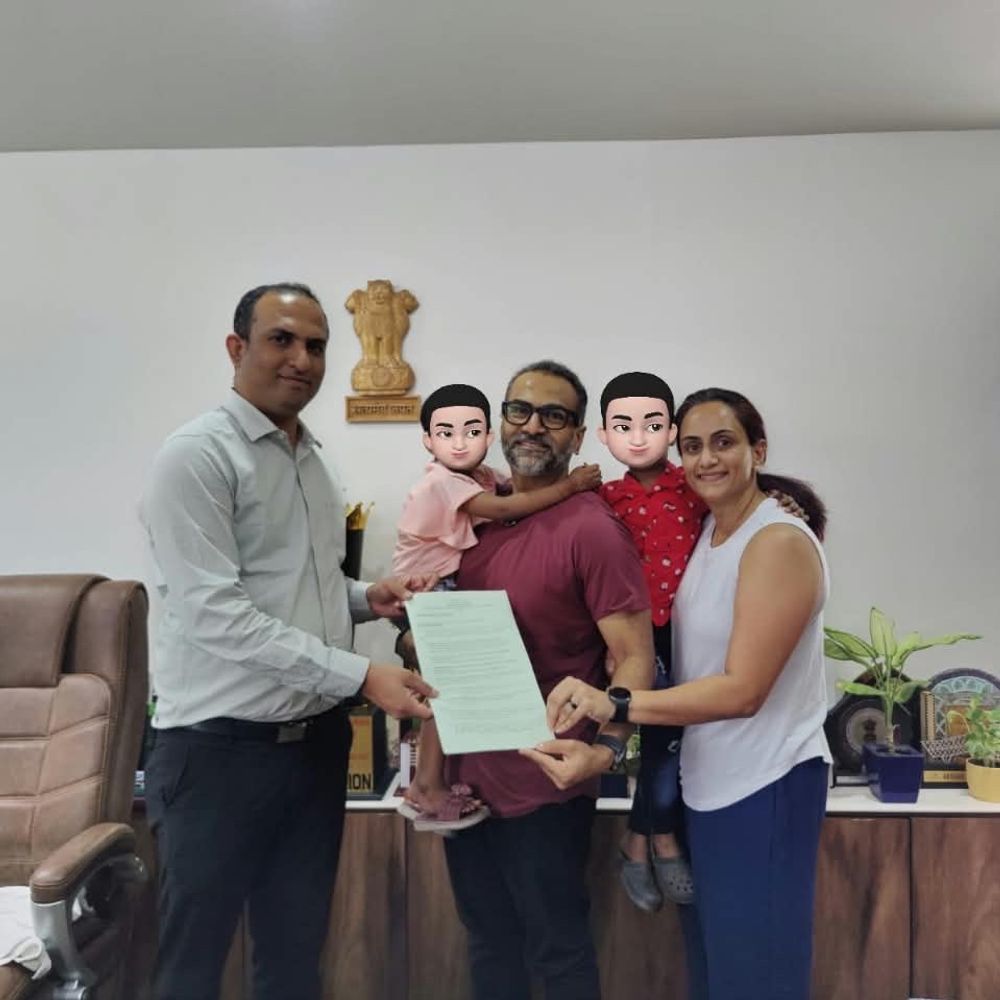
Two young children who were found wandering unattended on the streets of Surat have been officially adopted by an Indian-origin couple residing in New York. The children, aged approximately four and five years old, had been under the protective custody of a specialized adoption agency in Katargam after being rescued from destitution. Their formal handover marks the completion of an extensive inter-country adoption procedure coordinated between Indian child protection officials and prospective parents overseas.
Surat District Collector Tejas Parmar formally presented the official pre-adoption documentation to the adoptive parents at a ceremony in the district administrative offices. The handover finalized the legal guardianship necessary for the children to transition into their new family. Collector Parmar extended his best wishes to the couple and commended the district welfare authorities for ensuring the process adhered to child welfare mandates.
The two minors had been discovered in vulnerable circumstances on the streets of Surat roughly a year and a half ago. Because their biological guardians were either untraceable or unable to provide adequate care, local welfare authorities intervened to safeguard the children. They were subsequently placed at the Katargam Shishugruh, a registered institutional home dedicated to the care, shelter, and rehabilitation of abandoned and surrendered minors.
During their stay at the Katargam facility, the children received daily shelter, nutritional care, medical screening, and basic developmental attention. Social workers and institutional caregivers monitored their physical and psychological well-being while regulatory authorities initiated the legal search and declaration procedures. The children were declared legally free for adoption only after statutory waiting periods and mandatory background inquiries confirmed no biological claimants could assume custody.
The placement was processed under the statutory framework overseen by India's Central Adoption Resource Authority (CARA), the nodal body governing domestic and inter-country adoptions. Prospective overseas adoptive parents must fulfill extensive prerequisites, including comprehensive background checks and home study evaluations conducted by accredited international child welfare agencies. These strict protocols are designed to ensure that receiving households possess the financial stability, emotional maturity, and safe home environment necessary for raising vulnerable children.
Under established inter-country adoption guidelines, non-resident Indian and overseas citizens of Indian origin undergo layered scrutiny spanning both jurisdictional systems. Diplomatic and civil authorities in the host country collaborate with Indian district courts and administrative officials to review social investigation reports and background clearances. Officials emphasize that such procedural rigor is essential to guarantee child safety and prevent illicit trafficking across borders.
The Katargam home regularly assists with institutional care for destitute minors across south Gujarat, providing a vital safety net in an urban industrial hub where rapid migration sometimes leads to child vulnerability. While domestic adoptions remain the primary preference under Indian child welfare policy, cross-border placements provide stable permanent homes when compatible matches are established under bilateral standards. For institutional caregivers, placing children into secure and permanent family settings represents the primary goal of statutory rehabilitation efforts.
With the pre-adoption documentation officially issued, the adoptive family is now completing remaining travel requirements and consular formalities. This subsequent phase involves obtaining appropriate passports, visa clearances, and court registration details required for international travel from India to the United States. District welfare officers noted that the administrative steps are progressing smoothly to allow a seamless journey for the youngsters.
Once all cross-border travel documentation is finalized, the two children will move to their new home in New York, where their educational and social integration will begin. Follow-up welfare reports will continue to monitor the children's well-being in the United States through accredited partner agencies, in accordance with standard international adoption norms. For the two young youngsters from Surat, the conclusion of the long regulatory journey marks a definitive step toward stability, affection, and a promising future.
Primary source: Divya Bhaskar NRG. Newzly rewrites and structures source reporting for clarity; verify critical details at the original.