Two killed as violence marks Awami League shutdown in Bangladesh
A Divya Bhaskar report says two people died during an Awami League bandh in Bangladesh, with bomb blasts at several places and an attack on a police station.
In this piece
Violence during an Awami League shutdown in Bangladesh left two people dead, according to Divya Bhaskar. The report also describes bomb explosions at multiple…
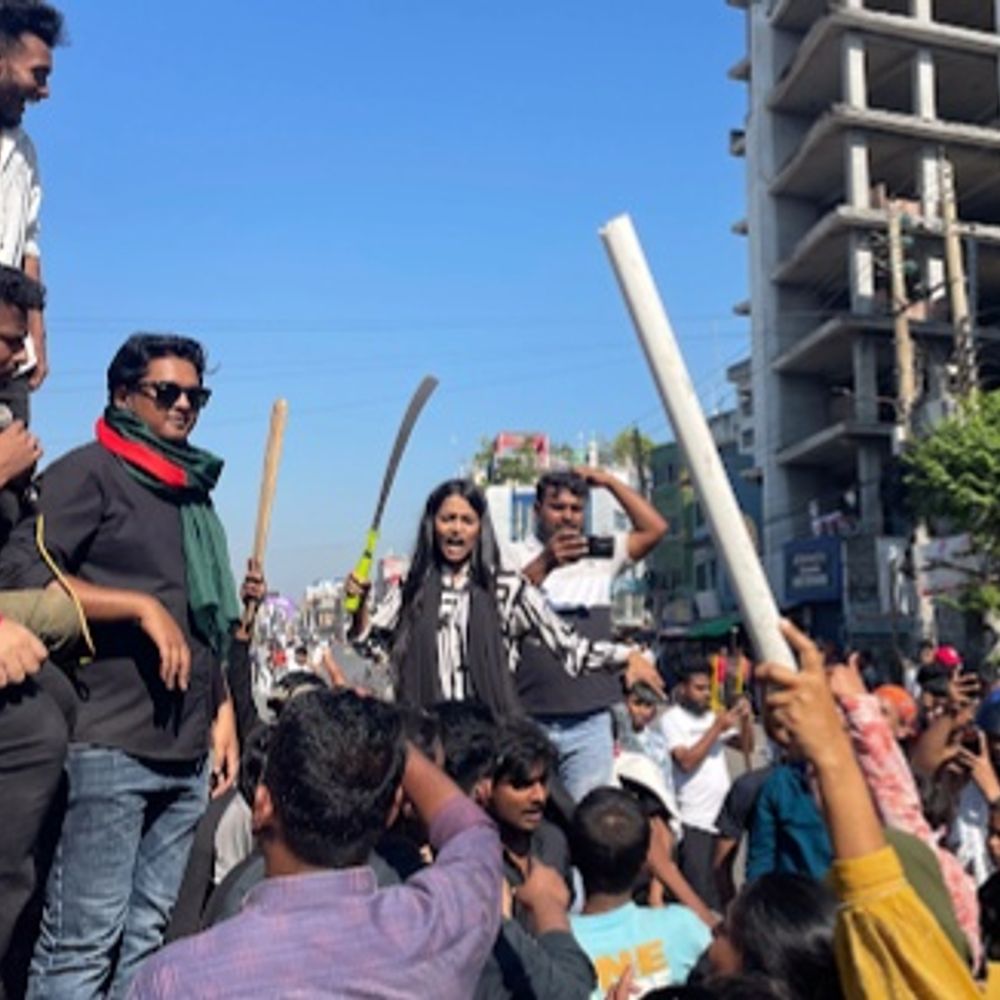
A shutdown called by Bangladesh’s Awami League was accompanied by deadly violence, with two people killed, bomb explosions reported at several places, and an attack on a police station, according to Divya Bhaskar. The account appears in the newspaper’s international section and is summarized in a Gujarati headline.
The published summary does not name the people who died, say where in Bangladesh the violence occurred, or identify who set off the explosives or attacked the police station. It also does not state whether the deaths were linked to the blasts, the station attack, or clashes elsewhere during the bandh. Those specifics are absent from the material available with the report.
A bandh is a political shutdown in which organizers press shops, offices, and transport to close as a show of strength or protest. In Bangladesh, parties have used bandhs and hartals for decades. Such calls have often brought ordinary movement to a halt and, in many past episodes, have coincided with street clashes.
The Awami League is one of the country’s oldest major parties and governed for long stretches under Sheikh Hasina. After mass unrest in 2024 and Hasina’s departure from office, the party’s place in public life changed sharply, and its activities have been politically contested. That broader setting is background for reading the latest report; the Divya Bhaskar account does not spell out the demand behind this particular shutdown.
The headline’s claims matter because they describe more than a peaceful closure of shops. Two deaths, explosions in more than one place, and an assault on a police station would, if borne out by official accounts, point to serious harm to bystanders and to the security forces. Attacking a police station can also disrupt emergency response for people nearby.
What the report does not establish should stay outside the story. It does not give a toll of injured people, a count of blasts, the type of explosives, or damage to the station. It does not quote police, hospital staff, or Awami League leaders, and it does not assign legal responsibility to any named person or group beyond tying the events to the period of the party’s bandh.
Bangladesh has a long record of partisan shutdowns turning violent, including crude bomb blasts and confrontations with police in earlier decades of hartal politics. That history helps explain why a headline about bombs and a station attack draws immediate attention. It is not evidence that this incident followed any earlier episode in detail.
Regional news outlets, including Indian newspapers, often carry early word of unrest across the border before fuller local briefings circulate. A headline can flag deaths and the kind of violence reported while leaving investigators’ questions open: who died, where, and who is suspected. Until authorities or a more detailed dispatch fills those gaps, the Divya Bhaskar summary is the limit of what can be stated.
Uncertainty in early unrest coverage is common. Casualty figures are sometimes revised after hospitals and police compare records, and first reports may not distinguish protesters, officers, and passers-by. Nothing in the available account supports a breakdown of the two deaths, so any such distinction would be speculation.
The next step is official and local confirmation: whether police identify the dead, file cases over the explosions and the station attack, and describe the scale of the shutdown. Party statements, if issued, would show whether the Awami League acknowledges violence during its bandh or rejects a role in it. The report as it stands puts two deaths, multiple bomb blasts, and a police-station attack on the record for the period of the shutdown, and leaves the investigation unstated.
Primary source: Divya Bhaskar International. Newzly rewrites and structures source reporting for clarity; verify critical details at the original.