U.S. Map Takes a Civilization-Inspired Approach
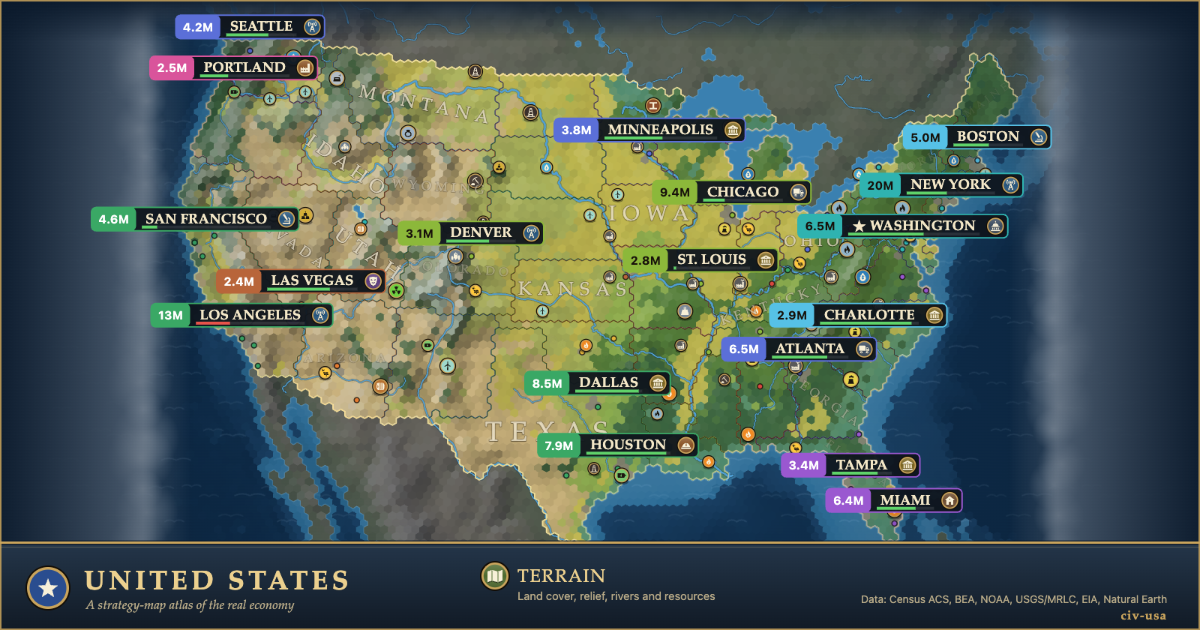
A web project presents the United States through a Civilization-inspired mapping concept. Shared on Hacker News, it invites a game-like reading of geography, though the supplied listing provides few details.
In this piece
A project titled “The USA as a Civilizations-esque map” reimagines U.S. geography through a strategy-game lens. The supplied Hacker News listing recorded 43…
A web project titled “The USA as a Civilizations-esque map” presents a game-inspired way of looking at the United States, according to a listing shared on Hacker News. The supplied listing recorded 43 points and 33 comments, providing a snapshot of attention to the project rather than a measure of its broader reach.
The project is hosted at karpathy.ai/usaciv/. Beyond its title and destination address, however, the supplied material contains no description of how the map was created, what information it includes or whether visitors can interact with it. Those limits leave its specific visual and technical features unverified.
The title establishes the central premise: viewing a real country through a frame associated with civilization-building games. That framing suggests an exercise in geographic reinterpretation, rather than establishing that the project is a conventional reference map. It does not, by itself, explain which features of the United States the creator chose to emphasize.
A game-inspired map can invite readers to think about how presentation changes their understanding of a place. The same geography may prompt different questions when approached as a landscape to explore rather than simply a collection of named locations. In this case, that is an interpretive possibility raised by the title, not a confirmed account of the project's contents.
The distinction matters because a visual concept and a documented geographic model serve different purposes. Without an accompanying explanation, readers cannot determine from the listing whether the project's choices reflect data, artistic judgment or a combination of the two. Nor does the supplied material establish that the map is intended for educational or analytical use.
The Hacker News figures offer similarly limited evidence about its reception. They show that the submission attracted votes and discussion at the time captured in the source, but the comments themselves were not supplied. It would therefore be premature to characterize the discussion as praise, criticism or a debate over any particular design decision.
Several practical questions remain open, including whether the project provides a legend, explains its geographic choices or credits underlying materials. The listing also gives no release date, development history or statement about future updates. None of those omissions establishes that such information is absent from the project itself; it is simply unavailable in the supplied excerpt.
For now, the supported takeaway is a narrowly defined one: a Civilization-inspired U.S. mapping project drew attention on Hacker News. A fuller assessment would require examining the map and any accompanying documentation directly. The available listing does not establish what changes, if any, are planned next.
Primary source: Hacker News. Newzly rewrites and structures source reporting for clarity; verify critical details at the original.