culture·Maharashtra·Pune District
UNESCO Inscribes Mahabharata, Arthashastra, and Rajatarangini into Asia-Pacific Memory Register
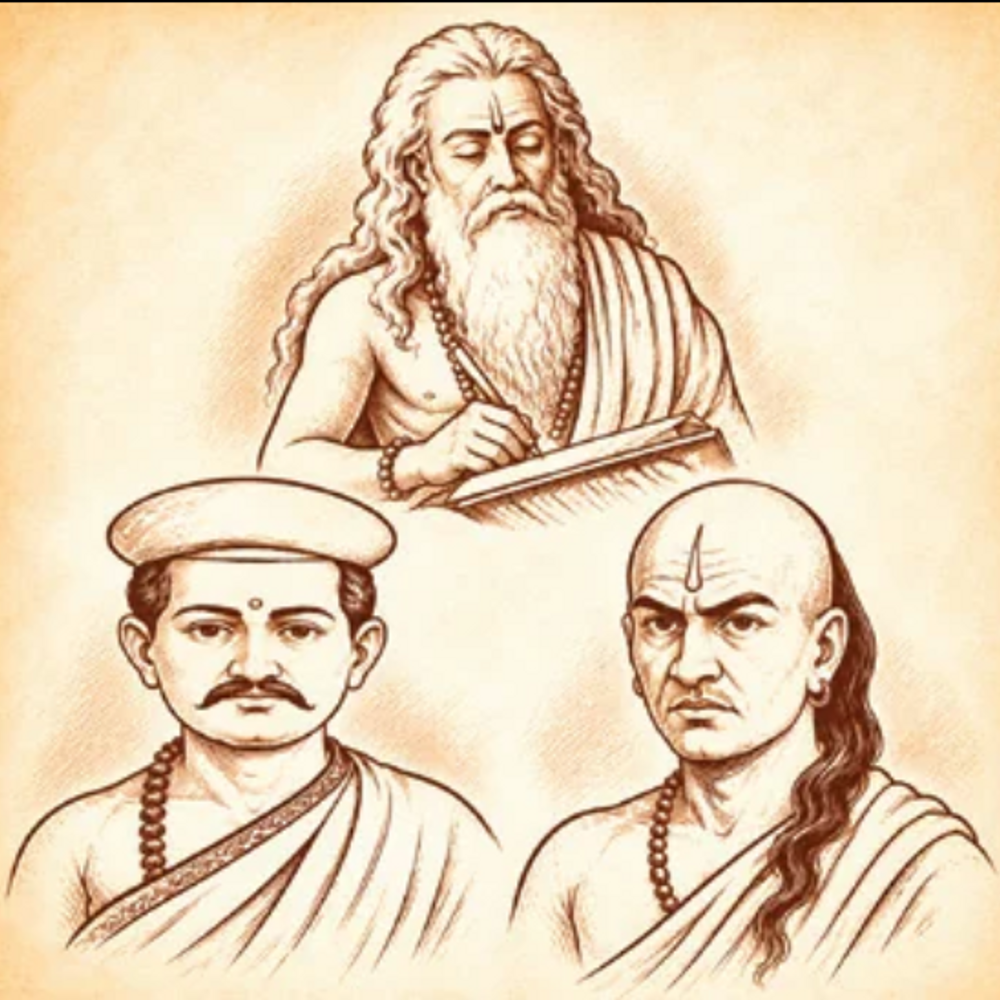
UNESCO has inscribed three cornerstone Indian manuscripts—the Mahabharata, Kautilya's Arthashastra, and Kalhana's Rajatarangini—into its Asia-Pacific regional memory register, marking a major international recognition of the nation's documentary heritage.
In this piece
Three foundational Indian literary works—the Mahabharata, Kautilya's Arthashastra, and Kalhana's Rajatarangini—have been added to UNESCO's Memory of the World…
UNESCO has officially inscribed three foundational Indian historical and literary texts—the Mahabharata, Kautilya's Arthashastra, and Kalhana's Rajatarangini—into the Memory of the World Committee for Asia and the Pacific (MOWCAP) Regional Register. The decision was formalized during the committee's general meeting in Jakarta, Indonesia, following a rigorous international evaluation of their historical and cultural significance. The formal listing recognizes the universal value of these works and ensures heightened global attention toward their preservation.
The nomination dossiers for all three documentary treasures were compiled and presented by the Indira Gandhi National Centre for the Arts (IGNCA), operating under the aegis of India's Ministry of Culture. Scholars and archivists worked over several years to document the provenance, material fragility, and historical lineage of the surviving manuscripts. With these successful inscriptions, India has expanded its footprint on the regional register, highlighting the country's vast repository of ancient knowledge systems.
Among the newly recognized works is the Mahabharata, the colossal epic traditionally attributed to Maharishi Vyasa that explores governance, moral philosophy, duty, and human conflict. The specific archival artifact submitted for the nomination is an extraordinary 400-year-old birch-bark manuscript written in the ancient Sharada script. Preserved at the Bhandarkar Oriental Research Institute in Pune, the document reflects the painstaking transmission of the epic across northwestern India through centuries of shifting political landscapes.
The second text, Kautilya's Arthashastra, stands as one of antiquity's most comprehensive treatises on statecraft, diplomatic strategy, economic administration, and jurisprudence. Composed in classical Sanskrit, the surviving comprehensive text was rediscovered on palm-leaf folios inscribed in the Grantha script, housed at the Oriental Research Institute in Mysuru. International reviewers praised the treatise for articulating advanced principles of governance and institutional accountability that remain influential in modern political philosophy.
Completing the trio is Kalhana's Rajatarangini, an acclaimed twelfth-century chronicle documenting the royal dynasties and political history of the Kashmir Valley. Written between 1148 and 1150 CE, the work is widely celebrated by historians as an exceptional early milestone in Indian historiography due to Kalhana's reliance on inscriptions, coins, and earlier records rather than oral myth alone. Its entry in the register underscores Kashmir's pivotal historical role as a vibrant intellectual hub of classical learning.
The addition of these three landmark texts builds directly upon India's growing recognition under the UNESCO Memory of the World framework. In previous cycles, other foundational Indian manuscripts, including Tulsidas's Ramcharitmanas, the Panchatantra fables, and the aesthetic treatise Sahrdayaloka-Locana, earned places on the regional roll. Cultural officials noted that the consecutive successes demonstrate the strength of India's ongoing institutional efforts to catalogue and digitize endangered documentary heritage.
The recognition comes at a critical time when preservationists across South Asia are racing to safeguard fragile physical manuscripts against environmental degradation, biological decay, and climate-induced humidity. Millions of rare texts composed on birch bark, palm leaves, handmade paper, and cloth remain scattered across university libraries, temple archives, and private trusts throughout India. International listing helps secure technical cooperation, standardized conservation protocols, and funding streams to stabilize these vulnerable organic materials.
Academics and cultural leaders have welcomed the inscriptions as a validation of India's intellectual contributions to global civilizational history. Researchers emphasized that having these works recognized regionally bridges the gap between historical scholarship and public awareness, especially for younger generations encountering classical texts through digital platforms. The recognition also reaffirms the importance of traditional scripts such as Sharada and Grantha, which require specialized palaeographic expertise to decipher and interpret.
Moving forward, cultural authorities plan to expand comprehensive high-resolution digitization programs for the inscribed manuscripts to enable open-access research worldwide. IGNCA and partner research institutions are also preparing dossiers for future submission cycles to ensure other regional traditions and multilingual Indian manuscripts gain comparable international visibility. As these preservation projects accelerate, scholars anticipate that wider digital access will inspire renewed global inquiry into ancient Indian statecraft, ethics, and historical writing.
Primary source: Divya Bhaskar Magazine. Newzly rewrites and structures source reporting for clarity; verify critical details at the original.