culture·Karnataka·Mysuru District
UNESCO Inscribes Mahabharata, Arthashastra, and Rajatarangini Manuscripts on Asia-Pacific Heritage Register
UNESCO has inscribed manuscripts of the Mahabharata, Kautilya’s Arthashastra, and Kalhana’s Rajatarangini onto its Asia-Pacific Memory of the World Register, honoring India’s rich documentary heritage and ancient statecraft traditions.
In this piece
UNESCO has formally added manuscripts of the Mahabharata, Arthashastra, and Rajatarangini to the Memory of the World Asia-Pacific Regional Register. Announced…
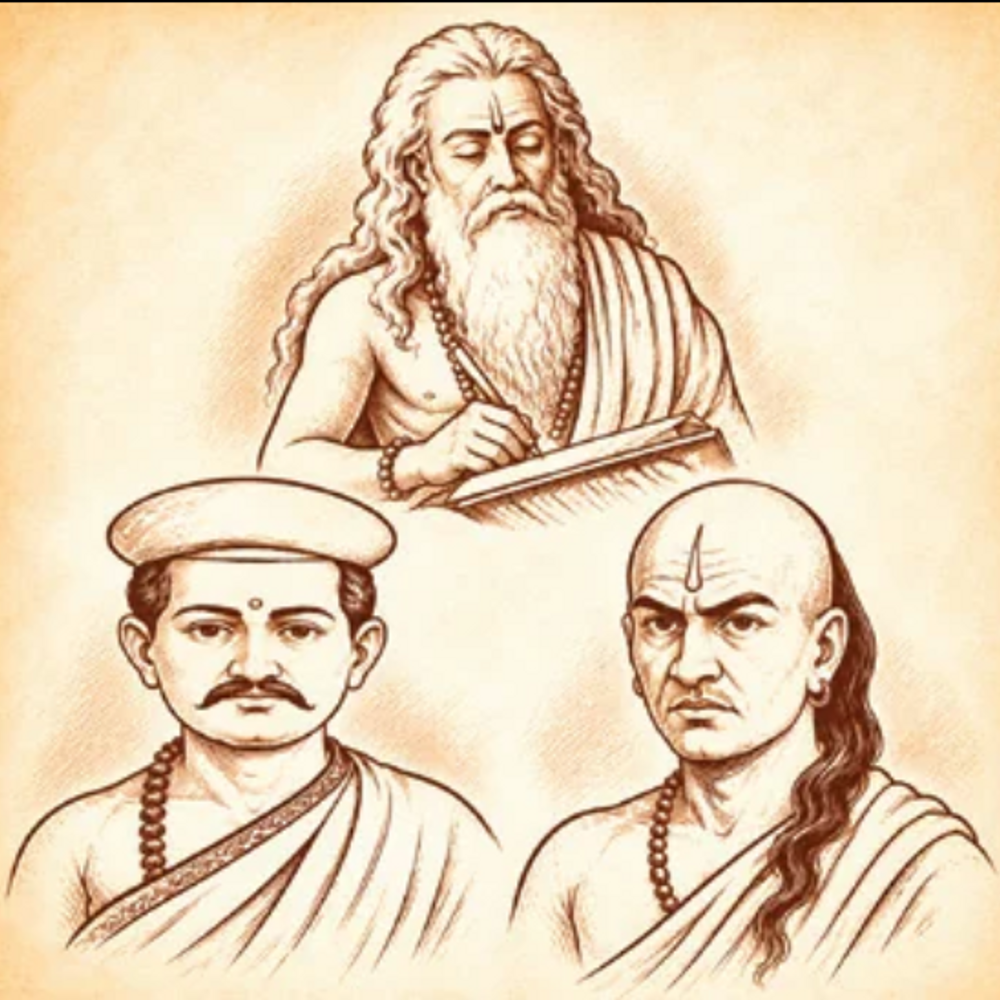
Three landmark ancient Indian manuscripts—Kautilya’s Arthashastra, the epic Mahabharata, and Kalhana’s Rajatarangini—have been formally inscribed on UNESCO’s Memory of the World Asia-Pacific Regional Register. The decision was announced during the 11th General Meeting of the Memory of the World Committee for Asia and the Pacific held in Jakarta, Indonesia. The recognition marks a major milestone in global heritage preservation, underscoring the universal significance of India's classical textual heritage.
Among the recognized treasures is the complete 16th-century palm-leaf manuscript of Kautilya’s Arthashastra, inscribed in the Grantha script and preserved at the Oriental Research Institute in Mysuru. Widely celebrated as an exhaustive treatise on statecraft, economic policy, diplomacy, and administrative law, the text reshaped modern understandings of ancient Indian political thought following its rediscovery by scholar R. Shamasastry in 1905. Its regional register inscription highlights its enduring influence on strategic doctrine and institutional governance across Asia.
The inscription also honors an ancient birch-bark manuscript of the Mahabharata, one of the longest epic poems in human history. Traditionally attributed to Sage Vyasa, the text encapsulates deep civilizational deliberations on moral duty, governance, material prosperity, and spiritual liberation. Preserving the epic on traditional organic media represents an invaluable achievement in archival continuity, anchoring South Asia's collective philosophical identity.
Kalhana’s Rajatarangini, translated as "The River of Kings," provides the third cornerstone of the new regional inscriptions. Composed in Sanskrit during the mid-12th century, the chronicle details the dynastic transitions and administrative history of the Kashmir region. Historians widely regard the eight-book work as one of early India’s finest examples of historiography, distinguished by its critical methodology, examination of physical inscriptions, and structured chronology.
UNESCO established the Memory of the World programme in 1992 to protect rare documentary heritage from decay, damage, and obscurity. Inscriptions aim to ensure that fragile documents, manuscripts, and archival collections are preserved with modern conservation techniques and made accessible to researchers worldwide. The Asia-Pacific committee oversees regional documentary treasures that have shaped regional culture and thought.
With the addition of these three works, India's inscriptions on the Asia-Pacific regional register have grown to six. The country previously secured inscriptions on the regional list for Goswami Tulsidas’s Ramcharitmanas, the fable collection Panchatantra, and the aesthetic treatise Sahrdayaloka-Locana. India also maintains extensive representation on UNESCO’s International Memory of the World Register, which includes the Rigveda manuscripts and the Gilgit collection.
The latest recognition draws international attention to the technical challenges of manuscript conservation in tropical and humid climates. Ancient Indian texts inscribed on organic materials like palm leaves and birch bark require specialized microclimate controls, deacidification, and digital cataloging to prevent degradation. Curators note that international recognition often unlocks greater institutional support and technical collaboration to protect vulnerable holdings.
Looking forward, archival institutions across India are accelerating digitization initiatives to create open-access digital repositories of endangered manuscripts. By pairing traditional physical conservation with high-resolution scanning, custodians aim to democratize access for international scholars while safeguarding the physical artifacts from handling damage. The regional UNESCO recognition is expected to spur wider public interest in classical Indian literature, philology, and historical scholarship worldwide.
Primary source: Divya Bhaskar Magazine. Newzly rewrites and structures source reporting for clarity; verify critical details at the original.