culture·Maharashtra·Pune District
UNESCO Inscribes Mahabharata, Arthashastra, and Rajatarangini on Asia-Pacific Heritage Register
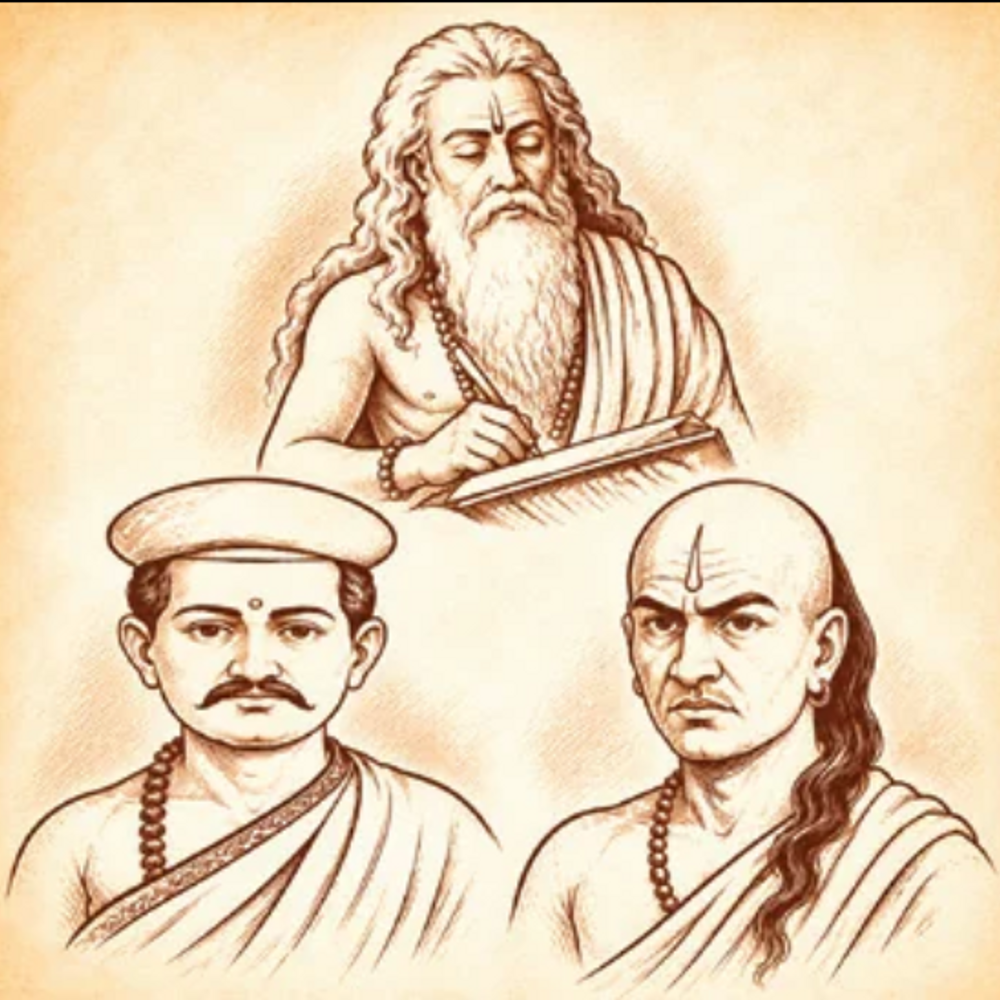
Three foundational Indian documentary treasures—the Mahabharata, Kautilya’s Arthashastra, and Kalhana’s Rajatarangini—have been formally inscribed onto UNESCO’s Memory of the World Asia-Pacific Regional Register, cementing their global civilizational significance.
In this piece
UNESCO has formally added manuscripts of the Mahabharata, Arthashastra, and Rajatarangini to the Memory of the World Asia-Pacific Regional Register. Recognized…
Three landmark ancient Indian texts—the Mahabharata epic, Kautilya’s Arthashastra, and Kalhana’s Rajatarangini—have been officially inscribed onto UNESCO’s Memory of the World Asia-Pacific Regional Register. The decision was formalized during the 11th General Meeting of the Memory of the World Committee for Asia and the Pacific, known as MOWCAP, convened in Jakarta, Indonesia. The recognition marks a major milestone in affirming the worldwide civilizational impact of India’s documentary heritage.
The successful nominations were submitted under the aegis of India's Ministry of Culture, with coordinated archival preparation spearheaded by the Indira Gandhi National Centre for the Arts. This latest induction brings India's total entries on the MOWCAP regional register to six, following previous recognitions that included the Ramcharitmanas and the Panchatantra. Cultural historians noted that securing regional register status elevates international awareness of India’s deep intellectual, political, and philosophical traditions.
Among the three newly recognized works is the renowned birch-bark manuscript of the Mahabharata, preserved at the Bhandarkar Oriental Research Institute in Pune, Maharashtra. Written in the historic Sharada script, the manuscript represents one of the most comprehensive surviving physical records of the ancient epic. Beyond its narrative core depicting dynastic rivalry and war, the text serves as a vast compendium of ethical philosophy, jurisprudence, and moral duty that has shaped South Asian thought for millennia.
The second inscription honors Kautilya’s Arthashastra, anchored by an ancient palm-leaf manuscript inscribed in the Grantha script held at the Oriental Research Institute in Mysuru, Karnataka. Authored over two millennia ago, the treatise remains one of antiquity's most sophisticated explorations of governance, fiscal policy, state administration, and diplomatic strategy. Its rediscovery in the early twentieth century fundamentally transformed modern scholarly understanding of classical Indian administrative science and economic theory.
Completing the trio is Kalhana’s Rajatarangini, preserved on Kashmiri paper in the Sharada script at the Oriental Research Library in Srinagar, Jammu and Kashmir. Authored in the twelfth century, the verse chronicle provides a detailed, chronological record of the rulers and political transformations of the Kashmir region. Scholars widely celebrate the text as a pioneering milestone in Indian historiography, notable for Kalhana’s critical use of corroborating epigraphic evidence and royal genealogies.
The UNESCO designation underscores the critical role that physical manuscripts play as tangible bridges connecting modern societies to ancestral knowledge systems. Unlike later printed volumes, historical manuscripts preserve unique linguistic scripts, local scribal traditions, and material technologies such as specially treated birch bark and palm leaves. Archival researchers emphasize that safeguarding these fragile records offers indispensable authenticity when reconstructing ancient historical timelines and societal developments.
Despite their historical value, ancient manuscripts across the subcontinent face significant environmental risks, including tropical humidity, pest infestation, and inadequate storage facilities. Institutional recognition from UNESCO provides essential impetus for modern conservation, scientific paper stabilization, and high-resolution digital scanning initiatives. Preserving these primary sources prevents irreplaceable loss and ensures that rare textual variants remain accessible to global researchers.
Scholars emphasize that the global acknowledgment of these texts highlights the universal relevance of ancient Indian thought in navigating contemporary global challenges. Concepts of statecraft and international diplomacy outlined in the Arthashastra continue to provide insightful parallels for modern geopolitical analysis. Similarly, the philosophical inquiries of the Mahabharata and the rigorous historical methodology of the Rajatarangini offer enduring frameworks for ethics and governance worldwide.
Moving forward, institutions housing the inscribed manuscripts are expected to expand collaborative digitization programs and academic outreach under UNESCO guidelines. Indian cultural authorities plan to leverage the global recognition to strengthen conservation infrastructure across state libraries and private manuscript repositories. As global cultural bodies increasingly prioritize non-Western documentary archives, the inscriptions provide momentum for further nominations of India's vast surviving textual heritage.
Primary source: Divya Bhaskar Magazine. Newzly rewrites and structures source reporting for clarity; verify critical details at the original.