Unocoin Confirms $200,000 Crypto Theft and Warns of Potential Customer Data Breach
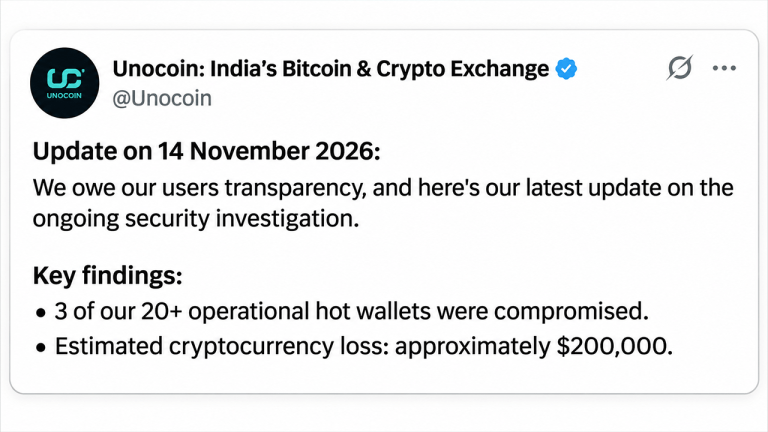
Indian cryptocurrency exchange Unocoin disclosed that attackers stole roughly $200,000 across three hot wallets, reversing earlier assurances of platform safety while warning that sensitive customer data may have been compromised.
In this piece
Indian crypto exchange Unocoin has confirmed that attackers stole approximately $200,000 in digital assets from three compromised hot wallets. The company also…
Indian cryptocurrency exchange Unocoin has disclosed the theft of approximately $200,000 in digital assets following a security breach affecting three of its hot wallets. The disclosure, confirmed on Saturday, Nov. 14, represents an abrupt reversal from earlier assurances issued by the trading platform that no corporate or customer funds had been lost during the incident.
Alongside the confirmed financial losses, the platform's team acknowledged that attackers may have accessed sensitive customer information. While the company has not published an exhaustive breakdown of the compromised records, digital asset exchanges typically maintain sensitive identity documentation and contact records, prompting heightened concerns regarding unauthorized data dissemination.
According to the disclosure, the attack specifically compromised three hot wallets, which are internet-connected digital storage pools utilized by exchanges to facilitate immediate trading liquidity and routine customer withdrawals. Because hot wallets remain linked to online infrastructure, they represent an ongoing target for cybercriminals, in contrast to cold storage repositories that keep assets isolated offline.
The admission has cast scrutiny on the exchange's initial incident handling and communication timeline. In the immediate aftermath of the suspicious activity, platform representatives had indicated that balances were secure and unaffected. Acknowledging that hundreds of thousands of dollars were diverted fundamentally alters the scope of the incident and poses reputational hurdles for the platform.
Security intrusions targeting centralized digital asset platforms remain a persistent threat across the broader cryptocurrency industry. Malicious actors frequently leverage phishing tactics, unauthorized API access, or software vulnerabilities to compromise operational private keys. Once transactions are confirmed on a blockchain network, reversing transfers is notoriously difficult without external intervention or direct recovery negotiations.
The potential exposure of customer records creates secondary risks for registered account holders. Leaked personal information often fuels follow-on social engineering campaigns, phishing attempts, and unauthorized account access efforts. Security analysts generally recommend that users on impacted platforms update their login credentials, establish robust multi-factor authentication, and remain vigilant against unsolicited communications.
The breach arrives amid a broader operational environment that demands stringent cybersecurity protocols and transparent incident disclosures from domestic exchanges. With digital asset platforms facing rigorous operational scrutiny, incidents involving both direct capital depletion and customer data compromise frequently draw intense review from financial and technical observers.
Following the disclosure, the platform has moved to contain the compromised systems and evaluate its wallet safeguards. Industry participants expect the exchange to carry out comprehensive technical reviews, strengthen administrative key controls, and clarify whether internal reserves will be allocated to offset the missing funds.
Moving forward, market participants and users will be watching for further technical findings detailing the precise vector used to compromise the hot wallets. As the post-incident review continues, the breach serves as another stark reminder of the persistent security challenges facing centralized custodial platforms.
Primary source: Bitcoin.com News. Newzly rewrites and structures source reporting for clarity; verify critical details at the original.