URI Researchers Map More Than 100 Languages Across Rhode Island
University of Rhode Island researchers are using geospatial mapping and citizen science to catalog more than 100 languages spoken statewide, illuminating the Ocean State's unexpected linguistic diversity.
In this piece
Researchers at the University of Rhode Island's Translanguaging Lab have launched 'Putting Rhode Island on the Map,' an initiative documenting more than 100…
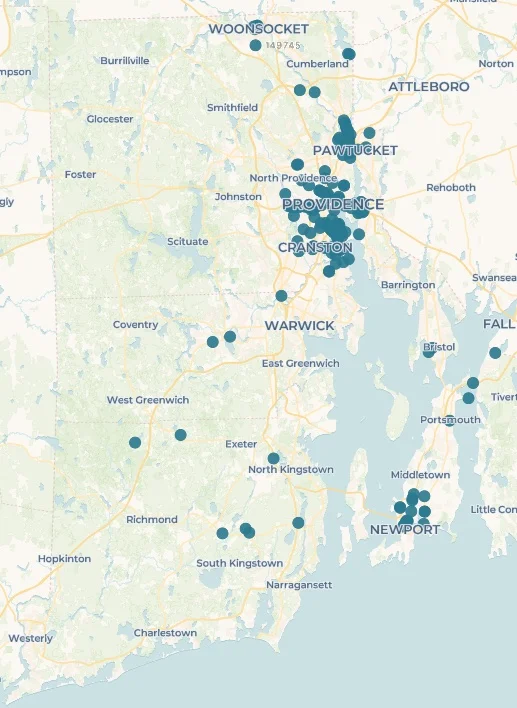
Researchers at the University of Rhode Island are documenting the state's cultural tapestry through an initiative titled "Putting Rhode Island on the Map." Spearheaded by the university's Translanguaging Lab, the community science project uses geospatial mapping to capture the state's remarkable linguistic diversity. By tracking physical signs across local neighborhoods, investigators are creating an interactive visual catalog of global languages spoken throughout the Ocean State.
The initiative is led by Dr. Steve Przymus, an associate professor of Teaching English to Speakers of Other Languages and Bilingual Education in URI's Feinstein College of Education. Alongside student researchers and academic colleagues, Przymus examines how languages other than English establish deep community roots. Their work studies the public linguistic landscape to understand the social connections behind everyday streetscapes.
Although Rhode Island is geographically the smallest state in the country, its linguistic footprint is expansive. Researchers have documented more than 100 distinct languages spoken by residents across its cities and towns. The research team notes that urban centers such as Providence rank exceptionally high in linguistic diversity when compared to other metropolitan regions nationwide.
To construct the geospatial database, researchers analyze visible text on commercial storefronts, church signs, community bulletin boards, and public notices. The project documents widely spoken languages like Spanish, Portuguese, and French, while also highlighting languages such as Arabic and Yoruba. In addition, the mapping recognizes indigenous Narragansett place names that anchor the state's earliest linguistic heritage.
Citizen science serves as a foundational component of the data collection process. Organizers invite residents, school classes, and neighborhood advocates to photograph and submit multilingual signage from their respective communities. This participatory approach transforms everyday neighborhoods into active research spaces and builds an inclusive archive of community identity.
The project's success hinges on collaborative ties with local educational and grassroots organizations across Rhode Island. Partners include the International Charter School in Pawtucket, the MET School in Providence, and La Conexión Latina in Newport. The research team also works alongside scholars from Brown University to broaden outreach and analytical depth.
Project leaders explain that documenting public language displays helps counteract historical misconceptions about the state's cultural makeup. For immigrant families and bilingual students, seeing their native tongues formally mapped validates their lived experiences. The researchers believe that recognizing these languages in public spaces promotes greater social inclusion and supports culturally responsive education.
Beyond digital cartography, the initiative connects with the public through seminars, workshops, and community presentations. Przymus has shared findings with campus audiences, including members of the URI Retired Faculty Association, highlighting how language reflects historical migration corridors. These forums allow community members to reflect on how linguistic heritage continuously evolves across generations.
Looking ahead, the Translanguaging Lab aims to expand its participatory mapping platform to capture emerging linguistic trends in real time. Organizers plan to integrate the findings into school curricula and civic resources statewide. By showcasing the dozens of languages spoken within Rhode Island borders, the project ensures that the state's diverse voices remain visible and valued.
Primary source: Google News Rhode Island. Newzly rewrites and structures source reporting for clarity; verify critical details at the original.