US Army Declares Controlled Iowa Munitions Blast a 'Huge Success' as Air Tests Show No Lead
Military officials confirmed the safe controlled detonation of unstable lead azide munitions at an Iowa facility, reporting that initial air-quality monitoring in surrounding communities detected no elevated toxic lead levels.
In this piece
The U.S. Army announced that a controlled explosion disposing of nearly five tons of deteriorating lead azide at an Iowa ammunition plant concluded successfully…
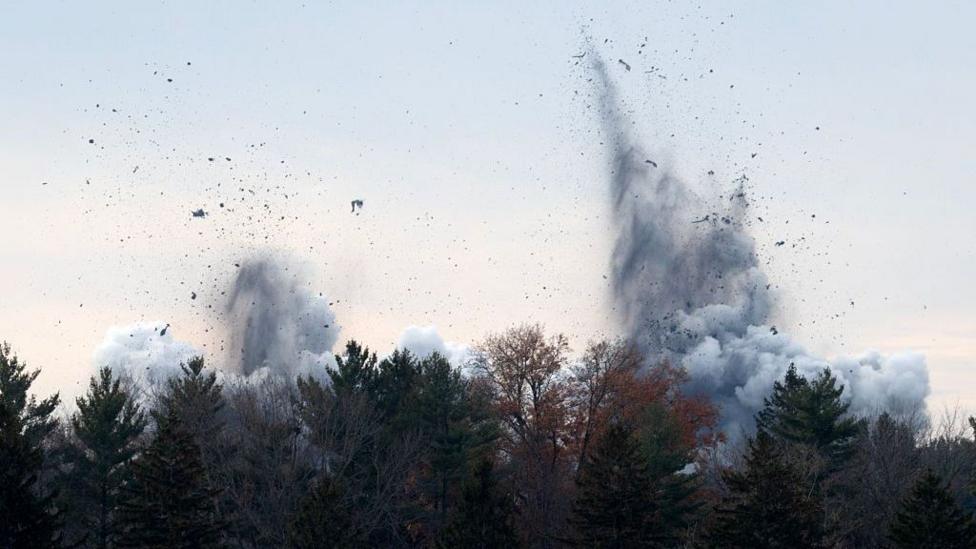
The U.S. Army announced that a high-stakes controlled detonation of degrading explosives at the Iowa Army Ammunition Plant was a huge success, neutralizing an unstable stockpile that had threatened regional safety. Military officials confirmed that the operation eliminated 68 barrels containing nearly five tons of aging lead azide with no secondary blasts or structural damage. Initial atmospheric testing across nearby residential areas detected no elevated lead levels following the blast.
Major General Eric Shirley of the U.S. Army Sustainment Command reported that the blast completely destroyed the target material without generating hazardous kickout or uncontained debris. Commanders emphasized that the execution had reduced the risk of an unintended catastrophic explosion to as close to zero as humanly possible. The controlled detonation followed extensive engineering preparations designed to contain the concussion and suppress airborne particulates.
Lead azide has served as an essential primary explosive in military detonators and munitions since World War I, valued for its sensitivity and reliability. The specific stockpile at the Iowa facility near Middletown had been stored for roughly two decades, during which time chemical degradation led the material to recrystallize. That crystallization significantly heightened its volatility, creating an escalating hazard of spontaneous ignition during handling or storage.
The operation had previously drawn intense scrutiny and pushback from residents in southeast Iowa and neighboring Illinois communities who feared the release of airborne toxins. Environmental advocates and civic groups raised alarms over the potential dispersion of a toxic lead dust plume across farms, schools, and waterways. Several legal maneuvers and regulatory reviews had sought to delay the detonation until comprehensive environmental assurances were in place.
To minimize environmental exposure, Army ordnance specialists deployed an elaborate mitigation architecture around the demolition site. Crews constructed substantial earthen berms, layered containment foam, and positioned specialized water sprayers to trap heavy metals and suppress dust clouds at the moment of impact. The specialized safeguards aimed to force particulate matter downward into retention basins rather than into the broader atmosphere.
Real-time environmental surveillance was conducted concurrently by the U.S. Environmental Protection Agency alongside state environmental protection specialists. Monitoring stations positioned around the facility's perimeter and within adjacent populated zones recorded air quality before, during, and after the event. Initial field readings indicated that particulate levels remained well within federal health thresholds, showing no immediate spikes in airborne lead.
The Iowa operation highlights the delicate logistical challenges the Pentagon faces as it modernizes national defense infrastructure and disposes of legacy chemical stockpiles. Aging energetic materials present unique handling dangers that prevent conventional transport over public highways or standard commercial disposal routes. Managing these deteriorated compounds requires balancing rapid emergency risk reduction against long-term ecological and community welfare.
Army authorities and environmental regulators confirmed that monitoring crews will remain stationed across the surrounding area to conduct secondary soil and water sampling over the coming weeks. Technicians are carrying out detailed forensic assessments of the blast zone to verify full chemical neutralization and inspect surrounding containment berms. Comprehensive laboratory reports on particulate collections are expected to be published as public safety agencies finalize their post-blast review.
Primary source: BBC US & Canada. Newzly rewrites and structures source reporting for clarity; verify critical details at the original.