US-Based Gujarati Couple Adopts Two Abandoned Children From Surat Shelter Home
Two young children rescued from the streets of Surat are preparing to begin a new life in the United States after being legally adopted by an Indian-American couple from a local shelter.
In this piece
An Indian-American couple has completed the legal adoption of two young children previously sheltered in Surat, Gujarat. The siblings, who were rescued from the…
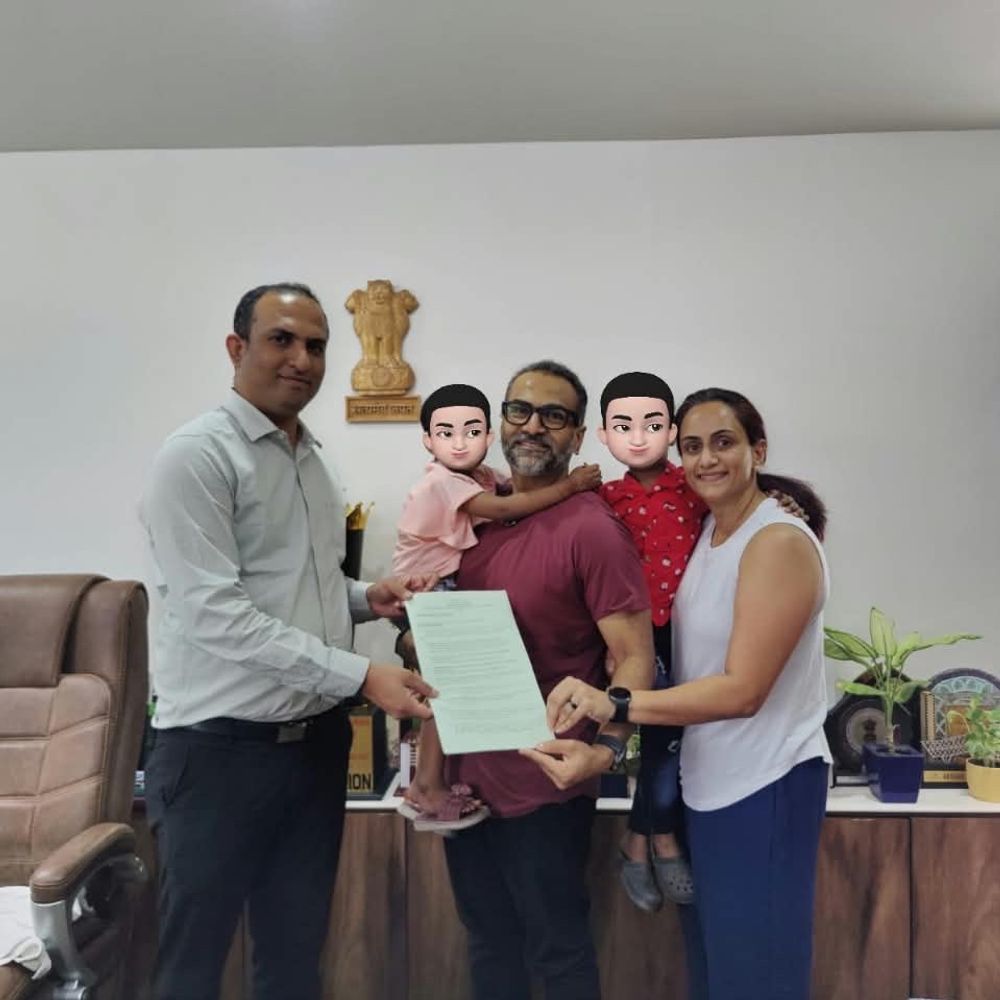
Two young children rescued from vulnerable conditions on the streets of Surat will soon move to the United States after being legally adopted by an Indian-American couple. The handover was formalized in Gujarat after district authorities concluded the statutory adoption procedures for the young brother and sister.
The children, aged four and five, had spent the preceding years living under institutional protection at the Special Adoption Agency and children's home located in Surat's Katargam neighborhood. Officials confirmed that social welfare teams originally placed both youngsters in the care of the Shishu Gruh after finding them stranded without parental guardianship.
The adoptive parents, an Indian-origin couple settled in the United States, completed an extensive multi-year evaluation before receiving final approval to bring the children home. Driven by a desire to provide a stable upbringing to vulnerable youths from their ancestral home state, the couple initiated the inter-country adoption process through designated bilateral legal channels.
Administrative proceedings culminated at the Surat District Collectorate, where local officials presented the pre-adoption documentation to the overseas family. The formal ceremony marked the transition of legal custody from state-run guardianship to the new parents, clearing the primary administrative obstacle in the international relocation.
The placement was coordinated under the guidelines established by the Central Adoption Resource Authority, the statutory body governing domestic and inter-country adoptions in India. Under the existing framework, foreign and non-resident Indian applicants undergo comprehensive home studies, background verifications, and judicial reviews to ensure that prospective placements serve the best interests of the children.
According to reports from local welfare administrators, the entire verification and matching timeline spanned approximately three years from initial application to final clearance. Child welfare advocates note that rigorous checks, while lengthy, are deliberately designed to prevent trafficking, ensure emotional compatibility, and guarantee financial stability for children placed abroad.
The successful adoption highlights ongoing child protection initiatives across urban centers in Gujarat, where municipal teams and state agencies regularly identify at-risk youths on public roads. Specialized shelter homes like the Katargam facility provide immediate medical evaluation, nutritional support, and structured education while welfare committees determine whether family reunification or formal adoption is appropriate.
Inter-country adoptions of sibling pairs and older children remain relatively uncommon, as many prospective parents primarily seek single infants. The willingness of overseas families to adopt bonded siblings ensures that family ties are preserved while offering children raised in communal institutions the opportunity to grow up in a supportive household environment.
Transitioning from an Indian municipal shelter to a household in North America presents both substantial opportunities and emotional adjustments for young children. Specialists emphasize that the family's shared cultural heritage and understanding of the children's linguistic background can play a constructive role in easing their integration into a new environment.
Following the issuance of the district order, the family is completing standard consular paperwork, including Indian passport issuance and United States immigration clearances, before traveling abroad. Post-adoption monitoring protocols will require periodic developmental reports to be submitted back to Indian child welfare authorities over the coming years to verify the children's welfare in their new home.
Primary source: Divya Bhaskar NRG. Newzly rewrites and structures source reporting for clarity; verify critical details at the original.