US Flights Nearing Full Capacity After Weekend of Disruption, Duffy Says
U.S. flights are returning to normal operations following a technical malfunction that grounded thousands of weekend departures, though planes remain near full capacity as airlines clear passenger backlogs, Transportation Secretary Sean Duffy said.
In this piece
U.S. airline operations are nearing full capacity as the national aviation network recovers from a weekend of major flight disruptions caused by an air-traffic…
United States flight operations are nearing full capacity as commercial aviation recovers from a weekend of widespread domestic travel disruptions, according to Transportation Secretary Sean Duffy. Federal aviation authorities and major airlines spent several days managing severe schedule backlogs following a nationwide technical failure that temporarily halted domestic departures. Duffy confirmed that flight systems are stabilizing, though passengers should expect crowded planes as airlines finish rebooking stranded travelers.
Transportation officials indicated that normal operational tempo is returning across major hubs, with the majority of scheduled departures proceeding without extended delays. However, officials noted that airlines are still working to clear lingering passenger backlogs created by the compounding cancellations. Commercial carriers have also deployed customer support teams to assist passengers whose travel plans were rearranged during the disruption.
The widespread operational collapse originated from a sudden technical malfunction affecting the Federal Aviation Administration's communication network. Technical teams traced the root issue to a network router malfunction during an infrastructure upgrade from legacy copper wiring to high-speed fiber optics at a facility in Arkansas. The technical failure compromised data exchange between control centers, prompting safety officials to halt takeoffs.
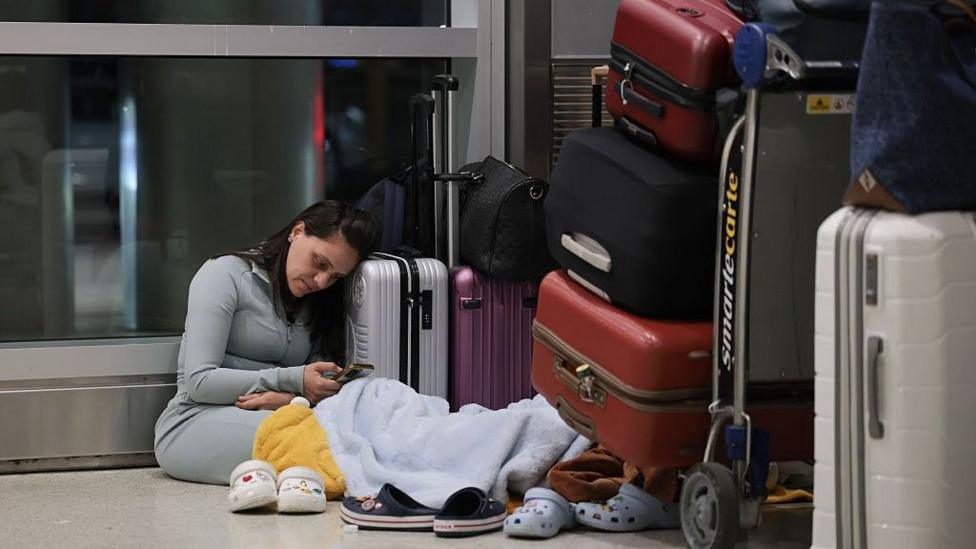
That communications breakdown prompted a nationwide ground stop lasting approximately four hours, halting departures across major metropolitan terminals and regional airfields. The interruption rippled rapidly through airline scheduling networks, forcing carriers to delay and cancel thousands of scheduled flights throughout the ensuing weekend. Airport terminals quickly swelled with travelers awaiting updates on rebooking options and gate changes.
Airlines faced significant logistical obstacles in the aftermath of the ground stop, as planes landed in incorrect hubs and flight crew duty-time limits were reached. Airline dispatchers had to orchestrate comprehensive recovery plans, repositioning displaced aircraft while managing strict federal work-hour regulations for pilots and flight attendants. Congested apron space and delayed baggage transfers further complicated efforts to return aircraft to their regular rotations.
Across major airport hubs, long lines formed at customer service desks and baggage claim areas as travelers sought alternate routes or hotel vouchers. Because flights operated at or near maximum passenger capacity, gate agents faced tight constraints when trying to place stranded fliers onto subsequent departures. Many passengers endured overnight layovers before empty seats became available on connecting routes.
The episode underscored the acute vulnerability and interconnectivity of the nation's air-traffic management architecture. Industry analysts observed that even brief outages in critical routing and communication systems trigger exponential downstream delays that require days to unravel. Modernization initiatives have sought to upgrade aging infrastructure, but transitional projects often introduce unforeseen risks to daily operations.
Federal regulators and transportation officials have initiated a review into the network malfunction to determine why backup systems failed to isolate the problem. Lawmakers and industry oversight groups are expected to seek assurances that future telecommunications upgrades include stronger fail-safe mechanisms to prevent nationwide shutdowns. Officials emphasized that safety standards remained uncompromised throughout the technical emergency.
Federal agencies and airline representatives projected that flight schedules would return to normal patterns once the remaining passenger backlogs are fully cleared. Transportation authorities continue to advise air travelers to monitor departure boards and confirm flight statuses with their respective carriers before heading to the airport. Duffy emphasized that while the system has demonstrated resilience, authorities remain focused on preventing similar infrastructure interruptions in the future.
Primary source: BBC US & Canada. Newzly rewrites and structures source reporting for clarity; verify critical details at the original.