markets·District of Columbia·District of Columbia
US Moves to Seize $1.17B in Frozen USDC from Binance Hack
The U.S. government filed a civil forfeiture complaint to seize $1.17 billion in USDC stolen during the historic Binance hack, with issuer Circle agreeing to reissue the frozen funds.
In this piece
Federal prosecutors have moved to seize approximately $1.17 billion in USDC connected to the $6.3 billion cyberattack on Binance attributed to North Korean…
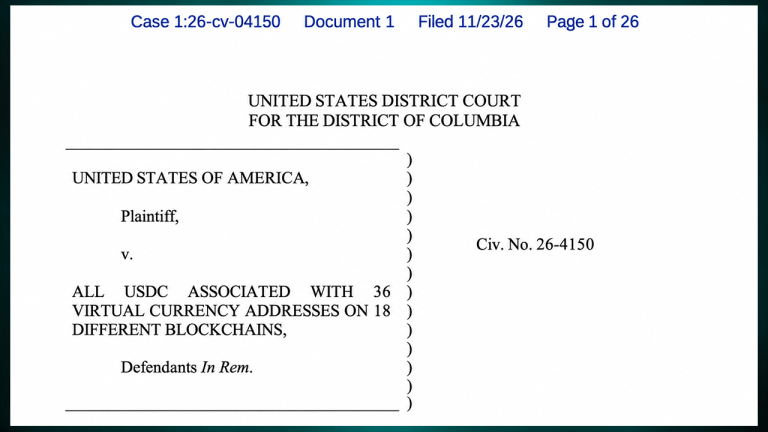
The United States government has filed a civil forfeiture complaint seeking approximately $1.17 billion in USD Coin linked to the massive cyberattack against cryptocurrency exchange Binance. Federal prosecutors submitted the filing in the U.S. District Court for the District of Columbia on Monday, targeting digital assets distributed across dozens of blockchain addresses. The legal action represents one of the largest seizure efforts in Department of Justice history aimed at North Korean state-sponsored cyber operations.
The targeted funds stem from an unprecedented security breach on October 29 that drained roughly $6.3 billion from Binance wallets. Federal investigators attributed the intrusion to sophisticated North Korean hacking syndicates, including the state-backed Lazarus Group and APT38. Court records show that the attackers infiltrated internal exchange systems and quickly dispersed the pilfered cryptocurrency across multiple blockchains in an effort to obscure the transaction trail.
Shortly after the breach was detected, stablecoin issuer Circle intervened by blacklisting the illicit addresses holding the USDC tokens. By utilizing built-in smart contract capabilities, Circle effectively immobilized approximately $1.17 billion worth of the stolen stablecoins spread across 36 addresses spanning 18 distinct network protocols. While the freeze prevented the cybercriminals from liquidating the funds, it left the original tokens stranded within locked on-chain wallets.
To resolve the technical impasse, Circle has offered to reissue replacement tokens directly to federal authorities once a formal forfeiture order is entered by the court. Because smart contracts do not permit unilateral withdrawals from blocked third-party addresses, newly minted USDC will be created to match the frozen balance dollar-for-dollar. The original frozen tokens will remain permanently immobilized on their respective host blockchains.
Federal authorities highlighted the filing as a vital countermeasure against North Korea's weaponization of cryptocurrency theft to generate illicit revenue. U.S. law enforcement agencies have long warned that Pyongyang relies on elite cyber units to fund state priorities and weapons programs through digital asset exploits. The Binance heist represents the largest single cryptocurrency theft documented to date, dwarfing prior major exploits attributed to North Korean operatives.
Civil forfeiture complaints allow federal prosecutors to proceed directly against property derived from criminal activity, regardless of whether criminal charges have been filed against specific individuals. By establishing that the digital assets constitute proceeds of computer fraud and money laundering, prosecutors seek to strip all legal title from the hackers. If the court grants the forfeiture decree, the United States will assume formal legal ownership of the seized wealth.
The ultimate objective of the civil forfeiture action is to establish a legal framework for returning recovered capital to impacted victims and platforms. Binance cooperated with blockchain analytics firms and international law enforcement immediately following the exploit to trace fund movements. Prosecutors noted that establishing sovereign custody over the reissued stablecoins is an essential legal prerequisite before restitution distributions can proceed.
The case underscores the growing role of centralized stablecoin issuers as gatekeepers in decentralized finance law enforcement. Unlike decentralized cryptocurrencies such as Bitcoin, fiat-pegged stablecoins like USDC often feature administrative freeze mechanisms that can assist regulators in halting illicit capital flows. Industry analysts note that Circle’s willingness to mint compensatory tokens sets an important operational precedent for high-stakes recovery operations.
Before the funds can be released, the federal court must adjudicate the forfeiture complaint and provide public notice for any potential competing claims. Federal investigators and cybersecurity analysts continue to monitor the remaining billions in stolen crypto assets that moved through decentralized mixing protocols. Law enforcement officials indicated that further recovery efforts and forfeiture actions remain active as the multi-agency international investigation unfolds.
Primary source: Bitcoin.com News. Newzly rewrites and structures source reporting for clarity; verify critical details at the original.