Uttar Pradesh Holds Statewide Air-Raid and Blackout Drills Across 75 Districts
Uttar Pradesh conducted simultaneous air-raid and blackout mock drills across all 75 districts to test civil defence systems, emergency services, and inter-agency coordination for potential aerial threats.
In this piece
All 75 districts of Uttar Pradesh carried out synchronized air-raid sirens and scheduled blackout drills to assess civil defence readiness. The coordinated…
Uttar Pradesh conducted synchronized civil defence air-raid and blackout mock drills across all 75 districts of the state on Friday evening. Initiated simultaneously at 6:00 PM, the extensive security exercise tested the operational readiness of emergency response mechanisms and public safety protocols during simulated aerial threats. Authorities aimed to evaluate how rapidly public departments could respond to war-like contingencies.
The coordinated operation commenced with air-raid warning sirens echoing across administrative quarters, municipal zones, and major urban centers for several minutes. Following the alert, municipal authorities and electricity departments enforced planned blackout measures, switching off illumination across key government complexes and designated public thoroughfares. Citizens and local traders were urged to cooperate by darkening shopfronts and domestic premises during the drill.
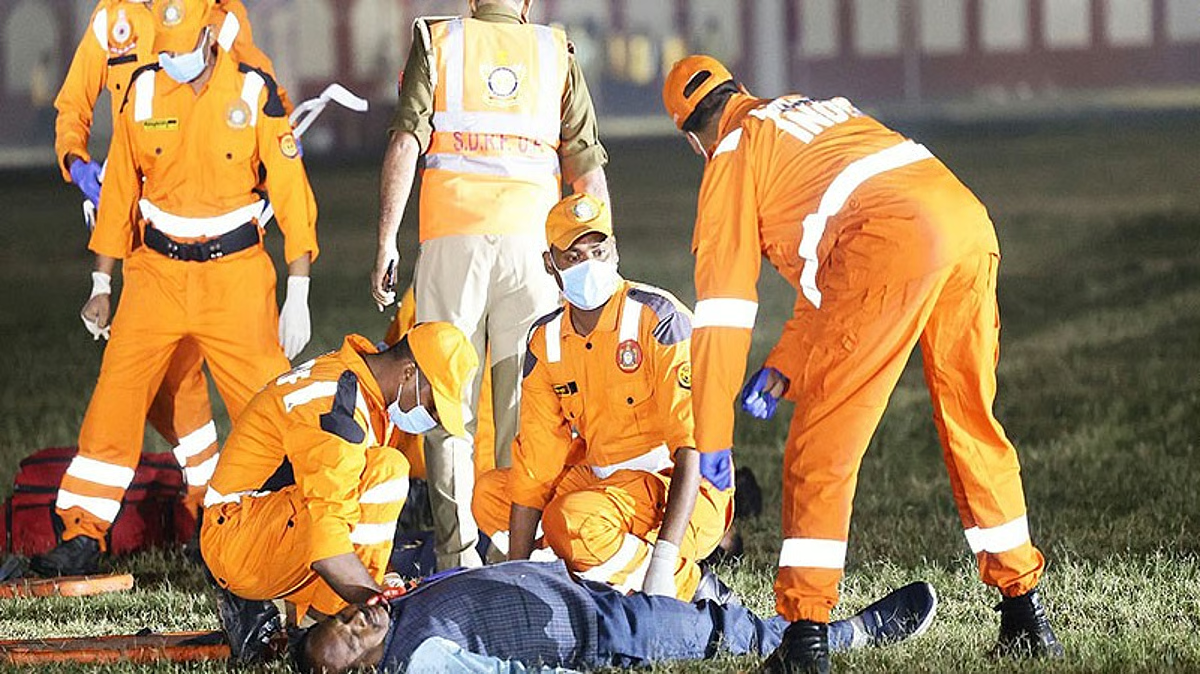
The multi-agency exercise brought together a broad coalition of state and municipal services, including the Civil Defence corps, local police departments, and fire and emergency rescue services. District magistrate offices coordinated frontline personnel to verify emergency communication links, establish command posts, and test tactical responses to simulated structural collapses. Officials tracked the elapsed time between the sounding of sirens and the full operational mobilization of emergency units.
Healthcare infrastructure throughout the state was integrated into the simulation to assess medical emergency readiness. Major state hospitals and trauma centers mobilized medical staff to practice casualty triage protocols, emergency patient transfers, and ward management under blackout conditions. Backup generator capabilities and auxiliary lighting systems were closely monitored to ensure life-saving machinery remained functional throughout deliberate power cuts.
In the state capital of Lucknow, Chief Minister Yogi Adityanath reviewed the operational execution and inter-departmental synchronization of the exercise alongside senior administrative leaders. Control centers monitored live inputs from various divisional headquarters to verify standard operating procedures were adhered to across urban and rural belts. Officials inspected resource deployment timelines and evaluated how effectively local administrations communicated safety instructions.
Specialized disaster management teams, including personnel from the National Disaster Response Force and the State Disaster Response Force, provided tactical oversight during the simulation. These units conducted focused rescue demonstrations, simulated hazardous debris clearance, and tested backup radio communications with regional police stations. Their participation allowed state planners to test cross-jurisdictional collaboration between central disaster relief forces and municipal civil defence volunteers.
State officials emphasized that the mock drills were routine preparedness exercises carried out under directives issued by central and state disaster authorities. Prior announcements were disseminated through local administrative channels to assure the public that the air-raid sirens and localized blackouts were strictly part of a simulated drill. Administrators underscored the necessity of familiarizing civilian populations with crisis response protocols to avoid confusion during real emergencies.
The statewide initiative highlights an intensified focus on civil defence modernisation and the protection of critical infrastructure amid evolving national security frameworks. Conducting identical drills simultaneously across all 75 districts allowed planners to assess systemic weaknesses, resource limitations, and communication vulnerabilities on an unprecedented provincial scale. The exercise serves as a benchmark for municipal preparedness in India's most populous state.
Looking ahead, district administrations and civil defence directorates are compiling detailed after-action reviews to evaluate departmental performance metrics and response lags. The documented findings from the drills will be integrated into updated disaster management manuals and future civil defence training programs across Uttar Pradesh. State authorities indicated that similar inter-agency simulations may be conducted periodically to keep emergency personnel in high operational readiness.
Primary source: Google News Uttar Pradesh. Newzly rewrites and structures source reporting for clarity; verify critical details at the original.