world·Uttarakhand·Chamoli District
Uttarakhand SIT Submits Inquiry Report on Badrinath Temple Offerings
A Special Investigation Team probing financial irregularities and donation handling at Uttarakhand's Badrinath temple has submitted an extensive report recommending glass-walled counting facilities and strict surveillance.
In this piece
An Uttarakhand Special Investigation Team has submitted a 300-page report on alleged irregularities in Badrinath temple offerings. The inquiry recommends…
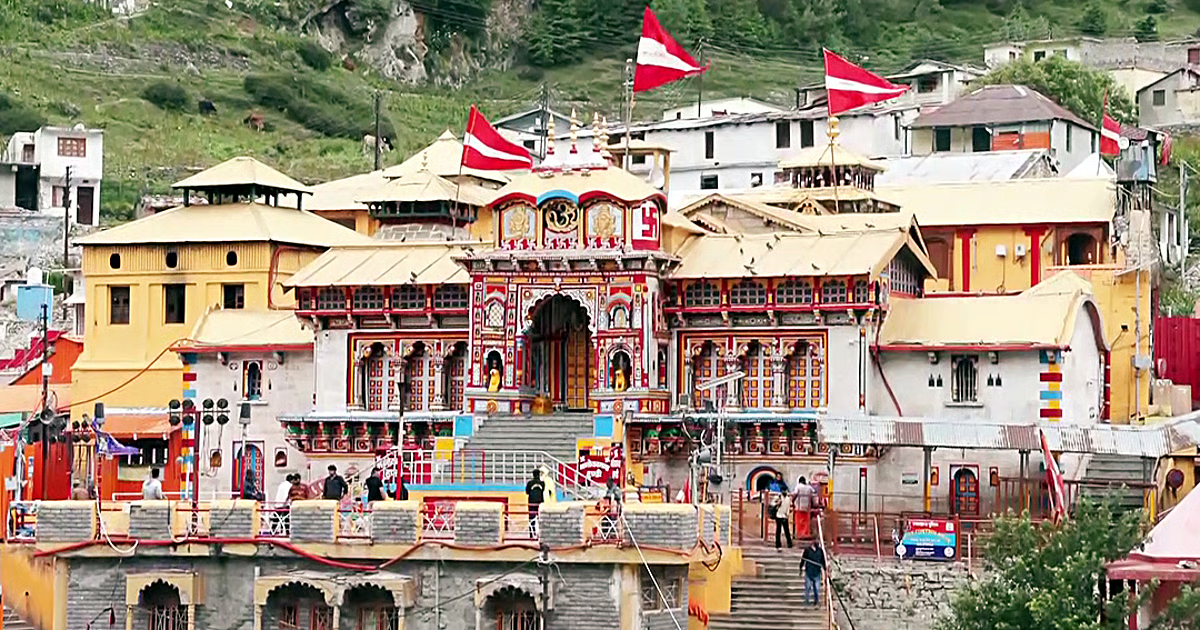
A special investigation team appointed by the Uttarakhand government has submitted an exhaustive inquiry report detailing systemic irregularities and financial lapses in the handling of offerings at the revered Badrinath temple. The investigative panel, led by Garhwal Divisional Commissioner Anand Swaroop, delivered its findings to state authorities following months of scrutinizing the management, collection, and accounting of pilgrim donations.
The three-member panel compiled a detailed document spanning roughly 300 pages that outlines critical vulnerabilities in the traditional donation processing pipeline. Investigators focused on systemic loopholes in physical security, currency tracking, manual counting operations, and the reconciliation of cash offerings before funds are deposited into official bank accounts.
During the course of the probe, the team recorded formal statements from more than 20 individuals, including administrative officers and on-ground staff affiliated with the Badrinath-Kedarnath Temple Committee. The committee oversees day-to-day shrine operations and manages the logistical flow of millions of devotees who visit the high-altitude Himalayan pilgrimage destination every year.
The state-level probe was commissioned in the wake of grave allegations involving the diversion, pilferage, and theft of cash offerings contributed by pilgrims at the sanctum sanctorum. Law enforcement agencies had earlier launched separate criminal proceedings and submitted initial charge sheets against designated individuals accused of direct theft and criminal conspiracy.
In formulating structural reforms, the panel reviewed administrative and security models practiced at several of India's prominent pilgrimage centers, including Tirupati Balaji, Vaishno Devi, Kashi Vishwanath, and the Golden Temple. Drawing comparisons from those institutions, the investigators highlighted an urgent need to replace outdated, opaque procedures with modern institutional custody mechanisms.
Among its core recommendations, the team advocated the construction of a specialized, glass-walled donation counting enclosure that allows operations to remain completely visible from the outside. By providing unobstructed sightlines, the proposed facility aims to eliminate blind spots and ensure public visual transparency during the manual unwrapping and sorting of offerings.
The report further urges the deployment of high-definition, 360-degree closed-circuit television cameras within the counting chamber, connected directly to a continuous monitoring control room. To minimize manual calculation errors and deter foul play, the team recommended installing modern currency-counting and sorting machines equipped with advanced counterfeit detection technology.
Strict operational discipline for personnel assigned to donation handling forms another central pillar of the panel's findings. Proposed rules mandate that staff wear pocketless clothing, undergo rigorous mandatory physical security checks before entering and leaving the facility, and adhere to strict duty logs documenting exact entry and exit times.
Badrinath remains one of the cornerstone destinations of the Char Dham pilgrimage circuit, attracting substantial financial offerings from domestic and international devotees throughout its operational season. Ensuring unassailable integrity in the handling of temple wealth is widely viewed by temple trustees and regional authorities as essential for maintaining public trust and preserving the sanctity of shrine administration.
With the report formally submitted, state government leadership and the temple administration are expected to review the recommendations and determine subsequent administrative and legal actions. The findings will likely guide policy revisions and technological investments ahead of future pilgrimage cycles as authorities seek to institutionalize safeguards across the state's major pilgrimage sites.
Primary source: Google News Uttarakhand. Newzly rewrites and structures source reporting for clarity; verify critical details at the original.