world·Uttarakhand·Chamoli District
Uttarakhand Women Farmers Revive Endangered Himalayan Herbs
In Uttarakhand’s Chamoli district, women farmers are shifting from wild-foraging to domestic cultivation of endangered Himalayan medicinal plants, curbing the depletion of alpine meadows while securing vital household income.
In this piece
Women farmers in the high-altitude villages of Uttarakhand are cultivating threatened Himalayan medicinal species like kutki on private plots. Supported by…
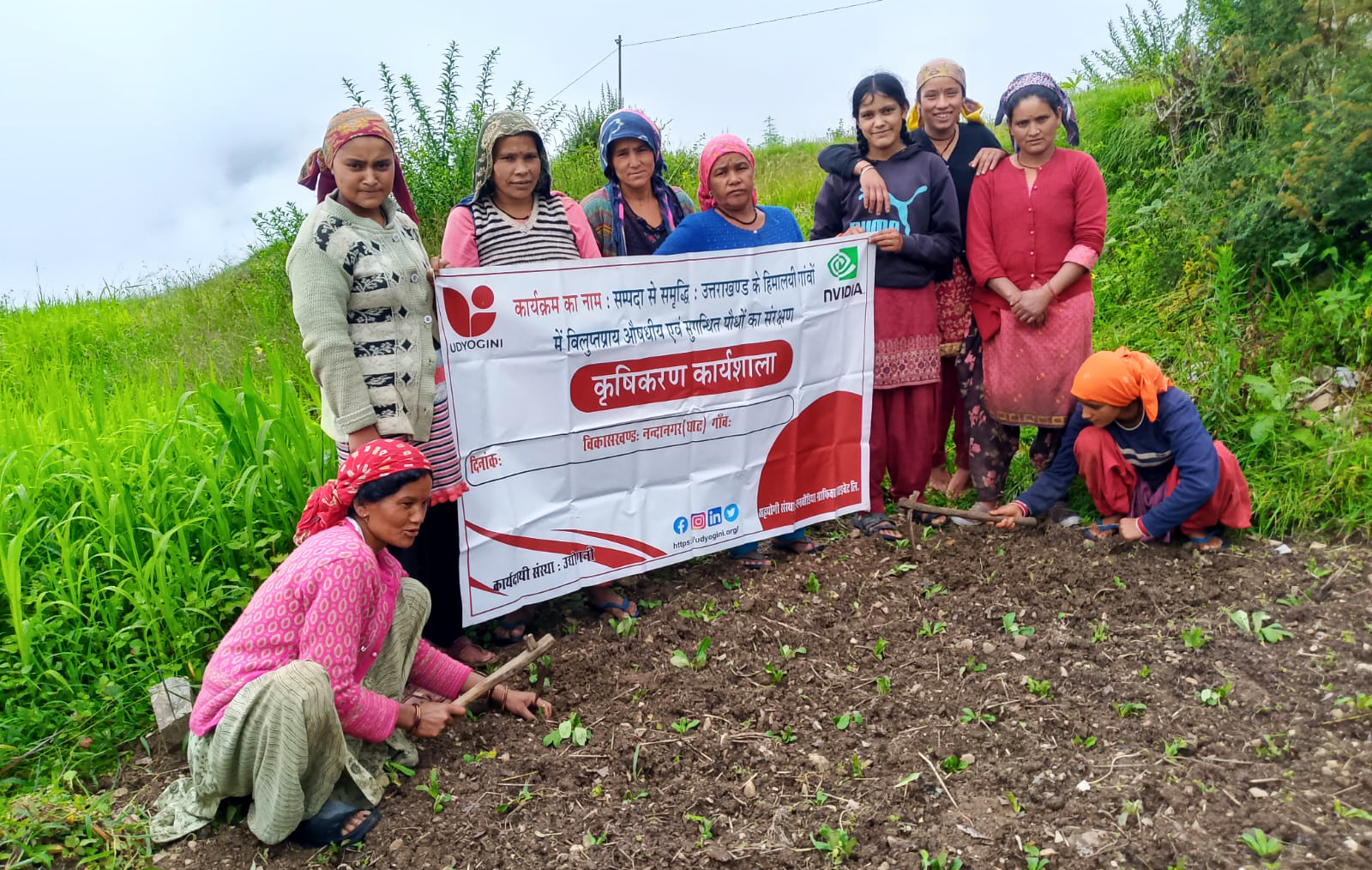
In the high-altitude mountain village of Ramni in Uttarakhand's Chamoli district, local women farmers are spearheading an ecological turnaround by cultivating endangered Himalayan medicinal and aromatic plants. Rather than relying on wild harvesting from fragile alpine meadows, these growers are raising threatened species in domestic nurseries and terrace plots. The transition offers a sustainable model that relieves acute environmental pressure on wild botanicals while establishing a dependable revenue stream for rural households.
High-altitude species such as kutki (Picrorhiza kurroa) and sugandha bala (Valeriana jatamansi) have long served as foundational remedies in traditional healthcare systems, valued for treating fevers and respiratory conditions. Naturally thriving at elevations above 2,000 meters, these slow-growing herbs are integral to the fragile alpine meadows, locally known as bugyals. Decades of heavy commercial demand from herbal drug manufacturers, however, triggered widespread wild-harvesting that left native populations dangerously depleted.
Women farmers, including local community organizers like Guddi Devi, have taken the lead in establishing community-managed nurseries across the district. Instead of gathering wild roots from high passes, farmers propagate saplings in controlled environments to transplant onto private and community farmland. These efforts ensure consistent plant survival rates and furnish surrounding cultivators with verified, disease-free planting stock.
The shift toward woman-led herbal farming reflects wider socioeconomic transformations taking place across the central Himalayas. Widespread outmigration by men seeking wage labor in lowland cities has placed the primary responsibility for mountain agriculture and land management onto rural women. Scientists and conservationists describe this dynamic as the feminization of hill agriculture, which positions female growers as frontline custodians of regional natural resources.
From an ecological standpoint, cultivating medicinal herbs on settled land creates a crucial protective buffer for mountain biodiversity. Field researchers emphasize that wild alpine root extraction damages root networks, disrupts thin mountain soils, and contributes to erosion across vulnerable slopes. Controlled cultivation relieves commercial pressure on native bugyals, allowing degraded alpine ecosystems sufficient time to naturally regenerate.
To sustain the initiative, grassroots organizations like the non-profit Udyogini and state research bodies have stepped in with technical guidance and agricultural inputs. Institutions such as the Herbal Research and Development Institute, along with scientists from the G.B. Pant National Institute of Himalayan Environment, provide training on propagation methods and post-harvest handling. This scientific backing helps farmers maximize active chemical yields while adhering to sustainable cultivation standards.
Despite these advances, women cultivators continue to navigate persistent structural obstacles, notably surrounding legal title and regulatory compliance. Commercial herbal trading and transit regulations frequently demand formal land tenure documents, yet women in the hill state rarely hold registered ownership of family farmland. Advocacy organizations have worked to bridge this institutional divide by assisting female collectives in obtaining formal certifications and marketing permits directly in their own names.
For local families, the economic dividends of herbal agriculture offer a resilient alternative to unpredictable subsistence farming. Traditional hill crops often suffer devastating losses from erratic weather, changing rainfall patterns, and wild animal raids. High-value crops like kutki command substantial prices in specialized commercial markets, providing households with liquid capital to invest in healthcare, education, and domestic improvements.
Moving forward, conservationists and state agencies view community-led medicinal plant farming as an essential pillar of Himalayan climate adaptation. Researchers note that expanding direct market access and establishing decentralized seedling hubs will be decisive for scaling the model to neighboring valleys. For the women farmers of Chamoli, cultivating endangered flora on home terraces demonstrates that safeguarding rare mountain heritage can go hand in hand with rural prosperity.
Primary source: Google News Uttarakhand. Newzly rewrites and structures source reporting for clarity; verify critical details at the original.