Vogue India essay recounts learning a wheelie at 11,000 feet in Ladakh
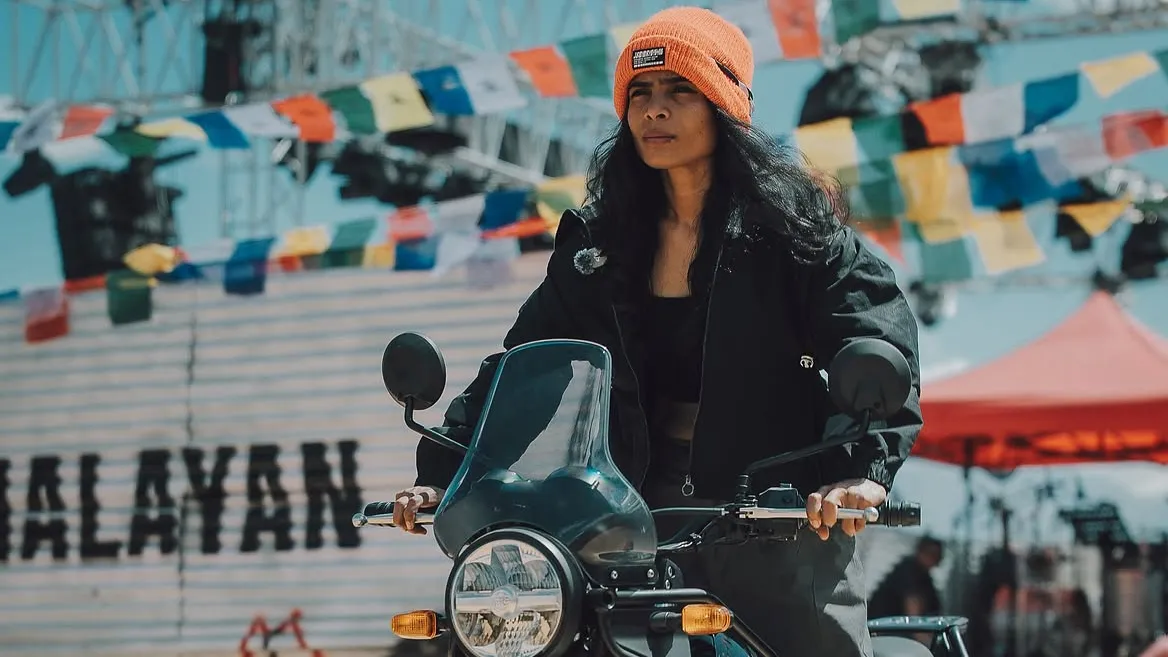
A Vogue India first-person headline describes a man going to a woman instructor to learn a motorcycle wheelie at about 11,000 feet in Ladakh. The circulated brief does not name either person.
In this piece
Vogue India’s personal essay, surfaced via a Ladakh news feed, frames a straight man’s attempt to learn a wheelie from a woman at high altitude. Only the…
Vogue India has published a first-person essay whose headline reads, “I’m a straight man who went to a woman to learn how to wheelie at 11,000 feet in Ladakh.” The piece reached a wider feed through Google News under a Ladakh listing. The material available for this report is the headline and the publication credit, not the full text of the essay.
Taken on its own wording, the headline sets three claims: the writer identifies himself as a straight man; he sought instruction from a woman; and the lesson was a motorcycle wheelie at roughly 11,000 feet in Ladakh. No names, quotations, dates, or further place names appear in the headline that circulated with the item.
Ladakh is a Union Territory in northern India, and much of its inhabited landscape sits at high elevation. An altitude near 11,000 feet is consistent with the region’s broad geography, but the headline does not identify a town, pass, or district. This account therefore does not assign the lesson to any particular locality inside Ladakh.
A wheelie is a riding maneuver in which the front wheel leaves the ground. At elevations around 11,000 feet, thinner air is a routine condition for travelers and riders, affecting both engines and people. Nothing in the available headline describes how the lesson was taught, how long it lasted, or whether the writer completed the maneuver.
The headline also puts gender at the center of a skill usually discussed as a riding stunt. It presents a man choosing a woman as his teacher and flags his own sexuality in the same sentence. Without the essay’s body, it is not possible to say how the writer develops that framing, what the instructor’s role was beyond the headline, or whether the piece is mainly about riding, travel, or gender expectations.
Motorcycle travel is a familiar part of how outsiders encounter Ladakh in the warmer months, when high roads are more often open. That is regional context, not a detail supplied by this headline. The Vogue India line does not say what kind of bike was used, whether the session was formal instruction or an informal lesson, or whether it was tied to a larger trip.
Because the source material is limited to the title and outlet, several ordinary news questions stay open. The writer is unnamed here. The woman who taught the wheelie is unnamed here. No injuries, records, or official comments are mentioned, and none should be inferred. Readers looking for those specifics need the full Vogue India essay rather than the headline alone.
What the item does show is how a personal travel story can travel as a single sentence. The combination of a gender reversal, a stunt, and an extreme altitude is compact enough to circulate before the surrounding narrative does. In that form, the piece functions as a prompt: who teaches, who learns, and where the lesson happens.
For now, the verifiable core is narrow and should stay narrow. Vogue India is the publisher. The headline describes a straight man learning to wheelie from a woman at about 11,000 feet in Ladakh. Anything beyond that sentence is outside what this brief can confirm.
Further reading depends on the magazine’s own text. If Vogue India expands names, places, or the outcome of the lesson inside the essay, those details would update what a headline-only account can responsibly say. Until then, the story remains a first-person feature signaled by its title, not a reported incident with independent confirmation.
Primary source: Google News Ladakh. Newzly rewrites and structures source reporting for clarity; verify critical details at the original.