Volvo Overhauls 2028 Plug-In Hybrids With Massive Batteries and Extended Range
Volvo is equipping its updated 2028 plug-in hybrids with floor-mounted battery packs that nearly double electrical capacity, allowing popular SUV models to travel up to 78 miles on electric power alone.
In this piece
Volvo has overhauled its 2028 plug-in hybrid lineup with dramatically larger battery packs offering up to 78 miles of all-electric driving. The substantial…
Volvo is rolling out a major mechanical refresh for its 2028 plug-in hybrid lineup, headlined by substantially larger battery packs that nearly double the vehicles' all-electric range. The engineering overhaul shifts the automaker's popular luxury SUVs toward extended zero-emission capability without abandoning the security of a gasoline engine. First-drive reports from Ars Technica highlight that the revisions significantly change how these electrified models perform during everyday driving.
Central to the update is a redesigned floor-integrated battery architecture that boasts a total capacity of 41.2 kilowatt-hours, with 37.9 kilowatt-hours of usable energy. In the refreshed XC60 T8 crossover, the massive pack delivers a manufacturer-estimated electric range of up to 78 miles on a single charge. That marks a dramatic leap over the prior generation, transforming what was once a short-range commuter into an electric-first family vehicle.
The three-row XC90 receives the same battery integration, achieving an estimated 73 miles of electric-only travel despite its larger dimensions and heavier curb weight. By moving the battery pack into the vehicle floor rather than cramming cells into the central transmission tunnel, engineers maintained cabin space and improved overall weight distribution. The resulting range figures place both models among the longest-range plug-in hybrids announced for the consumer market.
Under the hood, Volvo has retained its proven hybrid powertrain pairing a turbocharged 2.0-liter four-cylinder combustion engine with a potent rear-mounted electric motor. The combined system produces 455 horsepower, ensuring swift acceleration and seamless all-wheel-drive traction whenever additional performance is demanded. Drivers can operate almost entirely in electric mode during normal routines while retaining instant access to full hybrid power under heavier throttle loads.
Replenishing the substantially larger battery requires patience, as the vehicles rely on a 7.2-kilowatt onboard charger intended primarily for overnight or workplace charging. A complete recharge on a 240-volt Level 2 system takes approximately 5.7 to 6 hours, which remains manageable for home charging schedules. Volvo opted not to include direct-current fast-charging hardware, keeping vehicle complexity and cost focused on AC charging habits typical of hybrid owners.
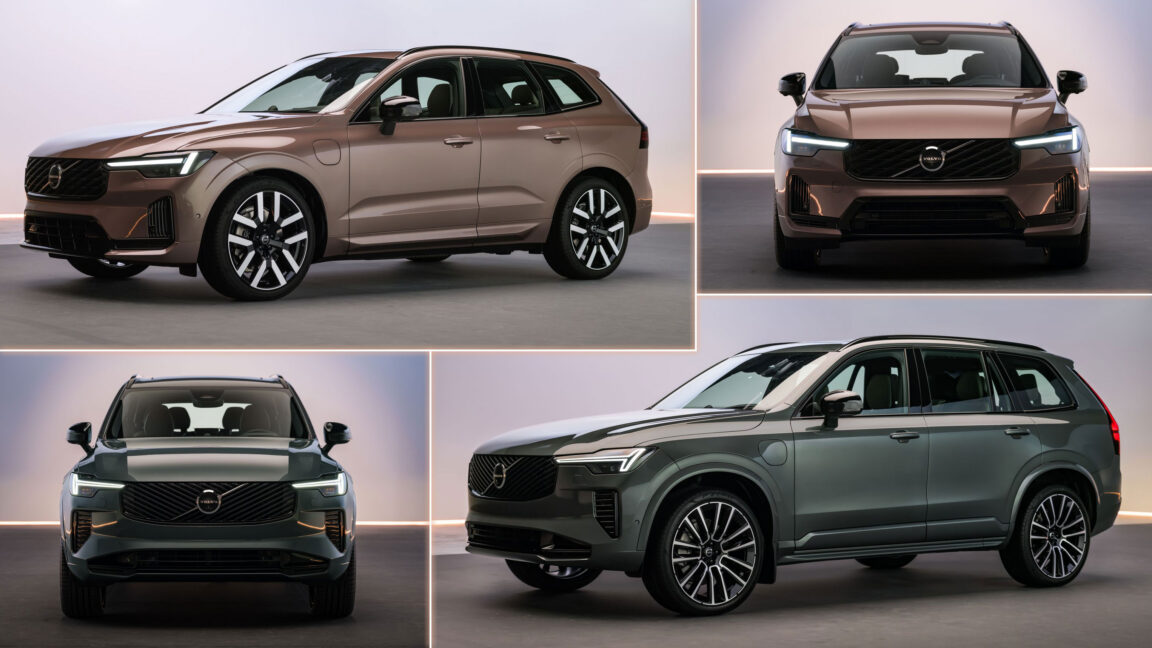
Beyond the powertrain improvements, the 2028 refresh introduces subtle exterior styling updates and meaningful cabin technology modernizations. The SUVs feature redesigned front grilles and updated matrix LED headlight assemblies that align with the brand's contemporary Scandinavian design language. Inside, drivers interact with a modernized infotainment interface that integrates built-in Google services to streamline navigation, media playback, and vehicle settings.
The strategic shift underscores a broader reevaluation across the automotive industry regarding consumer adoption rates for fully battery-electric vehicles. While automakers initially planned aggressive, rapid transitions to pure electric models, persistent public charging hurdles and range anxiety have kept plug-in hybrids in high demand. Providing real-world electric range exceeding 70 miles addresses the vast majority of daily driving needs while eliminating charging anxiety on long road trips.
With these extended-range variants taking center stage, older iterations featuring smaller batteries are expected to be phased out after the 2027 model year. For luxury car shoppers, the upgraded 2028 lineup offers a pragmatic middle ground that blends the daily benefits of an electric vehicle with long-distance combustion reliability. The substantial battery investment illustrates Volvo's willingness to adapt its platform roadmap to meet shifting buyer preferences in major markets.
As the updated models prepare to reach showrooms ahead of the 2028 model year, Volvo is positioning itself to capture motorists who are not yet prepared to abandon liquid fuel entirely. Final pricing and market-specific delivery schedules have yet to be detailed by the Swedish manufacturer. If consumer response matches initial critical reception, Volvo's big-battery experiment could establish a new performance benchmark for the luxury plug-in hybrid segment.
Primary source: Ars Technica. Newzly rewrites and structures source reporting for clarity; verify critical details at the original.