Waymo freeway incident highlights challenge of reading police maneuvers
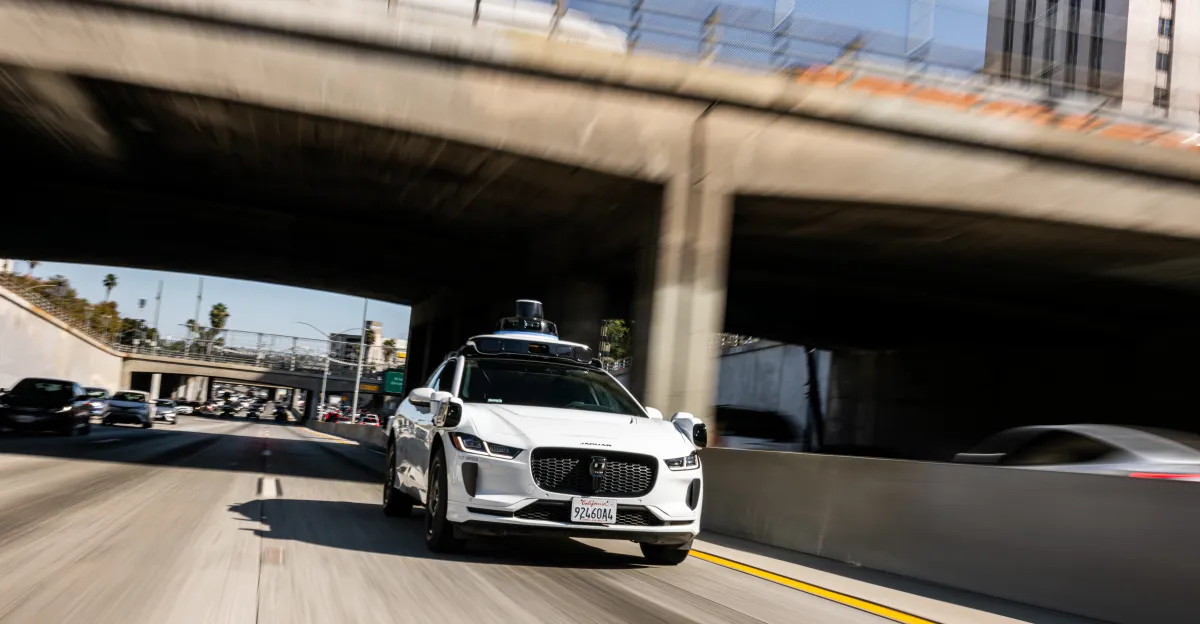
Video described by The Verge shows a driverless Waymo attempting to pass California Highway Patrol cruisers during a freeway traffic break, raising questions about how robotaxis respond to unusual road conditions.
In this piece
A driverless Waymo attempted to overtake two California Highway Patrol cruisers during a November 6 traffic break on Interstate 280, according to The Verge. The…
A driverless Waymo attempted to overtake two California Highway Patrol cruisers conducting a traffic break on Interstate 280 on November 6, according to video described by The Verge. The incident puts a specific freeway-driving challenge in focus: recognizing when police vehicles are deliberately controlling the movement of surrounding traffic.
The supplied report describes the attempted pass as a moving violation. It does not provide the year of the incident, explain how the encounter ended or say whether authorities took enforcement action, limiting what can be concluded about its immediate consequences.
A traffic break is a maneuver in which highway patrol officers slow or temporarily hold back vehicles, rather than allow traffic to continue at its previous pace. For a driver approaching from behind, the task is therefore not simply to identify a slower vehicle, but to recognize an instruction conveyed through police movement.
That distinction matters for automated driving because an available space on the road is not necessarily permission to advance. A vehicle must interpret the surrounding situation as well as detect lanes, other vehicles and potential obstacles, particularly when officers are actively changing the normal flow of traffic.
The Verge's account centers on two patrol cruisers and the Waymo's attempt to overtake them, but the supplied excerpt offers no technical explanation for that behavior. It does not establish whether the vehicle failed to recognize the traffic break, misunderstood the cruisers' actions or responded incorrectly after identifying them.
The episode illustrates why freeway operation involves more than maintaining speed and staying within a lane. Police-directed maneuvers create situations in which appropriate behavior depends on understanding the purpose of another road user's actions, not merely predicting where that vehicle will move next. That is the central safety question raised by the reported encounter.
Still, one described incident cannot establish how frequently Waymo encounters this problem or support a broader conclusion about its overall freeway performance. The supplied material contains no comparative safety data, company explanation or detailed account from highway patrol officers, and it does not identify a resulting crash or injury.
The unresolved issue is how the vehicle's behavior was assessed and whether any corrective action followed. A fuller account from Waymo or the California Highway Patrol would help clarify what the system perceived, how it responded and what happened after the attempted pass. For now, the reported video documents a troubling encounter without resolving its cause or outcome.
Primary source: The Verge. Newzly rewrites and structures source reporting for clarity; verify critical details at the original.