Weapon or Wine Bottle? China Rebuts Artillery Shell Report in Papua New Guinea
A diplomatic dispute has emerged after China rejected claims by Papua New Guinea police that a 32-kilogram object seized from a shipping container in Port Moresby was a live artillery shell, insisting it was a novelty wine bottle.
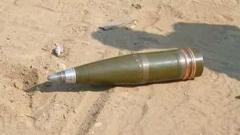
A diplomatic dispute has erupted between Papua New Guinea and China following the seizure of a suspicious 32-kilogram metallic object discovered inside a commercial shipping container at a wharf in Port Moresby. While local law enforcement reported the item to be an unexploded military-grade artillery projectile, the Chinese Embassy in Port Moresby has firmly rejected the claim, asserting that the object was merely a decorative wine bottle.
The incident unfolded after port workers and security officials flagged an irregular cargo consignment, prompting an immediate deployment of bomb disposal specialists from the Royal Papua New Guinea Constabulary. Following an initial inspection, local police dismissed early speculation that the heavy device was a harmless replica or dummy. Investigators moved swiftly to secure the perimeter around the container terminal while technical teams conducted deeper forensic assessments.
According to local police reports and technical assessments assisted by specialized scanning equipment, the item was preliminarily identified as a 130mm Chinese Type 59 artillery shell. Authorities indicated that preliminary imaging suggested the presence of internal explosives and an active fusing mechanism, which triggered elevated security protocols across the port facility. In connection with the shipment, authorities detained four Chinese nationals for questioning regarding the origin and manifest documentation of the cargo.
In response to the escalating controversy, the Chinese Embassy in Papua New Guinea issued a formal statement dismissing allegations that dangerous ordnance had been shipped into the Pacific island nation. Diplomatic representatives maintained that verification conducted with the importing enterprise proved the item was a shell-shaped liquor container intended as a novelty gift. Chinese officials emphasized that the container posed no physical hazard whatsoever to port personnel or the wider public.
Chinese diplomats also pointed to Beijing's stringent domestic legal frameworks governing firearms, ammunition, and controlled dual-use materials. The embassy stressed that China enforces some of the world's strictest export controls, making the unauthorized overseas transport of heavy military projectiles virtually impossible through standard commercial channels. Officials argued that premature characterizations of the cargo had created unnecessary alarm and misinformed the public about commercial trade ties.
The stark contradiction between the police assessment and diplomatic statements has cast a spotlight on maritime cargo screening capabilities in Papua New Guinea. Major ports across the country have historically operated with limited scanning infrastructure, making them vulnerable to illicit trafficking and contraband smuggling. In recent years, international partners, including Australia, have stepped up assistance to bolster border security, port oversight, and explosive detection across the region.
The episode unfolds against a broader backdrop of heightened geopolitical sensitivity across the South Pacific. Major powers have increasingly competed for influence and security partnerships across Melanesia, with critical infrastructure and policing agreements drawing sustained international scrutiny. In such an environment, any unverified report linking imported foreign goods to military ordnance quickly gains regional diplomatic weight.
Papua New Guinea authorities have indicated that comprehensive ballistic and chemical tests will continue before a definitive final determination is released to the public. Meanwhile, the legal status of the detained individuals and the container manifest remain under active review by port customs and law enforcement agencies. Officials from both nations are expected to maintain contact as technical examiners seek to conclusively resolve whether the object represents a hazardous weapon or an elaborate commercial novelty.
Primary source: BBC World. Newzly rewrites and structures source reporting for clarity; verify critical details at the original.