WHO Warns of Grave Risk as Heavy Fighting Disrupts Ebola Response in DR Congo
The World Health Organization has urged an immediate halt to fighting near a hospital in the Democratic Republic of the Congo, warning that clashes are putting patients and health workers at grave risk.
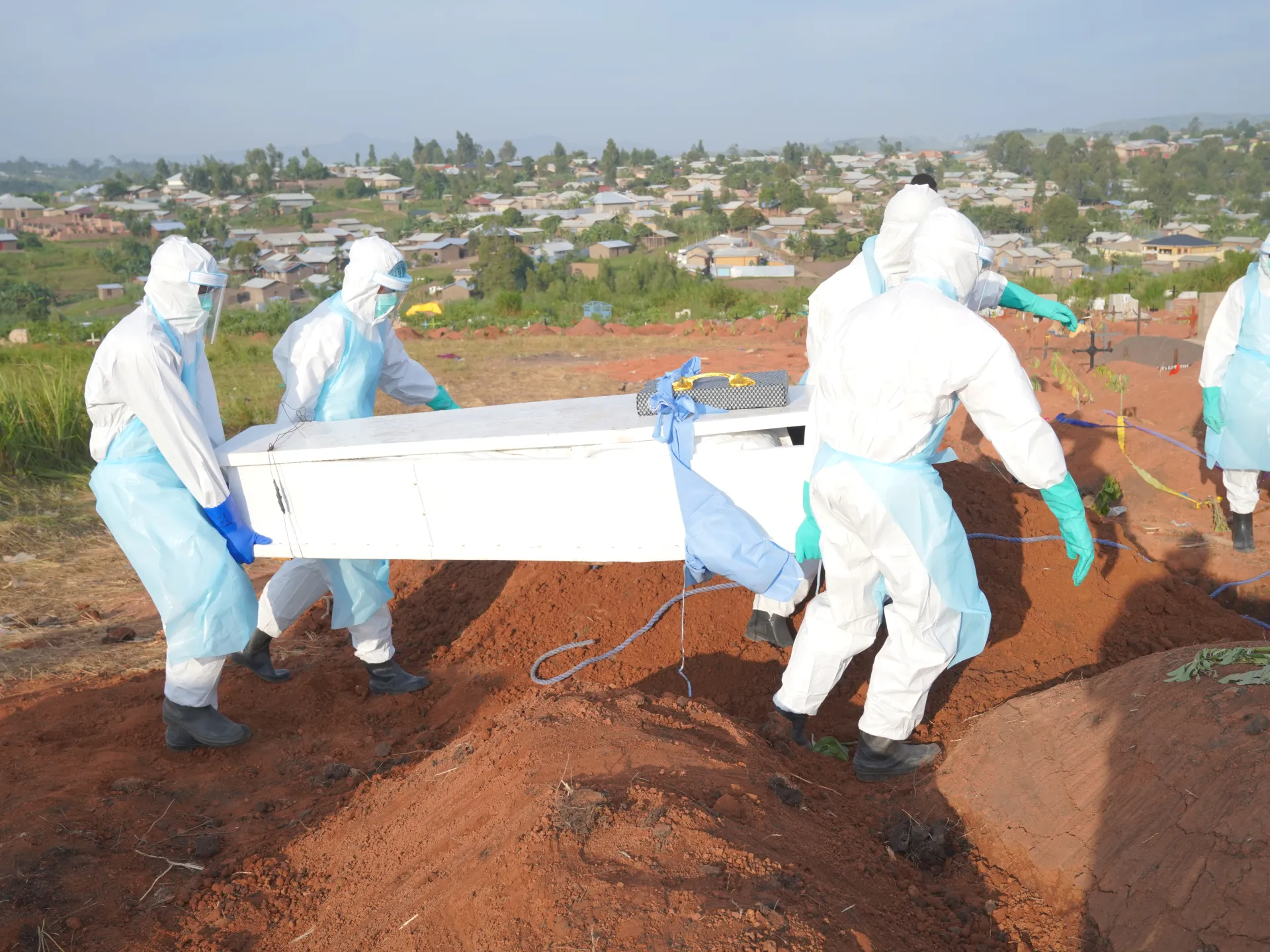
In this piece
Heavy fighting near a hospital in the Democratic Republic of the Congo has disrupted vital Ebola containment efforts, according to the World Health…
Heavy fighting near a hospital in an Ebola-affected region of the Democratic Republic of the Congo has severely disrupted medical operations, placing both patients and healthcare personnel at grave risk, the World Health Organization warned. In response to the intensifying clashes around the medical center, the chief of the global health agency issued an urgent call for peace to safeguard essential humanitarian operations.
According to reporting from Al Jazeera citing the World Health Organization, armed hostilities in close proximity to the facility have hindered critical response activities aimed at controlling the viral disease. Public health officials stressed that active fighting in civilian areas jeopardizes individuals undergoing intensive care while forcing emergency teams to navigate dangerous operational environments.
Containing an Ebola outbreak demands continuous, highly disciplined medical interventions, including strict isolation protocols, rigorous disinfection routines, and systematic contact tracing across surrounding communities. When combat breaks out near treatment units, healthcare providers are often compelled to suspend routine rounds or retreat to fortified shelters, creating hazardous gaps in epidemic oversight.
The Democratic Republic of the Congo has endured numerous public health crises compounded by long-standing security challenges and regional instability. In conflict-prone areas, healthcare infrastructure is frequently vulnerable to collateral damage, while logistical supply lines carrying diagnostic equipment, personal protective gear, and therapeutic medications face frequent blockages.
Frontline medical personnel operating in epidemic zones already endure extraordinary physical and psychological pressure without the added menace of nearby artillery or gunfire. The World Health Organization highlighted that medical workers, treatment centers, and patients must be protected, emphasizing that targeting or imperiling health infrastructure threatens the viability of humanitarian missions.
Beyond the immediate danger to hospital occupants, armed disruptions threaten to undermine community trust and weaken surveillance systems crucial for halting contagion. When access to clinical facilities becomes perilous, residents exhibiting symptoms may avoid medical centers altogether, substantially raising the danger of undetected community transmission.
Epidemiologists have repeatedly warned that security breakdowns represent one of the most serious impediments to eradicating infectious disease clusters before they spread across borders. Given that Ebola carries high case fatality rates and requires rapid isolation of suspected cases, any operational pause can quickly reverse fragile public health gains achieved over weeks of surveillance.
Detailed assessments regarding the specific factions involved in the clashes and the exact scale of operational impairment at the hospital remain limited in initial reports. Global health observers and humanitarian monitors are actively evaluating the security landscape to determine the extent of logistical disruption facing regional response teams.
In the days ahead, international health agencies and emergency responders will be watching closely to see whether armed confrontations subside enough to restore safe humanitarian access. The World Health Organization continues to press for an immediate cessation of violence around healthcare assets, reiterating that medical staff must be permitted to treat patients and contain deadly disease without fear of military crossfire.
Primary source: Al Jazeera. Newzly rewrites and structures source reporting for clarity; verify critical details at the original.