Why Families Go Hungry in Northern Yemen Despite Food in Local Markets
Although staple foods still reach markets across Sanaa and Hodeidah, families in northern Yemen face severe hunger. Rising prices, deep joblessness, and declining aid distributions have pushed essential nourishment out of reach for local households.
In this piece
Markets across northern Yemen remain stocked with essential commodities like flour and cooking oil, yet widespread poverty and soaring retail prices prevent…
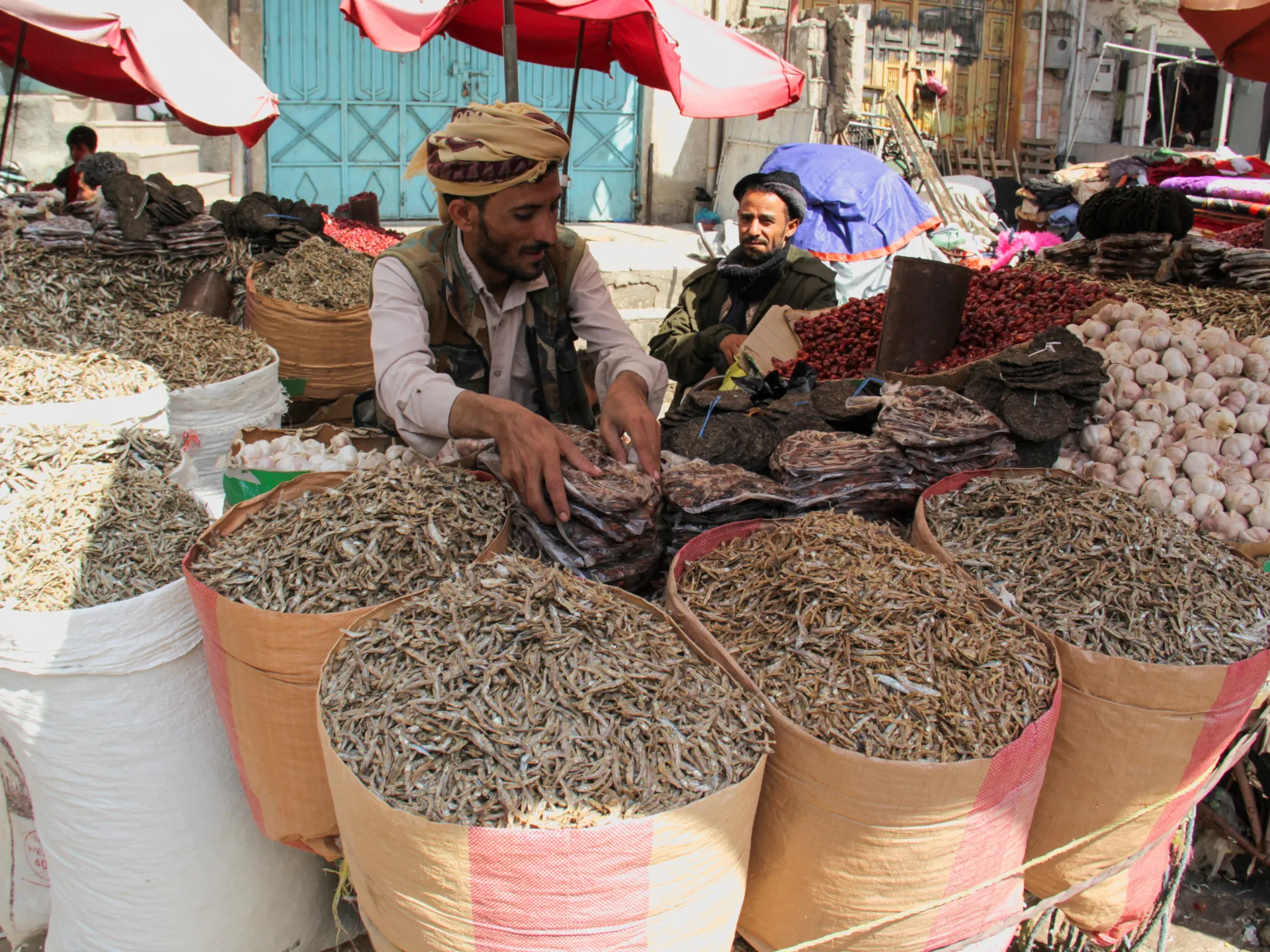
Markets across northern Yemen, including the major urban centers of Sanaa and the port city of Hodeidah, continue to see commercial supplies of flour, cooking oil, and other staple foods arriving on vendor shelves. Yet despite the physical presence of these goods, mounting numbers of local families are unable to secure adequate nutrition. The paradox of stocked market stalls set against spreading domestic hunger underscores an acute crisis of economic accessibility rather than absolute supply shortage.
According to field reporting and economic assessments, households are confronting an overwhelming affordability barrier driven by runaway costs for basic provisions. While commercial supply lines maintain the inflow of essential foodstuffs into local retail hubs, local wages and informal earnings have failed to keep pace. As a consequence, ordinary citizens frequently watch food sit out of reach in neighborhood markets while daily food insecurity deepens.
A primary driver behind this widening gulf is the severe contraction of employment and income-generating opportunities across northern Yemen. Sustained conflict, infrastructure strain, and protracted instability have degraded private enterprise and restricted regular wage payments. Many families that previously relied on regular commerce, daily wage labor, or municipal employment now face prolonged periods without dependable earnings.
Compounding the loss of household income is the sharp escalation in retail commodity prices across northern governorates. The expense of transporting goods inland from coastal terminals like Hodeidah, coupled with broader inflationary pressures and supply chain friction, directly inflates final grocery costs. For households operating on minimal or depleted financial reserves, even routine weekly purchases of cooking oil or flour have turned into prohibitive expenses.
The strain is further intensified by substantial reductions and operational disruptions in international humanitarian relief programs. Aid organizations operating across Yemen have increasingly encountered severe funding shortfalls, forcing reductions in direct food rations and cash assistance schemes. Consequently, vulnerable communities that historically relied on humanitarian transfers to bridge the affordability gap are left with diminished external safety nets.
In humanitarian analysis, this pattern reflects what economists classify as an access deficit rather than a simple supply famine. When food remains commercially available but families lack purchasing power, traditional market mechanisms continue to function only for those with liquid assets or remittances. The wider population, however, is pushed into severe coping mechanisms, including skipping meals, rationing portions, and taking on unsustainable debt.
The geographic focus of the strain in Sanaa and Hodeidah highlights the particular vulnerability of urban and semi-urban populations. Unlike rural agrarian communities that may occasionally lean on subsistence cultivation or livestock, city dwellers are almost entirely dependent on cash transactions for their daily sustenance. When urban labor markets stall and liquid currency dries up, townspeople face an immediate and unforgiving hunger crisis.
Public health and food security observers caution that the divergence between commercial availability and household affordability poses a profound risk of prolonged malnutrition, particularly for children. Even moderate price spikes in staple commodities can trigger immediate declines in dietary diversity and caloric intake. Over extended periods, the inability to purchase staple grain and cooking fats inflicts long-lasting developmental and health burdens across affected generations.
Looking ahead, international monitors and relief coordinators stress that addressing northern Yemen's hunger crisis will require far more than merely keeping transport corridors and commercial import routes functioning. Stabilizing market access necessitates expanding targeted humanitarian financing, restoring household purchasing power, and generating viable livelihood opportunities. Without systemic interventions to address economic paralysis and replenish emergency aid pipelines, well-stocked markets will continue to stand in stark contrast to empty household pantries.
Primary source: Al Jazeera. Newzly rewrites and structures source reporting for clarity; verify critical details at the original.