Why Land Costs May Decide Rhode Island's Sub-$300,000 Modular Home Goal
Rhode Island's plan to deliver sub-$300,000 modular homes hinges on securing low-cost public land, as factory savings alone cannot offset high site preparation and real estate expenses.
In this piece
Rhode Island is targeting sub-$300,000 price tags for factory-built modular homes, but high land and infrastructure expenses threaten that benchmark. Analysts…
Rhode Island's ambitious push to deploy factory-built modular homes priced below $300,000 faces an economic bottleneck that factory efficiencies alone cannot solve. While prefabrication significantly reduces framing and labor expenses, industry analysts note that escalating land prices and site preparation expenses threaten to consume any cost savings achieved on the assembly line.
Modular construction in the region generally averages around $300 per square foot, offering a notable discount compared to the $400 to $500 per square foot standard for traditional stick-built housing. However, at that rate, a $300,000 price ceiling accommodates roughly 1,000 square feet of physical structure alone. Under private-market conditions, this basic arithmetic leaves zero financial margin for acquiring the underlying real estate.
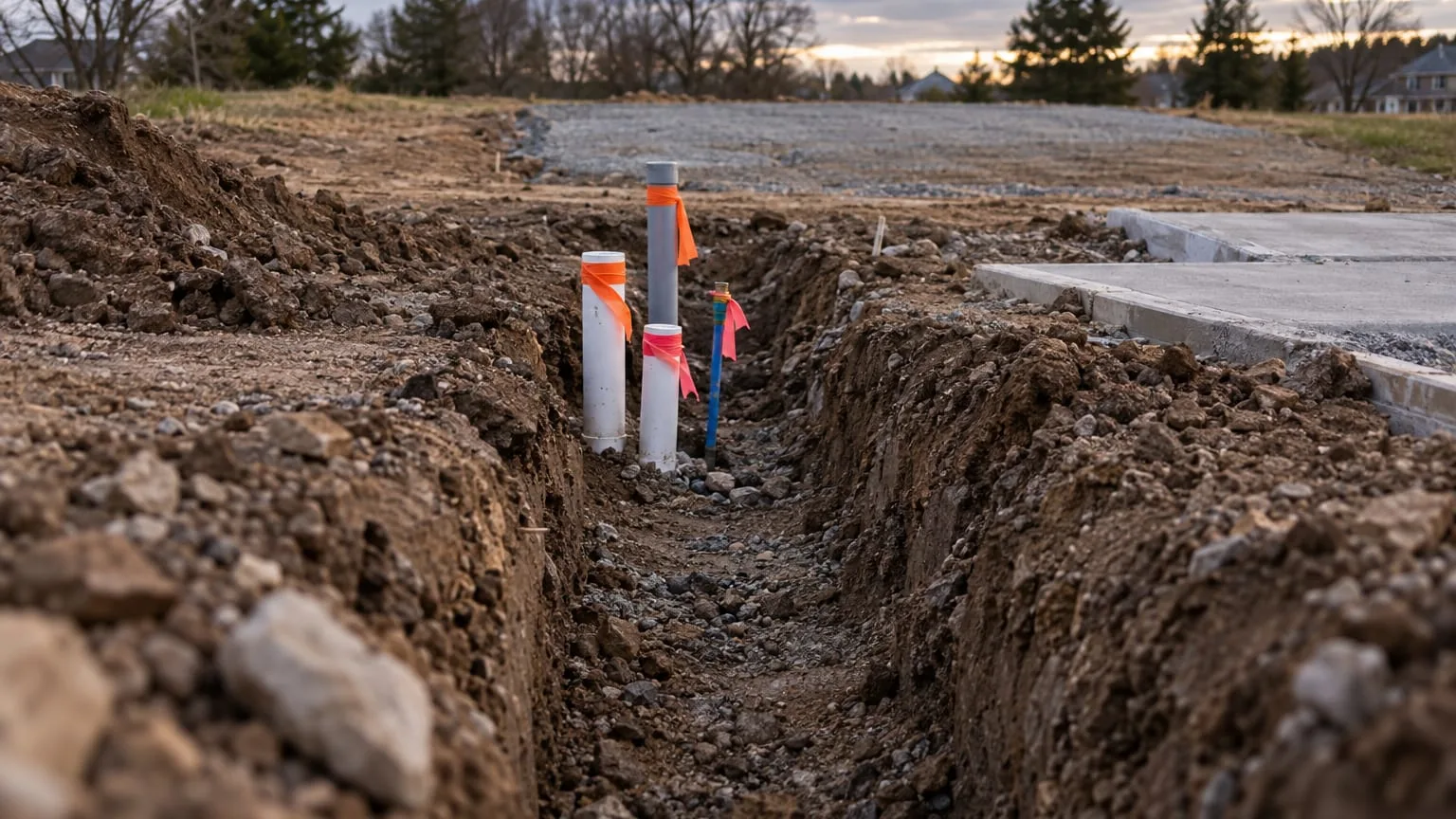
Even before a modular unit is placed, the hidden expenses of preparing raw acreage can mount rapidly. Excavation, foundation laying, and extending municipal water, sewer, and electrical lines to undeveloped lots frequently add tens of thousands of dollars to total project budgets. In high-density or topographically challenging areas, these infrastructure requirements can swiftly turn an ostensibly affordable project into an expensive undertaking.
Because private acquisitions quickly breach the targeted price threshold, the viability of Rhode Island's sub-$300,000 goal depends almost entirely on state-owned and publicly subsidized parcels. Housing planners are increasingly examining surplus public land portfolios that could be conveyed to builders at little or no cost. Without a steady stream of discount or gifted parcels, private developers say building entry-level prefab homes remains economically infeasible.
Compounding the land dilemma is Rhode Island's lack of an in-state modular fabrication plant. Builders currently must source and truck completed modules across state lines from facilities in Pennsylvania and northern New England. Long-haul highway transport and specialized delivery logistics introduce recurring shipping surcharges that further compress developer margins.
Grassroots housing organizations have already stepped into the arena to test modular methods on a smaller scale. Nonprofit developers like South County Habitat for Humanity have launched modular housing builds in municipalities such as South Kingstown to compress construction schedules and trim labor overhead. These pilot developments provide live testing grounds for evaluating how effectively factory construction performs under existing regional zoning and permitting rules.
The focus on modular construction comes as Rhode Island grapples with an acute scarcity of starter homes and workforce housing. Surging mortgage rates and persistent inventory deficits have priced many working families out of conventional homeownership. If the state can streamline the off-site production model, it could establish a repeatable blueprint for middle-income housing across New England.
State policymakers are preparing to host manufacturer pitch days and outline targeted incentive packages designed to attract regional modular fabricators. Construction analysts emphasize that commercial builders will scrutinize whether these incentives come bundled with shovel-ready land. Offering tax credits or equipment subsidies without pre-permitted, utility-connected sites will do little to mitigate the upfront real estate barrier.
The ultimate determinant of the program's success will be the state's capacity to coordinate real estate transfers with infrastructure readiness. Observers note that while factory-built homes offer an indispensable technological tool for lowering structural expenses, housing affordability remains fundamentally tied to the ground beneath them. Whether Rhode Island achieves its sub-$300,000 target will depend on how aggressively public officials can de-risk site development in the months ahead.
Primary source: Google News Rhode Island. Newzly rewrites and structures source reporting for clarity; verify critical details at the original.