Why Manchester City were not awarded a penalty after the ball hit Gyokeres’s hands
The Indian Express looked at a Manchester City–Arsenal handball controversy in which officials did not give City a penalty after the ball struck Viktor Gyokeres’s hands.
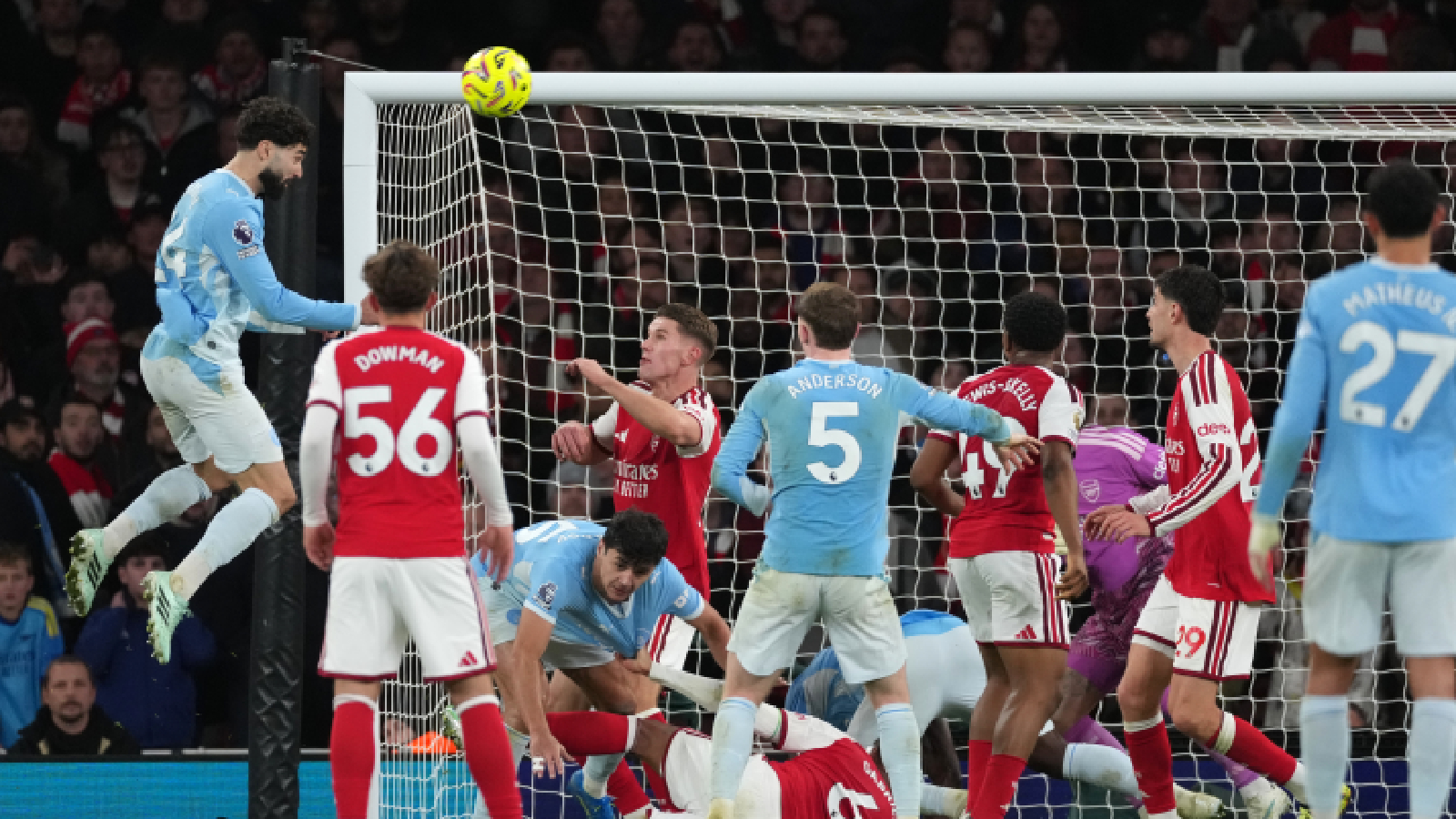
In this piece
Manchester City were denied a penalty after the ball hit Arsenal forward Viktor Gyokeres’s hands, a call The Indian Express examined as a handball controversy…
Manchester City were not awarded a penalty after the ball struck the hands of Arsenal forward Viktor Gyokeres, a decision examined by The Indian Express in a report on the controversy between the two clubs.
The published account, as captured in the story’s headline, turns on a single sequence: the ball hit Gyokeres’s hands and match officials did not give City a spot kick. No minute, scoreline, or referee explanation is included in the material available with that headline, so those details are not stated here.
Gyokeres is identified as the Arsenal player involved. The report frames the moment as a handball controversy rather than as a confirmed foul. That distinction matters, because contact between the ball and a hand or arm is not, by itself, an automatic penalty under the laws of the game.
In ordinary match officiating, referees and video officials weigh whether the player handled the ball deliberately, whether the arm made the body unnaturally bigger, and whether the contact led to an immediate attacking advantage. Those are the standard tests fans and pundits apply to incidents of this kind. How they were applied to Gyokeres on this occasion is the subject of the Express piece; this account does not add a quotation or a video-review finding that the source text supplied here does not contain.
Manchester City and Arsenal meet regularly in English domestic football, and penalty claims between them draw heavy attention because one kick can change the shape of a result. The competition and the date of this particular match are not named in the headline, so the fixture is described only as a City–Arsenal game.
The non-call leaves City without a penalty from the phase of play in question and leaves Arsenal’s defensive moment intact. Neither club’s formal reaction, nor any comment from a manager or a match official, appears in the source material used for this article. No such reaction is reported.
Handball has been a recurring argument in the professional game since lawmakers tightened guidance on arms held away from the body. Attacking teams often see a clear offence. Defending teams often see unavoidable or incidental contact. Without a diagram, a freeze-frame description, or the officials’ wording in the text at hand, the position of Gyokeres’s arms cannot be reconstructed beyond the fact that the ball hit his hands.
For supporters, the stakes are straightforward. A penalty is a high-value chance. A refusal is a decision that cannot be replayed on the pitch once play restarts. Broadcast analysis and, where a competition uses it, later referee review are the usual places such moments are revisited. Any later clarification from officials would be separate from what the Express headline records.
The Indian Express story is the primary explanation of why the penalty was not given. Until that explanation is read in full, the reliable public facts are narrow: the ball struck Viktor Gyokeres’s hands in a Manchester City–Arsenal match, and City were not awarded a penalty.
What follows is more scrutiny than a new decision. The call on the field stands unless competition rules provide some other review, which this report does not describe. The controversy remains a question of how the handball law was read in one moment, not a claim that a different score or a different outcome has been established.
Primary source: The Indian Express. Newzly rewrites and structures source reporting for clarity; verify critical details at the original.