Why the Army's Controlled Lead Explosion in Iowa Has Outraged Public Health Experts
Public health experts say the U.S. Army's detonation of five tons of degraded lead azide in Iowa highlights a maddening failure of storage oversight that scattered toxic heavy metal dust over surrounding communities.
In this piece
The U.S. Army detonated nearly five tons of degraded lead azide at an ammunition plant in Des Moines County, Iowa, after the material became too volatile to…
The U.S. Army's controlled detonation of nearly five tons of degraded lead azide at the Iowa Army Ammunition Plant has triggered widespread alarm among public health experts and local residents. Carried out near Middletown in Des Moines County, the blast was intended to eliminate an imminent explosion hazard from aging munitions components. However, epidemiologists and environmental advocates warn that dispersing airborne lead particles over regional communities trades one acute disaster for long-term toxic contamination.
Military officials stated that routine safety inspections uncovered roughly 9,500 pounds of lead azide stored in 68 drums that had severely deteriorated and crystallized over several decades. In that state, the primary explosive compound became extraordinarily sensitive to friction, heat, and slight movement. Army explosive ordnance disposal specialists concluded that attempting to transport the chemical off-site or chemically neutralize it presented an unacceptably high risk of a spontaneous, catastrophic blast.
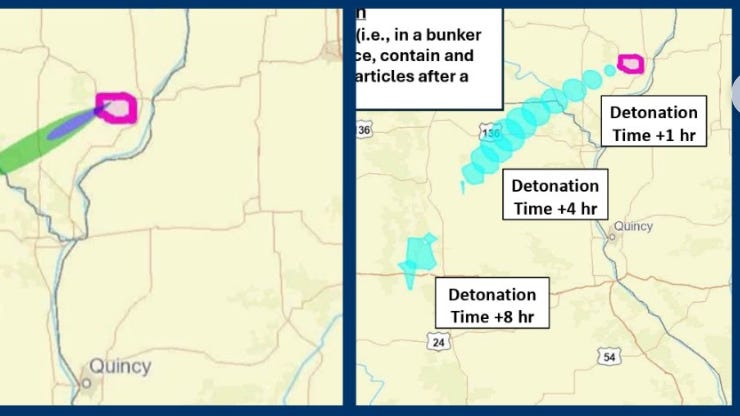
To mitigate the impact of the planned blast, crews positioned the drums inside reinforced, earth-covered concrete magazines encircled by multi-story sand-filled barriers and saturated the site with water. Despite those engineering controls, atmospheric models indicated that fine particulate matter and lead dust could form an airborne plume capable of traveling dozens of miles downwind. The projected trajectory prompted multi-county alerts across southeastern Iowa and into neighboring northeastern Missouri.
In response to the imminent detonation, Iowa Governor Kim Reynolds issued a disaster emergency proclamation covering Des Moines, Lee, and Van Buren counties. The Iowa National Guard deployed personnel to assist emergency managers with traffic management and public warnings. Local authorities advised nearby residents to shelter indoors, seal windows and ventilation intakes, or temporarily evacuate beyond the immediate path of the projected dust cloud.
Public health communicators, including epidemiologists analyzing the incident, have described the situation as deeply infuriating because decades of neglected storage forced an impossible compromise. By allowing hazardous military stockpiles to sit until in-situ detonation became the only feasible operational choice, defense authorities effectively created a false dilemma between an uncontrolled explosion and mass toxic dispersion. Critics point out that this systemic failure shifted the heavy burden of disaster avoidance directly onto ordinary rural communities.
The primary driver of medical outrage is the toxicological nature of lead, an element for which medical authorities recognize no safe exposure threshold in the human body. When inhaled or ingested, lead functions as a persistent neurotoxin that accumulates in bones and tissues, causing permanent neurological harm, behavioral issues, and developmental deficits in infants and young children. Unlike organic pollutants that degrade naturally, elemental lead settles into topsoil, gardens, household dust, and local watersheds where it remains an environmental hazard indefinitely.
Community frustration was further compounded by the abrupt timeline and communication gaps preceding the operation. Families and local civic leaders were given only short notice to evaluate complex toxicological advisories, plan protective measures, and decide whether to vacate their homes. Public health advocates noted that placing the onus on parents to procure specialized air filters, seal living spaces, and keep children off local ground surfaces highlights systemic inequities in environmental protection.
Before the detonation took place, environmental organizations, including the Sierra Club and the Iowa Environmental Council, sought emergency injunctions in federal court to halt the operation. Although a federal judge briefly paused the blast to evaluate potential statutory violations, a higher appeals court quickly dissolved the stay, allowing the military to proceed. Opponents argued that federal authorities had not thoroughly assessed alternative containment technologies that might have captured airborne heavy metals more reliably.
Following the blast, environmental regulators from the Environmental Protection Agency and state health agencies began monitoring air sensors and collecting soil samples across the affected corridor. Health experts are urging regional healthcare providers to prepare for comprehensive baseline blood lead screenings for vulnerable residents living downwind of the plant. Long-term surveillance of residential dust and agricultural plots will be critical to understanding whether hazardous quantities of lead settled over nearby properties.
Moving forward, public health leaders insist that the Iowa explosion must serve as a catalyst for rigorous nationwide reforms in military hazardous waste management. Congressional lawmakers and community advocates are demanding complete audits of aging munitions depots across the country to prevent similar volatile accumulations. Without proactive disposal protocols and timely decommissioning of deteriorating stockpiles, public health specialists warn that other communities remain vulnerable to facing the same unbearable choice.
Primary source: Google News Iowa. Newzly rewrites and structures source reporting for clarity; verify critical details at the original.