World recognition cited for India's Mahabharata, Arthashastra and Rajatarangini manuscripts
Divya Bhaskar Magazine reports that the importance of Indian manuscripts of the Mahabharata, the Arthashastra and the Rajatarangini has been acknowledged internationally, in an item linked to UNESCO's Memory of the World programme.
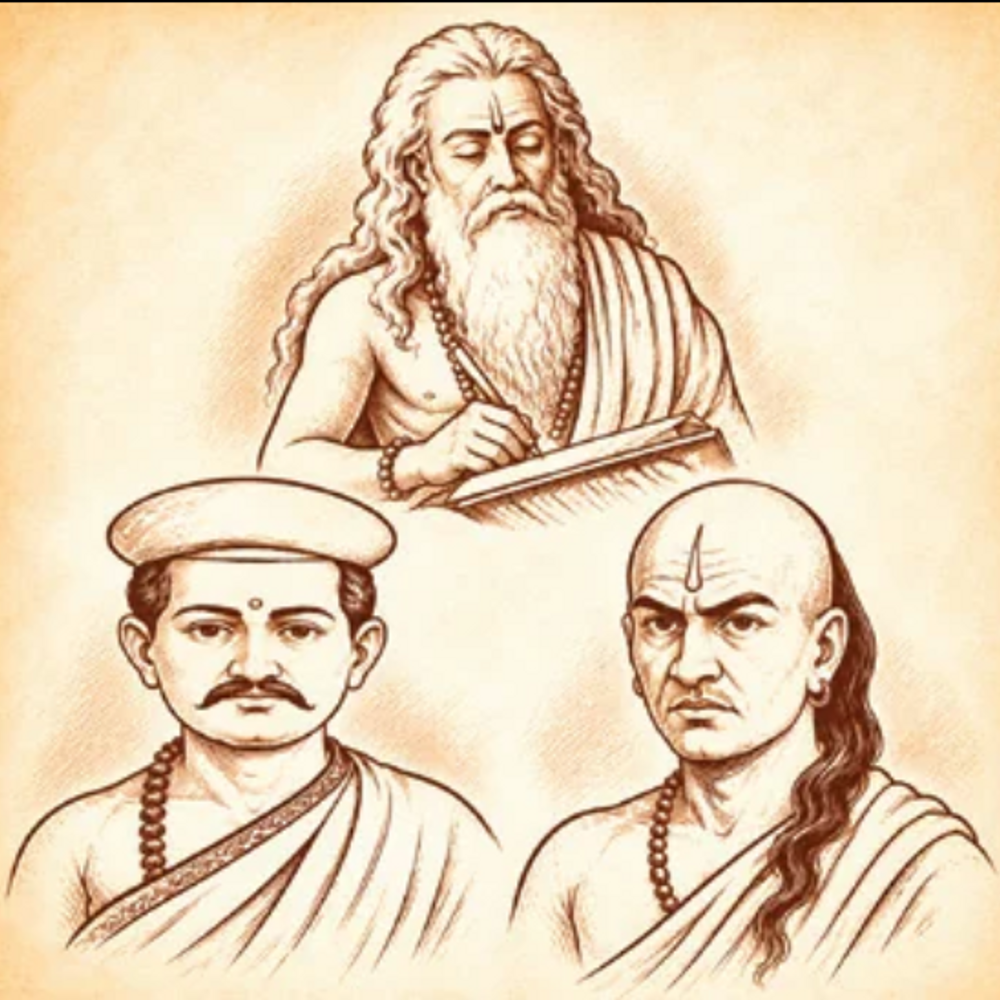
In this piece
A Divya Bhaskar Magazine report says the world has recognized the importance of India's manuscripts of the Mahabharata, the Arthashastra and the Rajatarangini.…
A report in Divya Bhaskar Magazine says the world has recognized the importance of India's manuscripts of the Mahabharata, the Arthashastra and the Rajatarangini. The item, carried in the magazine's Kalash section, places that recognition alongside UNESCO's Memory of the World programme.
The published headline asks why manuscripts matter and points to those three works as examples of Indian documentary heritage whose significance has been acknowledged beyond India. The material supplied for this account consisted of the headline, the magazine credit and the web address. The full article text was not included.
The Mahabharata is the long Sanskrit epic built around the conflict of the Pandavas and the Kauravas, and around layers of narrative, ethics and instruction that later tradition copied and commented on for centuries. What survives for scholars is not a single ancient author's copy but a tradition of handwritten manuscripts in different scripts and recensions.
The Arthashastra is a classical Sanskrit treatise on governance, revenue, diplomacy and the conduct of a ruler, traditionally associated with Kautilya, also known as Chanakya. Manuscripts of the work are the physical bridge between that tradition and the printed editions readers use today.
The Rajatarangini, often rendered as "River of Kings," is Kalhana's Sanskrit chronicle of the rulers of Kashmir, composed in the twelfth century. It is widely treated as an early sustained attempt, in Sanskrit, to set dynasties and events in order and to weigh earlier accounts.
A manuscript is not the same object as a modern reprint. It can preserve a particular version of a text, marginal notes, a commentary, a script and a regional line of transmission that a later edition may smooth away. Palm-leaf, birch-bark and paper copies are also fragile. Humidity, insects, fire and simple neglect can destroy a witness that has no exact duplicate.
UNESCO's Memory of the World programme was established to call attention to documentary heritage of outstanding value and to encourage its preservation and wider access. Notice under that programme is a signal to libraries, archives and governments that a document or collection deserves conservation, description and, where suitable, digitization. This account does not state a year, a vote, a holding institution or a formal inscription list, because those details were not in the source text provided.
For India, the three titles sit where literature, political thought and regional history meet. Wider notice can support conservation, scholarly access and public awareness. It does not by itself protect a folio. That work stays with the libraries, universities, temples and private collections that keep the objects.
Because the magazine body was not available with the headline, this report does not attribute quotations, figures or a timetable. The news claim that can be stated from the source is narrower: that the importance of these Indian manuscripts has been acknowledged on a world stage associated, in the published item, with the Memory of the World programme.
What follows, on the evidence in hand, is attention to how such manuscripts are stored, catalogued and shared. Conservation and careful digitization are the practical steps institutions commonly take after documentary heritage draws wider notice. The Divya Bhaskar piece opens that discussion. It is not a substitute for the records of the collections that hold the manuscripts.
Primary source: Divya Bhaskar Magazine. Newzly rewrites and structures source reporting for clarity; verify critical details at the original.