X 100 Global Governance Takeover Nets $4.85 Million, Reports Say
Attackers reportedly captured two of X 100 Global’s three Senate seats, enabling treasury and liquidity withdrawals. Blockaid tracked approximately $4.85 million in USDT proceeds as the project’s token plunged.
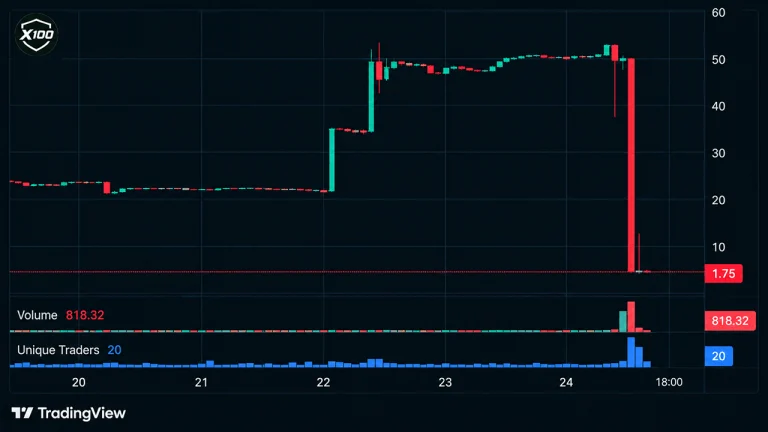
X 100 Global suffered a reported governance takeover on Saturday after attackers captured two of its three Senate seats and used their majority to move treasury assets. Bitcoin.com News reported approximately $4.85 million in USDT proceeds traced by blockchain security firm Blockaid, alongside additional token withdrawals and a decline of more than 96% in the X token.
The Ethereum-based project’s governance mechanism was central to the reported attack. Rather than simply taking tokens from individual wallets, the attackers reportedly obtained enough Senate seats to approve actions involving assets controlled by the project, turning its decision-making process into a route for withdrawals.
According to reporting that reproduced Blockaid’s alert, the first attacker seized two Senate seats and sold 400,000 treasury X tokens into an empty liquidity pool they had created. That sequence placed control over a treasury transaction in the hands of a participant who also controlled the destination pool.
A second attacker subsequently burned Uniswap V3 liquidity positions held by the project’s Freezer contract, according to the same accounts. Blockaid’s initial assessment put realized proceeds at approximately $4.85 million in USDT across two transactions and described the attack as ongoing at the time of its alert.
A subsequent update, carried by TechFlow and other outlets, described a third attacker using the same Senate route to withdraw liquidity corresponding to approximately 550,000 X tokens. The updated accounting distinguished those extracted tokens from the USDT proceeds, rather than treating both figures as a single cash loss.
Approximately 12.2 million X remained in the Freezer contract at the time of that update, according to reports citing Blockaid. That remaining balance was a snapshot during the incident, not confirmation that the tokens were secure or that further withdrawals had been prevented.
For holders, the reported token-price collapse compounded the treasury losses. The withdrawal of trading liquidity also matters separately from the quoted price: a displayed market value does not necessarily indicate how much a holder could receive when trying to sell into a depleted pool.
The incident highlights the importance of who can authorize transactions in a blockchain project, not just where its assets are stored. In this case, the reported capture of two seats in a three-member governing body provided a majority capable of directing treasury activity, making the Senate’s composition a critical security boundary.
The available accounts leave important questions unresolved, including the final loss and whether the governance route was subsequently closed. Blockaid’s figures were preliminary observations during an unfolding attack, so they should not be read as a completed accounting of every asset moved or any eventual recovery.
The next assessment will depend on further transaction tracing and evidence that the project has contained the withdrawal mechanism. Blockaid’s reported warning that the attack remained ongoing frames the immediate outlook: the amount already extracted was significant, but the status of the remaining assets was still unresolved.
Primary source: Bitcoin.com News. Newzly rewrites and structures source reporting for clarity; verify critical details at the original.