A Look Inside Arvind Kejriwal's Former Delhi Residence Amid 'Sheesh Mahal' Dispute
Newly surfaced visual tours and media walk-throughs have detailed the interior of former Delhi Chief Minister Arvind Kejriwal's official residence at 6 Flagstaff Road, reigniting political debate over public expenditure.
In this piece
Visual accounts and media walk-throughs have documented extensive amenities inside former Delhi Chief Minister Arvind Kejriwal's former 6 Flagstaff Road…
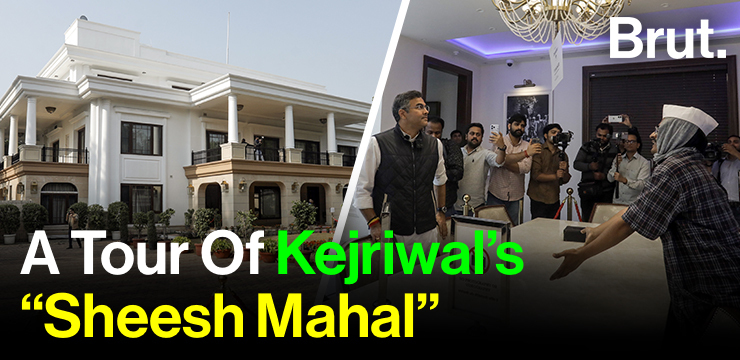
Media walkthroughs and visual features published by outlets including Brut have offered a detailed look inside 6 Flagstaff Road, the former official residence of former Delhi Chief Minister Arvind Kejriwal. The property, labeled "Sheesh Mahal" by political critics, has returned to the center of regional debate following walk-through inspections and recorded footage documenting its renovated interior spaces.
According to reports and documented footage from the premises, the residence spans eight bedrooms and over a dozen bathrooms, accompanied by expansive common areas and specialized hospitality zones. Visual records show modern amenities including motorized curtains, multi-zone automated lighting, multiple high-definition television panels, and extensive centralized air-conditioning systems fitted throughout the living quarters and utility areas.
The visual disclosures also highlight upscale architectural finishes and imported furnishings across the official compound. Media accounts note the installation of imported Vietnamese marble flooring, bespoke wood paneling, premium chandeliers valued in excess of several lakh rupees, and dedicated leisure facilities such as a jacuzzi and sauna.
The bungalow emerged as a major flashpoint between the Bharatiya Janata Party and the Aam Aadmi Party after allegations surfaced regarding the scale and cost of the refurbishment. Political opponents alleged that tens of crores of rupees from public funds were inappropriately directed into converting the official bungalow into a lavish retreat, pointing to audit observations that cited significant budget revisions during the renovation process.
Central to the controversy are findings from public audit reviews, which indicated that expenditures rose substantially from early estimates to exceed thirty-three crore rupees, with critics citing overall refurbishment tallies approaching fifty-eight crore rupees. Opposition figures have repeatedly cited these figures as evidence of fiscal excess, contrasting the luxurious fittings with the founding ethos of modesty championed during the party's formative anti-corruption movement.
In response, the Aam Aadmi Party and representatives close to the former chief minister have vigorously rejected claims of financial wrongdoing, characterizing the attacks as a calculated campaign to discredit political leadership. Party spokespersons have maintained that the vintage structures on the premises had suffered severe structural distress, necessitating comprehensive rebuilding, modern security adaptations, and upgraded meeting facilities suitable for the head of government.
Supporters of the administration have also emphasized that the property belongs to the state rather than any individual, serving as permanent public infrastructure for future officeholders rather than personal property. They argue that renovations complied with sanctioned protocols managed by public works authorities, and that high-profile scrutiny has deliberately sensationalized standard administrative upkeep for electoral mileage.
The dispute carries wider significance for Delhi governance, where overlapping jurisdictional authorities and intense partisan competition frequently center on public accountability, administrative approvals, and institutional oversight. The scrutiny surrounding 6 Flagstaff Road highlights how political messaging in the capital often revolves around symbols of executive lifestyle and the stewardship of taxpayer revenue.
Looking ahead, authorities in Delhi have indicated that the compound may be subject to further formal administrative reviews and potential public access initiatives to promote transparency. As competing factions continue to present contrasting narratives over executive privilege and infrastructure governance, the residence remains a potent symbol in Delhi's ongoing political contest.
Primary source: Google News Delhi. Newzly rewrites and structures source reporting for clarity; verify critical details at the original.