Delhi Startup Offers Advance Funeral Bookings With Packages Up to ₹1.5 Lakh
A Delhi-based startup has introduced end-to-end funeral management packages starting from ₹6,000 to ₹1.5 lakh, allowing citizens to pre-plan their last rites and hire pallbearers amid changing urban family dynamics.
In this piece
A New Delhi enterprise is drawing national attention by offering advance funeral bookings with packages ranging between ₹6,000 and ₹1.5 lakh. The service…
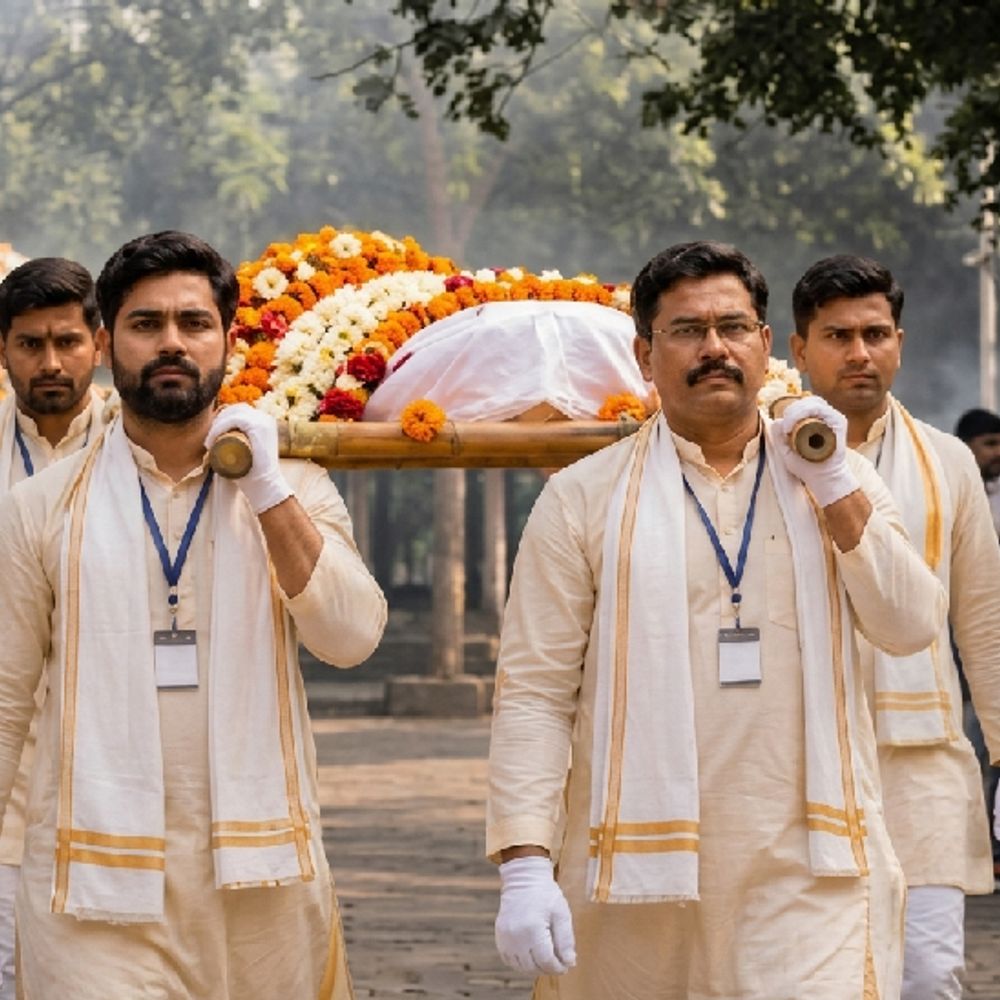
A New Delhi startup has introduced an advance booking service for funeral rites, allowing individuals to organize their own last ceremonies ahead of time. Operated under the brand Moksh Voyage by Namo Gange Wellness Private Limited, the firm offers comprehensive packages ranging from ₹6,000 to ₹1.5 lakh. Crucially, the service includes the provision of four pallbearers to carry the bier for bereaved families who lack sufficient local relatives.
The venture covers every logistical component required for traditional Hindu last rites, relieving families from administrative strain during periods of grief. Its scope spans mortuary cold storage, hearse transportation, crematorium bookings, ritual wood, and puja supplies. In addition, the company arranges Vedic priests to conduct ceremonies, organizes ash collection, and manages sacred immersion at holy riverfronts.
The initiative gained widespread public attention after presenting its model at national promotional platforms, including trade exhibitions in the national capital. While end-of-life planning is an established industry across Western markets, commercialized advance bookings for final rites remain a novel and unconventional proposition in India. Company representatives noted that the concept arose directly from observed difficulties faced by urban households during sudden family tragedies.
Among the service's most discussed offerings is the arrangement of hired pallbearers, known traditionally as the four shoulders that carry the funeral bier. Organizers explained that modern metropolitan demographics frequently leave elderly citizens living alone while their children reside in distant states or abroad. When an untimely demise occurs, elderly spouses or sole survivors often struggle to find neighbours or friends available to perform physical rites on short notice.
Pricing tiers are structured around the scale and geographic requirements of the rituals chosen by clients. Basic packages starting at ₹6,000 cover fundamental hearse transportation, basic wood arrangements, and standard crematorium coordination. Premium tiers climbing toward ₹1.5 lakh incorporate extended multi-day rites, travel logistics for ash immersion at pilgrimage destinations such as Haridwar or Varanasi, and catering for traditional community memorial gatherings.
The advent of professionalized funeral booking highlights accelerating social and demographic transitions across urban India. As nuclear family structures replace traditional joint households, traditional neighbourhood networks that previously managed community ceremonies have significantly thinned. Consequently, basic domestic ceremonies that once relied on spontaneous communal participation are increasingly being outsourced to structured service providers.
Proponents of the service maintain that pre-planning deathcare arrangements provides immense emotional and financial relief to next of kin. By formalizing arrangements in advance, individuals can ensure their preferred rites are followed according to their specific wishes. The model also shields grieving relatives from price gouging or last-minute confusion during emotionally exhausting circumstances.
Despite its practical merits, the business model has provoked mixed reactions and spirited discussion across social and cultural platforms. Critics suggest that commercializing funeral traditions risks eroding solemn familial duties and communal bonding. Conversely, supporters counter that professional logistics address a stark modern reality where many city residents otherwise face bereavement in isolation.
As metropolitan centres continue to expand and demographic mobility separates extended families, demand for specialized end-of-life assistance is projected to grow. The organizers plan to expand their service network across additional Indian tier-one cities in the coming quarters. Observers believe that while open conversations about mortality remain culturally sensitive, practical considerations will steadily normalize formal bereavement planning.
Primary source: Divya Bhaskar National. Newzly rewrites and structures source reporting for clarity; verify critical details at the original.