A Wall Across the Sea: Inside Gujarat's Ambitious Kalpasar Project
Gujarat’s proposed Kalpasar project envisions a massive sea barrier across the Gulf of Khambhat to create a vast freshwater reservoir, promising critical water security and transport links despite formidable engineering challenges.
In this piece
The ambitious Kalpasar project seeks to dam Gujarat’s Gulf of Khambhat to create a giant freshwater reservoir for the arid Saurashtra region. In addition to…
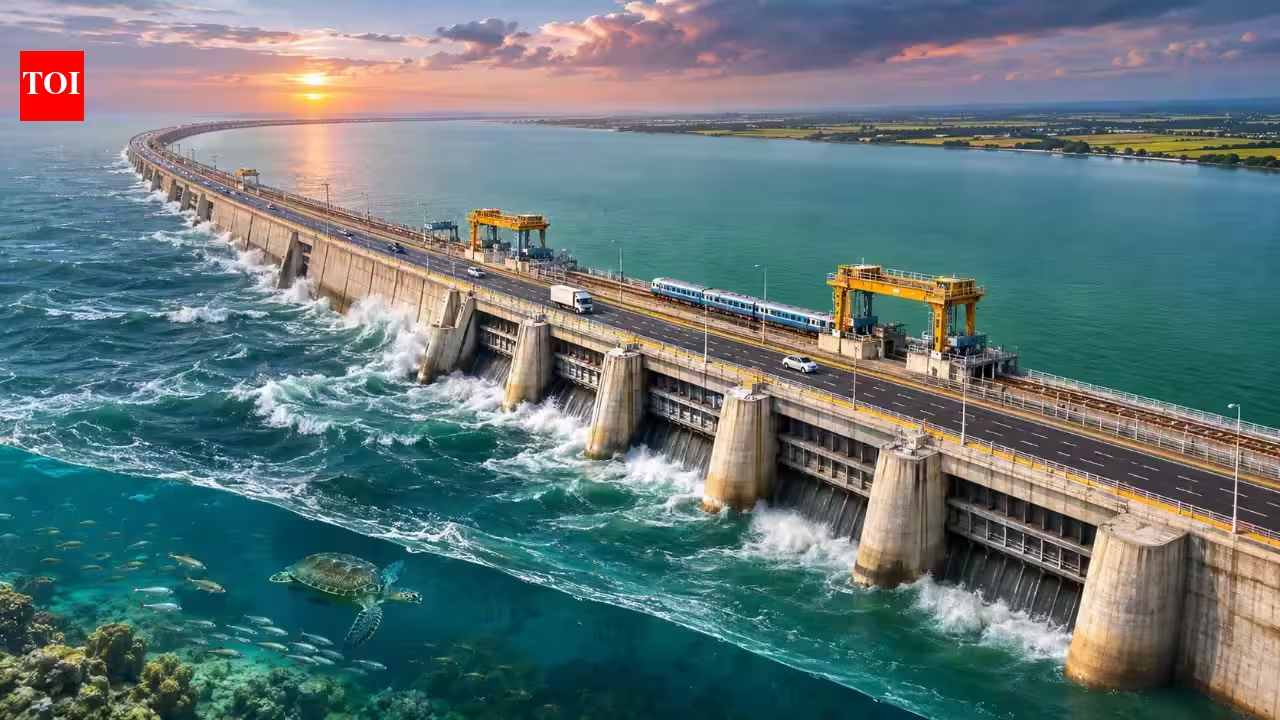
Gujarat is advancing technical assessments and long-term planning for the Kalpasar project, an audacious multi-billion-dollar civil engineering initiative aimed at constructing a massive barrier across the Gulf of Khambhat. Often described as a wall across the sea, the proposed structure would enclose an enormous marine area to establish one of the world's largest man-made coastal freshwater reservoirs. If realized, the venture would dramatically reshape the state's hydrological landscape and regional connectivity.
The foundation of the Kalpasar project rests on building a barrier spanning approximately 60 kilometers, including a direct marine stretch of nearly 27 kilometers across the Gulf of Khambhat. By closing off the bay from the Arabian Sea, planners intend to trap freshwater discharge from major rivers including the Sabarmati, Mahi, and Dhadhar. Over time, the continuous influx of river runoff is designed to displace the saline sea water, transforming the enclosed bay into a freshwater lake covering roughly 1,600 square kilometers.
Water scarcity has historically plagued western Gujarat, particularly the arid Saurashtra and northern mainland belts that endure erratic monsoons and groundwater depletion. The envisioned reservoir aims to store billions of cubic meters of surface runoff that currently discharges unutilized into the sea each monsoon season. Securing this vast volume would provide reliable drinking water supplies to dozens of towns and supply irrigation water to hundreds of thousands of hectares of parched agricultural land.
Beyond water management, the mega-structure is conceived as a vital strategic transport corridor linking Saurashtra directly with southern Gujarat. Plans include running a multi-lane highway and railway line across the crest of the sea barrier, connecting Bhavnagar on the western coast with Bharuch and Surat on the eastern side. This direct crossing would bypass the long detour around the perimeter of the gulf, cutting travel distances by more than 200 kilometers and saving several hours of transit time.
The project blueprint also incorporates potential clean energy generation, taking advantage of the unique geographic and maritime conditions of the gulf. Early assessments have explored integrating hybrid renewable energy installations, including tidal, solar, and wind facilities along the barrier corridor. Proponents emphasize that reliable water and enhanced transport links could also stimulate industrial growth, port logistics, and coastal development along both shores of the gulf.
Despite its transformative potential, the initiative faces staggering technical and geological obstacles. Constructing a heavy barrier across the Gulf of Khambhat requires building upon deep, soft marine clay deposits under conditions of severe tidal fluctuations, which are among the highest in the world. Engineers must design the structure to withstand violent tidal bores, strong marine currents, and seismic activity in an active tectonic zone, prompting authorities to consult international marine engineering specialists, including Dutch dam experts.
Environmental scientists and marine ecologists have raised serious concerns regarding the profound ecological disruption the sea wall could cause. Blocking the natural tidal exchange would permanently alter the delicate estuarine habitat, threatening local fisheries, mangrove belts, and the migratory pathways of marine species. Fishing communities that depend on the gulf's rich tidal waters also worry that turning the saltwater bay into a freshwater reservoir will devastate their traditional livelihoods and coastal landing centers.
The project's financial magnitude presents another formidable barrier to implementation, with cost estimates exceeding 1.3 lakh crore rupees. Sustained capital requirements of this scale necessitate complex financing models, potential government-to-government partnerships, and extensive pre-feasibility validations before groundbreaking can occur. Fiscal watchdogs and industry analysts have repeatedly questioned whether the long gestation period and potential cost escalations justify the capital outlay compared to localized water management solutions.
State authorities continue to treat Kalpasar as a long-range strategic priority, focusing on specialized bathymetric studies, sedimentation modeling, and environmental impact evaluations. While detailed project reports and international consultations remain ongoing, official approval and heavy construction remain dependent on resolving critical environmental clearances and securing central funding. For now, the colossal wall across the sea stands as one of the most ambitious, complex, and closely watched engineering concepts in modern Indian infrastructure.
Primary source: Google News Gujarat. Newzly rewrites and structures source reporting for clarity; verify critical details at the original.