Africa CDC chief warns Ebola outbreak could spread to UK
Jean Kaseya has urged stronger international preparedness and funding as Africa’s Ebola outbreak exceeds 10,000 cases, warning that countries beyond the continent should not assume they are insulated.
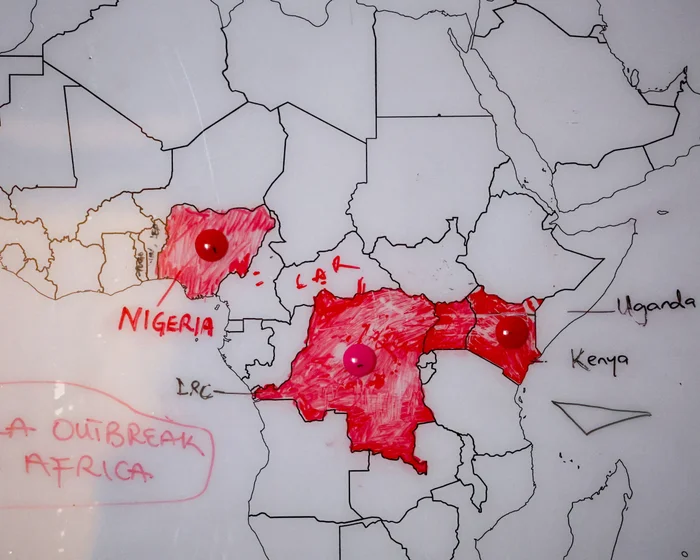
Africa’s expanding Ebola outbreak could reach the UK and other countries, Africa Centres for Disease Control and Prevention director general Jean Kaseya has warned. Speaking to the Guardian, he called for more funding to strengthen preparedness and the capacity to care for patients as reported infections passed 10,000.
The supplied report puts deaths at almost 5,000, underscoring the outbreak’s severe toll. Kaseya invoked the international spread of Covid to argue that governments outside Africa should not assume a health emergency elsewhere will remain distant from their own populations.
The Democratic Republic of the Congo remains the centre of the crisis. In its update dated October 27, the European Centre for Disease Prevention and Control said the country had recorded 10,060 confirmed cases and 4,887 deaths, using figures through October 25, with eight provinces affected.
The ECDC also reported cases in Kenya and Nigeria during October and earlier cases in Uganda, where it said the outbreak had ended. Kenya had recorded nine confirmed infections, including two deaths, while the patient identified in Nigeria had travelled to Uganda and was subsequently medically evacuated to Switzerland.
Kaseya’s warning concerns the possibility of further international spread, rather than evidence that widespread transmission in Britain is inevitable. The ECDC currently assesses the likelihood of infection among people living in the European Union and European Economic Area as very low, while acknowledging uncertainties and promising to review its assessment as information changes.
The comparison with Covid should not be read as suggesting identical transmission patterns. According to the World Health Organization, Ebola spreads through direct contact with infected blood or other body fluids, or contaminated materials, and people do not transmit the disease before symptoms begin.
Those characteristics make protection during patient care and the handling of bodies particularly important. WHO identifies infection-control precautions, laboratory testing, contact tracing and safe burials as central parts of an effective response, alongside community participation and care for people who become ill.
The outbreak is caused by Bundibugyo virus, according to the ECDC. WHO’s Ebola guidance distinguishes this virus from the Ebola virus for which approved vaccines and medicines are available; its guidance says there are no approved vaccines or treatments for Bundibugyo disease, although candidate products are being developed.
That does not mean care offers no benefit. WHO says early intensive supportive treatment, including rehydration and management of symptoms, improves survival, making access to timely diagnosis and properly equipped treatment services an important part of preparedness.
The immediate response remains focused on containing transmission in affected countries while strengthening readiness elsewhere. The ECDC says it has deployed experts to Nigeria and offered support with surveillance, contact tracing and infection prevention; its assessment of the wider threat will be revised as the outbreak evolves.
Primary source: The Guardian World. Newzly rewrites and structures source reporting for clarity; verify critical details at the original.