Amy Poehler Unearths Mystery and Workplace Comedy in Peacock's 'Dig'
Amy Poehler stars as a seasoned excavator in Peacock's comedy-mystery series "Dig," an adaptation of Kate Myers' novel exploring the unglamorous realities and high-stakes drama of archaeological field work.
In this piece
Peacock has debuted "Dig," a 10-episode comedy-mystery series co-created by Michael Schur and starring Amy Poehler as an archaeologist on a dig site in Greece.…
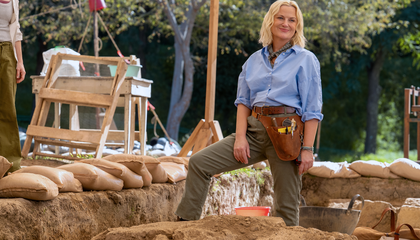
Peacock has officially released all ten episodes of "Dig," a new comedy-mystery television series co-created by Michael Schur and starring Amy Poehler. Poehler portrays Elise, an experienced archaeologist working at an excavation site in Greece who uncovers an extraordinary ancient statue. The discovery quickly alters the routine of the crew, propelling the team into an unfolding academic and international dilemma.
The television series is adapted from author Kate Myers' 2023 novel "Excavations," which drew heavily upon the writer's own background in classical archaeology and anthropology. Myers participated in field digs in Greece, including excavations at Mount Lykaion, channeling those gritty firsthand experiences into her fictional narrative. The adaptation preserves the core setting, focusing on the procedural, sun-drenched atmosphere of Mediterranean fieldwork.
In the series, Poehler's character serves as the chief on-site supervisor managing a diverse crew of excavators, lab conservators, and student assistants. The ensemble features Hugh Laurie as a veteran professor overseeing the academic expedition, alongside cast members Geraldine Viswanathan, Antonia Thomas, and Fina Strazza. Together, the group navigates complex personal rivalries and site hierarchies while managing the day-to-day operations of the trench.
The plot turns sharply when the crew unearths an ancient statue whose unusual features challenge established historical narratives and academic orthodoxy. Rather than bringing immediate professional triumph, the find creates immediate friction among senior scholars and threatens departmental careers. The characters find themselves caught between institutional pressure to commercialize or suppress the finding and their own scientific ethics.
Depictions of archaeological science on screen have traditionally leaned toward swashbuckling adventures or treasure-hunting tropes. In contrast, "Dig" emphasizes the unglamorous, methodical realities of genuine excavation, from endless dirt-sifting and cataloging to the physical toll of field labor. Professional archaeologists reviewing the portrayal note that the production captures the authentic texture of remote research camps, complete with equipment malfunctions and bureaucratic disputes.
Schur and Poehler, who previously collaborated on acclaimed sitcoms like "Parks and Recreation," structure the narrative around familiar workplace dynamics transplanted into an academic setting. The comedy arises from the friction between senior university faculty, aspiring graduate researchers, and the local realities of running an international field school. The show examines how academic institutions frequently rely on undercredited early-career researchers to accomplish the most labor-intensive tasks.
Beyond character comedy, the narrative touches upon real controversies surrounding the preservation and handling of Mediterranean cultural heritage. The illicit trade in antiquities and questions regarding who rightfully owns historical treasures form an essential undercurrent to the storyline. By depicting the vulnerability of archaeological sites to theft and commercial exploitation, the series reflects debates that active field researchers confront across the Mediterranean.
The project represents a notable departure for modern prestige streaming, which has infrequently explored academic archaeology through a comedic mystery format. Scholars and industry observers view the series as an opportunity to spark wider public interest in classical history and the genuine science of excavation. By humanizing the researchers and deconstructing cinematic myths of instantaneous treasure finds, the program bridges academic reality and entertainment.
With all ten episodes now streaming on Peacock, audience reception and critical responses will determine whether the adaptation continues into future seasons or remains a self-contained limited run. While Myers' source material was conceived as a standalone novel, the expansive world of international antiquities offers ample room for further narrative exploration. Television critics and archaeology enthusiasts alike are watching closely to see if the series can sustain its balance of sharp humor and academic authenticity.
Primary source: Smithsonian History. Newzly rewrites and structures source reporting for clarity; verify critical details at the original.