Anchorage Adds MXNB Custody Across Six Blockchains in Bitso Expansion
Anchorage Digital Bank is extending custody for the Mexican peso stablecoin MXNB across six networks as Bitso adds dollar tokens, linking institutional infrastructure on both sides of the U.S.-Mexico payment corridor.
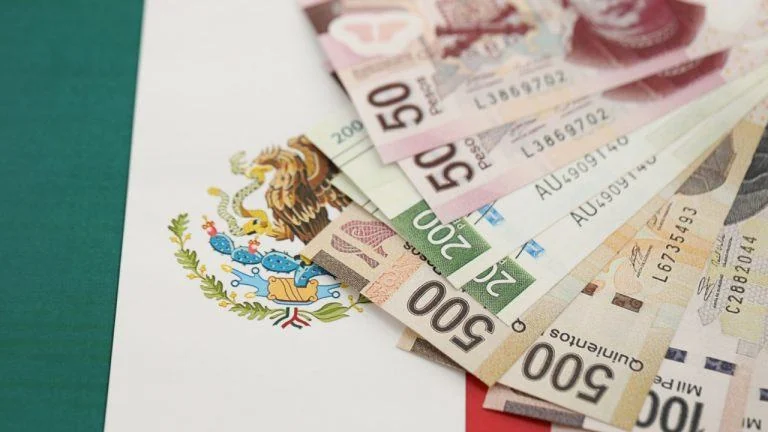
Anchorage Digital Bank has expanded its partnership with Bitso to provide custody for Mexican peso stablecoin MXNB across six blockchains. The arrangement accompanies Bitso’s listing of dollar-denominated USDPT and USAT, connecting custody services for tokens on both sides of the U.S.-Mexico payment corridor, according to Anchorage’s announcement.
The supported MXNB networks are Arbitrum, Base, Ethereum, Polygon, Avalanche and Arc. Anchorage says institutional customers can hold the peso token across those networks through one custody relationship, rather than arranging separate custody coverage for each blockchain.
USDPT and USAT are associated with Western Union and Tether, respectively, and are both issued and custodied by Anchorage Digital Bank. According to the announcement, Mexican Bitso users can trade USDPT directly against pesos, while Western Union agents with Bitso Business accounts can convert it into other supported currencies.
The commercial backdrop is an established cross-border payments business, rather than a new corridor. Anchorage’s announcement says 15% of U.S.-Mexico remittance volume already passes through Bitso’s infrastructure, although that figure should not be read as the share handled by these newly supported stablecoins.
MXNB’s connection to the peso extends beyond its availability on blockchains. Bitso’s Juno documentation identifies the token as pegged one-to-one to Mexico’s currency and names Juno, a Bitso subsidiary, as the company behind its issuance. That makes issuance and redemption important parts of the payment infrastructure alongside custody.
Under the process described in Juno’s documentation, peso deposits through Mexico’s SPEI payment network or Bitso Transfer can trigger MXNB issuance. Redemption reverses that exchange, allowing equivalent peso funds to move to an external bank account through SPEI or to a Bitso peso balance through Bitso Transfer.
Bitso separately says MXNB has reserves covering at least the equivalent value of tokens in circulation. Its support materials describe those reserves as held in Mexican financial institutions and instruments that can be converted into cash quickly. Those statements concern the token’s backing, which is distinct from Anchorage’s role safeguarding customers’ digital assets.
That distinction matters for institutions evaluating the arrangement. Custody addresses how assets are held, while reserve backing and redemption determine how a peso-linked token connects to its underlying currency. Bringing those functions into a payment workflow does not make them interchangeable or eliminate the need to assess each component.
Anchorage’s legal disclosures also draw a boundary between regulated custody and deposit protection. They state that digital assets held in custody are not guaranteed by Anchorage and do not receive Federal Deposit Insurance Corporation or Securities Investor Protection Corporation insurance. The company also warns that its digital asset services should not be understood as risk-free.
Anchorage is positioning the expanded relationship as infrastructure for banks, issuers and payment companies entering the dollar-peso stablecoin market. The next test is whether broader custody coverage and access to both currencies translate into additional payment activity; the announcement does not provide transaction-volume targets for the expanded services.
Primary source: Bitcoin.com News. Newzly rewrites and structures source reporting for clarity; verify critical details at the original.