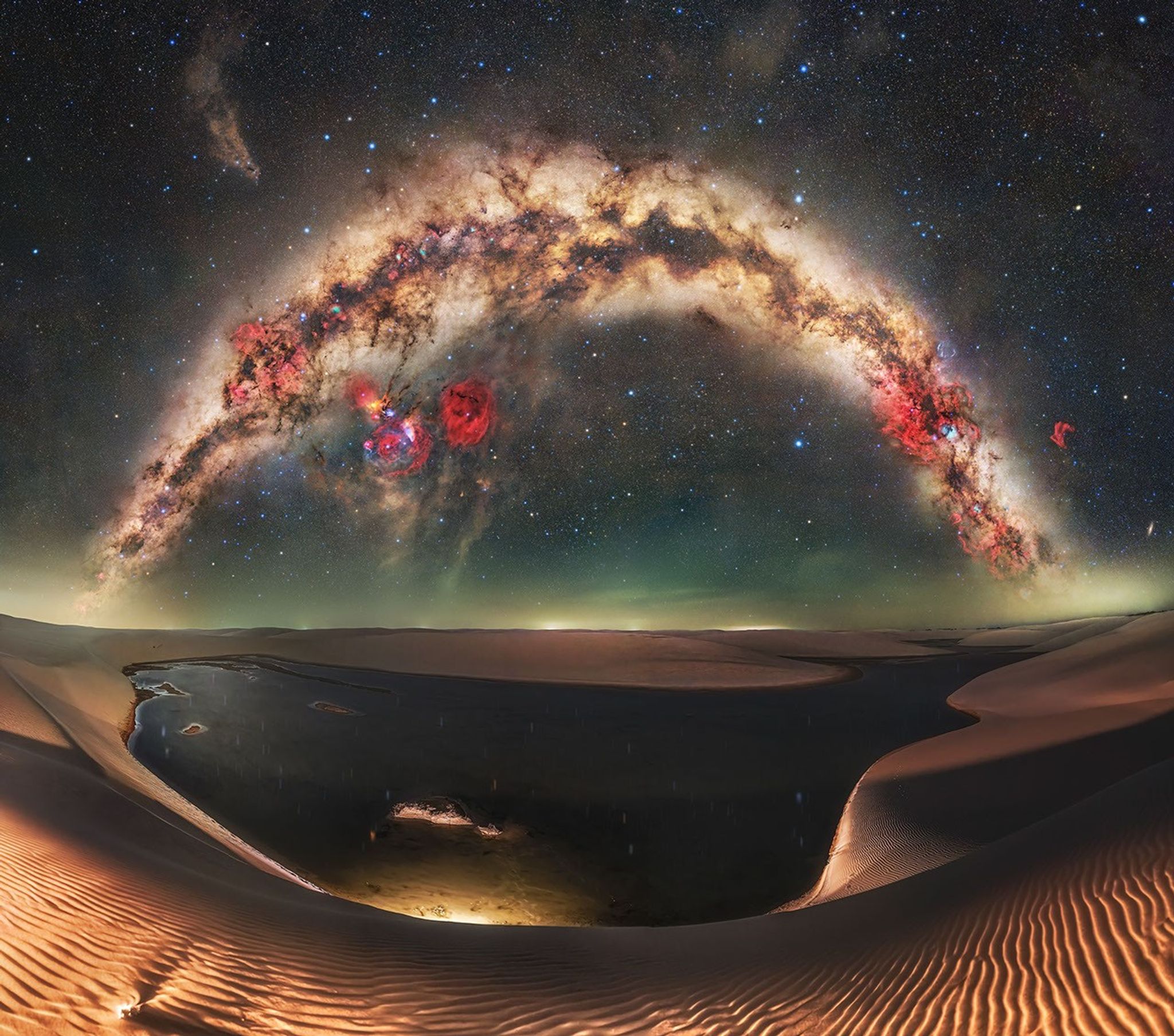
APOD Lists ‘Eye in the Sky: The Milky Way over Lençóis’
A NASA Astronomy Picture of the Day listing pairs the Milky Way with Lençóis, but the supplied excerpt omits the photograph and its accompanying scientific explanation.
In this piece
A NASA Astronomy Picture of the Day entry dated November 26, 2026, carries the title “Eye in the Sky: The Milky Way over Lençóis.” The available excerpt…
A NASA Astronomy Picture of the Day listing dated November 26, 2026, is titled “Eye in the Sky: The Milky Way over Lençóis.” The supplied material identifies the subject through that headline, but does not include the photograph or the astronomer-written explanation that would establish what the image shows.
The excerpt instead contains the program’s standard introduction and website navigation, followed by a truncated opening. That makes this a limited account of a listed astronomy feature, rather than a basis for reporting a new scientific finding, a newly observed event or the circumstances in which a photograph was taken.
Astronomy Picture of the Day, known as APOD, describes its purpose as presenting a different image or photograph of the universe each day. Its introduction says each selection comes with a brief explanation written by a professional astronomer, pairing a visual subject with scientific interpretation for readers exploring astronomy.
In this instance, the headline places the Milky Way over a location named Lençóis and uses the phrase “Eye in the Sky.” Without the accompanying image or caption, however, that phrase cannot reliably be interpreted as a description of a particular shape, photographic composition or astronomical feature visible in the scene.
The location also remains insufficiently specified in the supplied text. Although Lençóis appears in the title, the excerpt gives no fuller geographic identification, observing site or surrounding landscape description, so assigning the photograph to a particular locality would go beyond the available material.
The distinction between a feature’s publication date and the circumstances of its subject is important here. The November 26, 2026, date identifies the APOD entry as supplied; it does not establish when the photograph was captured, and the excerpt provides no separate observation date or account of the conditions at the time.
For readers, the missing explanation is central to understanding the selection rather than merely an additional detail. APOD’s stated format gives an astronomer the role of explaining the featured image, but that interpretation is absent here, leaving no supported basis for identifying individual objects or describing how the view was produced.
The full entry would be needed to move beyond the headline and the program’s general description. Until the photograph and explanatory text are available, the supported account remains narrow: the listing names the Milky Way and Lençóis, while the visual details, photographic attribution and scientific context remain unconfirmed in the supplied excerpt.
Primary source: NASA Breaking News. Newzly rewrites and structures source reporting for clarity; verify critical details at the original.