Scientists Discover Deep-Sea Brine Pools Over a Mile Beneath Red Sea
Scientists exploring more than a mile beneath the Red Sea have discovered rare underwater brine pools teeming with microbial life, providing critical clues about primordial oceans and extraterrestrial habitability.
In this piece
Researchers have found rare underwater lakes more than a mile beneath the surface of the Red Sea. Despite extreme salinity and zero oxygen, these deep-sea brine…
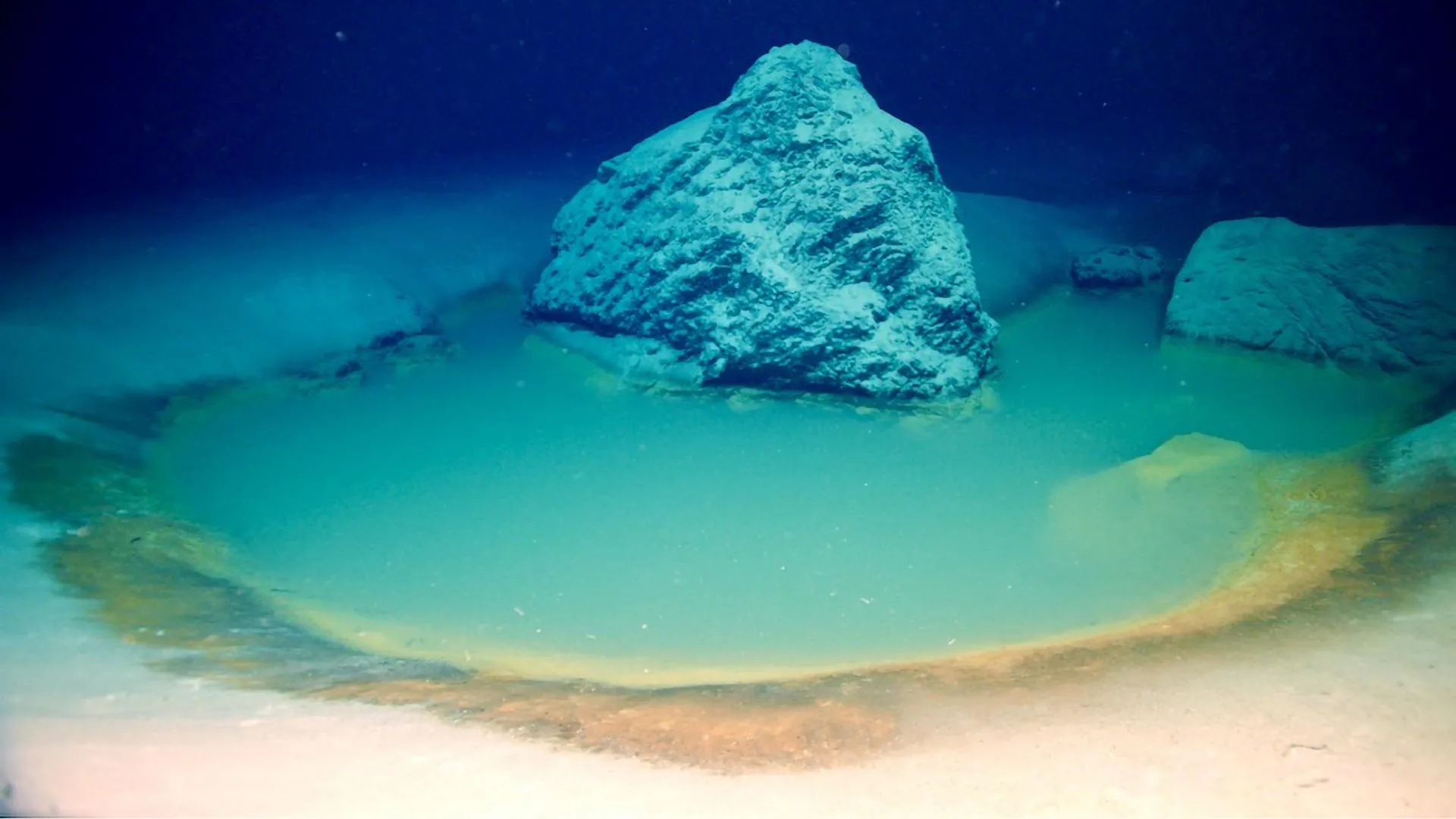
Researchers have identified rare underwater lakes situated more than a mile beneath the surface of the Red Sea, uncovering an extreme marine frontier that could alter scientific perspectives on biology. Known as deep-sea brine pools, these submerged basins represent some of the most inhospitable aquatic settings documented on the planet. The discovery sheds fresh light on isolated oceanic features that remain largely shielded from the broader marine environment.
These deep-water formations are defined by intense chemical conditions, most notably exceptionally high salinity and a total absence of dissolved oxygen. Under normal circumstances, such an environment would prove immediately lethal to higher marine organisms and typical aquatic fauna. However, preliminary evaluations indicate that these hypersaline reservoirs are far from barren, harboring complex communities of specialized microscopic life.
Brine pools typically develop on the ocean floor when buried geological salt deposits dissolve into seawater and settle into natural depressions along the seabed. Because the resulting water becomes extraordinarily dense and heavy, it resists mixing with the overlying ocean layers, creating visible underwater shorelines and surfaces beneath the sea. This physical separation allows the pools to remain functionally isolated systems for immense spans of time.
The survival of microorganisms within such an aggressive, anoxic setting poses profound questions for modern biochemistry and marine ecology. Life within the Red Sea pools must rely on specialized metabolic pathways that operate entirely independent of photosynthesis and standard dissolved oxygen cycles. By examining how these extremophiles flourish, researchers hope to map the biochemical adaptations that enable cells to withstand severe chemical pressures.
Beyond documenting biodiversity in extreme habitats, scientists consider these deep-sea pools to be critical windows into the history of Earth's ancient oceans. Billions of years ago, before photosynthesizing organisms enriched the atmosphere and oceans with oxygen, Earth's marine ecosystems were characterized by anoxic, chemically harsh waters. The microbial colonies inhabiting deep brine pools may therefore preserve survival strategies and ecological dynamics reminiscent of the planet's earliest biosphere.
The discovery also carries meaningful implications for astrobiologists searching for life beyond Earth. Environments featuring extreme salinity, lack of sunlight, and absence of free oxygen mirror the suspected conditions within the subsurface oceans of outer solar system moons, including Jupiter's Europa and Saturn's Enceladus. Observing active biological communities in deep terrestrial brine pools provides researchers with valuable real-world benchmarks for assessing habitability on distant icy worlds.
Conducting scientific research more than a mile below the ocean surface remains an extraordinarily demanding endeavor for marine scientists. At these depths, extreme hydrostatic pressure and total darkness require specialized oceanographic equipment to observe and sample the water column. Researchers face the additional challenge of studying the dense brine without disturbing the delicate chemical layering and biological structures that have evolved undisturbed over centuries.
The Red Sea has long attracted geological and oceanographic interest due to its active tectonic rifting and high geothermal activity. These regional geological factors create fertile ground for the formation of unusual hydrothermal and hypersaline features along its deep seafloor. The latest identification of deep brine pools further solidifies the basin's standing as a premier global laboratory for studying the outer limits of life on Earth.
Further investigations are expected to focus on detailed genomic sequencing and geochemical profiling of the organisms found within the newly discovered pools. Scientists aim to determine the precise genetic lineages of the resident microbes and trace how they diverged from surrounding deep-sea life. As deeper exploration continues, the findings promise to deepen humanity's grasp of how life emerges, adapts, and persists in the most unforgiving corners of the natural world.
Primary source: ScienceDaily. Newzly rewrites and structures source reporting for clarity; verify critical details at the original.