Apple Launches Research App to Study How Users Turn to AI for Health Questions
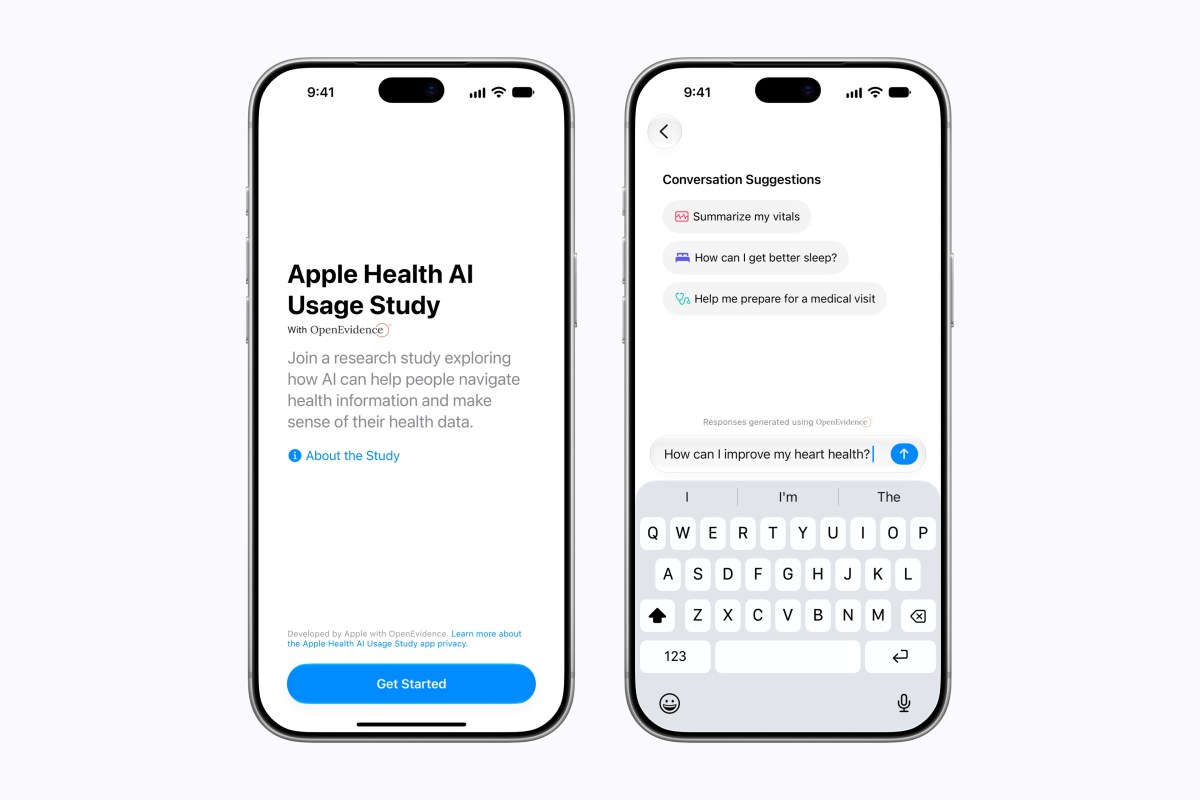
Apple has launched an experimental study app to examine how people interact with artificial intelligence for everyday medical advice, evaluating consumer reliance on conversational tools in healthcare.
In this piece
Apple has rolled out a new study application aimed at understanding how individuals utilize artificial intelligence for routine medical questions. The…
Apple has launched a new research-focused application designed to study how people interact with artificial intelligence when seeking answers to everyday medical and wellness questions. The initiative, reported by TechCrunch, marks an effort by the technology company to observe real-world health inquiries through an experimental study environment.
Under the research program, the application will directly address routine health and medical questions posed by participating users. By deploying an AI-driven tool specifically focused on common inquiries, researchers aim to assess how individuals formulate questions, interpret medical explanations, and apply digital guidance to daily life.
The project builds on Apple's longstanding interest in personal health monitoring and consumer wellness technologies. Over recent years, the company has integrated clinical and health tracking tools into its hardware and software platforms, frequently using structured research studies to explore how consumer devices interface with healthcare needs.
Generative artificial intelligence and conversational assistants have increasingly become informal first stops for individuals seeking clarification on symptoms, treatments, and lifestyle choices. While standard search engines have historically fielded these queries, conversational models offer synthesized explanations, creating new dynamics around user comprehension and trust.
Public details regarding the specific architecture of the application, underlying models, and participant enrollment criteria remain limited in initial reports. It is currently unclear how long the investigation will run, which geographic regions will participate, or whether clinical oversight boards are directly monitoring the responses generated by the system.
The deployment of artificial intelligence in healthcare contexts continues to attract intense scrutiny from medical professionals and regulatory bodies. Industry observers frequently emphasize that automated guidance must balance accessibility with clinical accuracy, avoiding incorrect self-diagnosis or the delay of necessary in-person medical care.
Medical experts have consistently pointed out that while algorithmic models can rapidly synthesize complex literature, nuanced clinical decision-making requires context that conversational systems may overlook. Because of these challenges, researchers are eager to evaluate how everyday participants interpret disclaimers and follow-up guidance delivered through an automated interface.
Participant privacy and sensitive health data handling represent central considerations for any digital health research undertaking. While Apple typically emphasizes on-device processing and strict privacy protocols across its consumer ecosystem, specific data retention and review practices for this experimental health study have not yet been fully detailed.
The findings from this study could provide critical baseline data for how mainstream technology providers design future medical assistance features. By documenting user expectations and potential misunderstandings, technology developers and healthcare researchers can identify where automated answers succeed and where human clinical intervention remains indispensable.
Moving forward, industry analysts and health specialists will be watching for formal disclosures regarding findings, potential platform integrations, and regulatory discussions. As public participation gets underway, the initiative is expected to offer practical insights into whether conversational artificial intelligence can safely serve as a reliable companion for consumer health education.
Primary source: TechCrunch. Newzly rewrites and structures source reporting for clarity; verify critical details at the original.