Australian couple draws online attention after wedding on a cable-car roof
The Indian Express reports that an Australian couple went viral after marrying on the roof of a cable car. Names, location and how the ceremony was arranged were not included in the account available here.
In this piece
An Australian couple has drawn wide online attention after a wedding held on the roof of a cable car, according to The Indian Express. The short report does not…
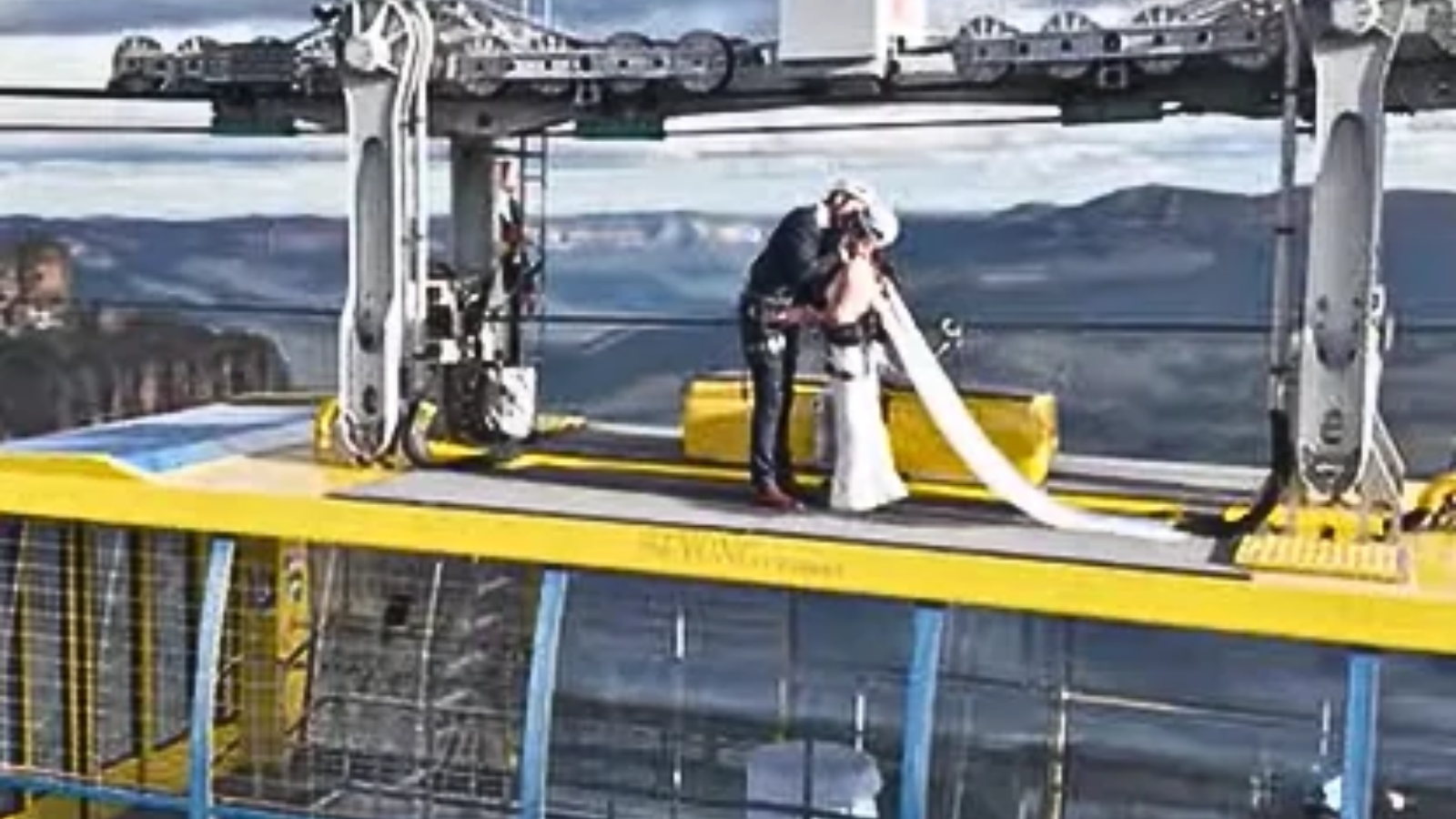
An Australian couple has gone viral after holding a wedding on the roof of a cable car, The Indian Express reported in its trending coverage. The item frames the ceremony as a moment that spread quickly online, turning a private celebration into a widely shared spectacle.
The account available here is brief. It identifies the pair only as an Australian couple and describes the setting as the roof of a cable car. It does not name them, give a date, identify the mountain or city, or describe guests, officiants or how the ride was booked.
Those missing details matter for how the story should be read. A headline can confirm that a ceremony took place in an unusual place and that footage or images circulated, while leaving the logistics unknown. Nothing in the material at hand establishes whether the operator approved the event, how long the couple stayed on the roof, or what safety measures were in place.
Cable cars are built to move people between stations, often over steep ground and in changing weather. A wedding staged on the roof places a formal ritual in a moving, elevated space that most passengers never occupy. That contrast—formal dress and vows against open sky and machinery—is a ready-made visual for short video, which helps explain why the scene traveled beyond the people who were there.
The Indian Express placed the story in a global trending file, a signal that editors treated the reach of the clip as the news, not a local civic dispute or a commercial announcement. Viral, in that usage, means the images moved quickly across feeds. The report as provided does not cite a view count, a platform, or a caption from the couple.
Unconventional weddings have become a familiar genre online: couples seek backdrops that photograph as clearly as the vows themselves. A cable-car roof fits that pattern because the setting is immediately legible even without sound. Viewers can grasp the claim—this happened up there—in a single frame. Whether this couple planned the moment for an audience or simply agreed to share it afterward is not stated.
The attention also raises ordinary questions that the published item does not answer. Operators typically set rules for where passengers may stand, what they may attach to a cabin, and whether a car can be reserved for a private event. Aerial ceremonies can involve permits, insurance and weather calls. Those are standard constraints on this kind of setting; they are not findings about this wedding.
For readers, the episode is a reminder that a few widely forwarded images can outrun the facts around them. The couple’s nationality and the cable-car roof are the details on the record. Broader claims—about who arranged access, who filmed the vows, or how the pair has responded since—would go beyond what The Indian Express item, as supplied, actually shows.
What happens next is likely to stay on the platforms where the footage is already moving. Outlets that pick up the clip may add names or a location if the couple, a venue or a local authority confirms them. Until then, the story remains a short viral report: an Australian wedding on a cable-car roof, notable for where it happened and for how far the pictures traveled, with the rest still unverified.
The Indian Express is the primary source for the account. No additional figures, quotes or place names were available in the material used for this article, and none have been added.
Primary source: The Indian Express. Newzly rewrites and structures source reporting for clarity; verify critical details at the original.