Bangladesh garment workers offered 36% pay rise after weeks of protest
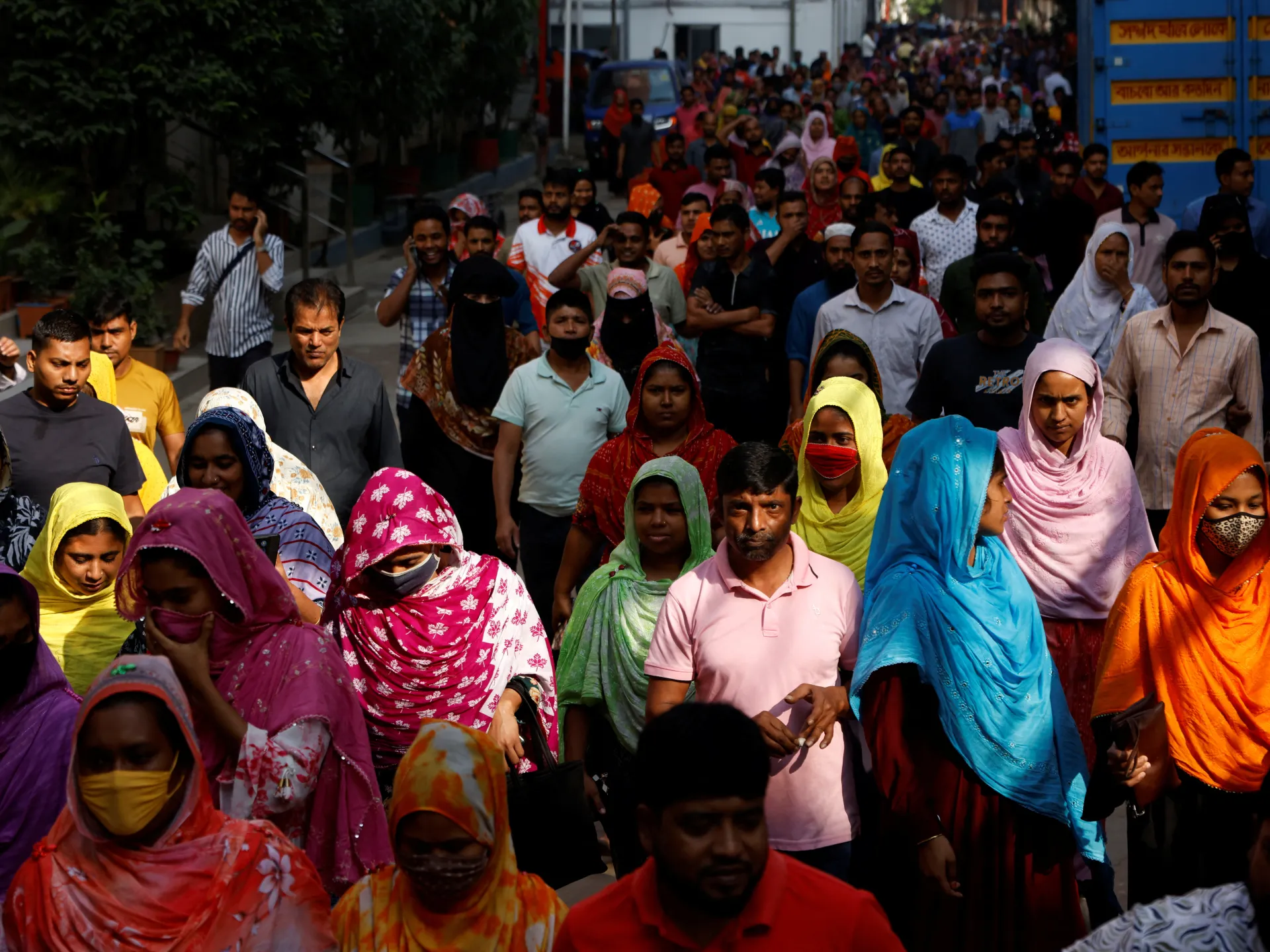
Garment workers in Bangladesh have been offered a 36 percent pay increase after weeks of protest. The stoppages have cost the country hundreds of millions, and workers have not yet accepted the deal.
In this piece
Al Jazeera reports that garment workers in Bangladesh have been offered a 36 percent pay rise after weeks of protest. The disruption has cost the country…
Garment workers in Bangladesh have been offered a 36 percent pay rise after weeks of protest, according to Al Jazeera. The report presents the increase as a result of the unrest while also stating that workers have yet to accept the offer.
That gap between an announced rise and acceptance is the immediate point of the story. A percentage figure leaves open the base wage it would apply to, when it would take effect, and which groups of workers it would cover. Those terms are not laid out in the brief account of the report.
Al Jazeera said the protests have cost Bangladesh hundreds of millions. The summary gives that scale of loss and leaves the currency, the time period, and the mix of lost output, idle capacity, and related costs unspecified.
The protests are described as having run for weeks. The available account centers on the pay offer and the stated economic cost rather than on named factories, particular cities, or figures for arrests or injuries.
Bangladesh’s ready-made garment industry is widely regarded as a pillar of the national economy and a major source of formal employment, including for large numbers of women. Pay disputes in the sector draw notice abroad because factories there supply clothing sold in many countries. That broader role is why an offer of this size is being followed even while the package itself remains thinly described.
A 36 percent increase would be substantial against existing pay. What it would mean in daily life depends on the wage it is calculated from and on the cost of food, rent, and transport. The report does not give a current minimum, a new cash amount, or a measure of living costs, so the practical gain cannot be calculated from this account alone.
Factory owners in such disputes commonly warn that sharp wage rises pass into prices paid by buyers. Workers commonly argue that earnings have trailed household expenses. This report does not carry quotes from employers, officials, or labor representatives, so those familiar positions stay background rather than claims tied to this offer.
The figure of hundreds of millions indicates disruption large enough to register in the national economy. Continued refusal would leave production and shipments unsettled on the terms now described. Acceptance would still leave timing and coverage to be spelled out beyond the summary.
What comes next is whether workers take the 36 percent offer, seek a larger rise, or press for conditions that this account does not list. As published, the report holds both points: a sizable increase has been put forward after weeks of protest, and workers have not yet agreed to it.
Primary source: Al Jazeera. Newzly rewrites and structures source reporting for clarity; verify critical details at the original.