Bhagalpur and Sitamarhi Put Focus on Bihar’s Flood-Poverty Link
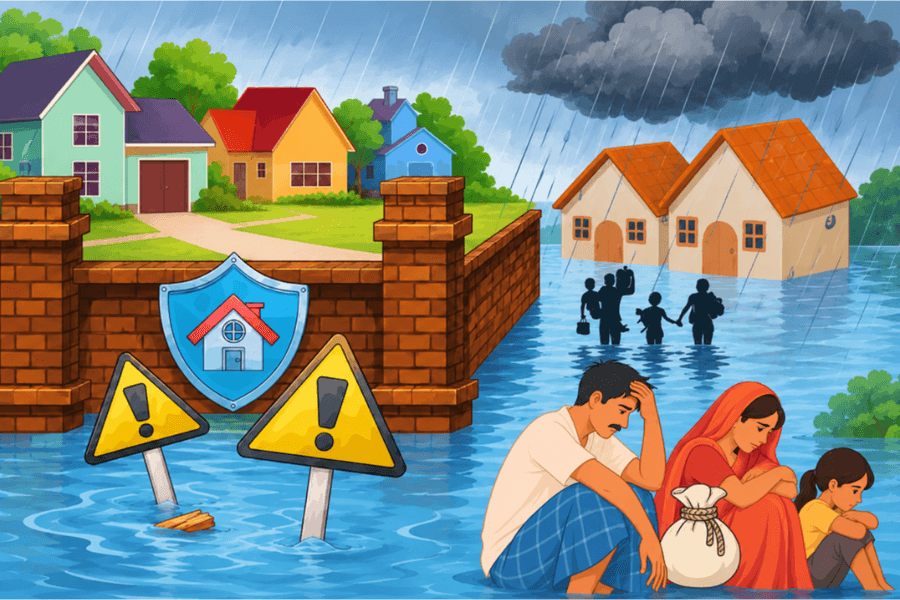
A Policy Edge article examines Bihar’s floods and rural poverty through Bhagalpur and Sitamarhi, raising questions about how disaster exposure intersects with economic vulnerability. The supplied listing does not include the underlying findings.
In this piece
The Policy Edge has highlighted Bhagalpur and Sitamarhi in an article about Bihar’s floods and rural poverty. Only the headline and publication attribution were…
An article published by The Policy Edge puts Bhagalpur and Sitamarhi at the centre of an examination of floods and rural poverty in Bihar. Its headline connects the two issues, but the supplied Google News listing does not contain the reporting or analysis needed to establish the publication’s specific findings.
The article is titled “What Bhagalpur and Sitamarhi Reveal about Bihar Floods and Rural Poverty.” The material provided consists of that headline, a publication attribution and a link, rather than the full text. It therefore supports identifying the subject of the article, but not reporting particular outcomes as established facts.
The pairing of floods and poverty raises an important analytical question: whether exposure to disaster and limited household resources reinforce one another. Examining that question requires distinguishing the immediate consequences of an individual flood from economic conditions that existed beforehand. The headline alone does not establish how the article makes that distinction.
A comparison involving Bhagalpur and Sitamarhi would also need to explain what is being compared. Relevant evidence could concern household circumstances, livelihoods, access to assistance or recovery over time, but none of those details appears in the supplied excerpt. It is not possible to identify which measures, if any, the publication used.
The distinction matters because a discussion of rural poverty is not automatically evidence that flooding caused a particular household’s hardship. Establishing such a relationship would require information about timing, exposure and other influences on economic conditions. Conversely, an account of flood damage would not by itself explain why some households might recover differently from others.
For policy readers, the central issue is how to connect disaster management with longer-term economic security without treating them as interchangeable problems. Immediate assistance and sustained poverty reduction address different needs, even where they overlap. The available material does not disclose whether The Policy Edge advocates particular interventions or evaluates existing programmes.
There are also clear limits on drawing a current news conclusion from the listing. It supplies no publication date, flood dates, damage estimates, household figures or statements from residents or officials. Nothing in the provided text establishes that a new flood emergency has occurred, or that authorities have announced a response linked to the article.
The next step in assessing the argument is to consult the full article and examine its evidence, timeframe and attribution. Until that material is available, the supported takeaway remains narrow: The Policy Edge has framed Bhagalpur and Sitamarhi as a way to explore the relationship between Bihar’s floods and rural poverty, while its detailed conclusions remain unverified here.
Primary source: Google News Bihar. Newzly rewrites and structures source reporting for clarity; verify critical details at the original.