Bihar Opens Nitish Setu Over Ganga, Linking Patna and Vaishali
The 9.76-kilometer Nitish Setu over the Ganga connects Patna and Vaishali, easing chronic congestion on older bridges and slashing travel times across North and South Bihar.
In this piece
Bihar has opened the 9.76-kilometer Nitish Setu across the River Ganga, connecting Patna with Bidupur in Vaishali district. Built at an estimated cost of 4,280…
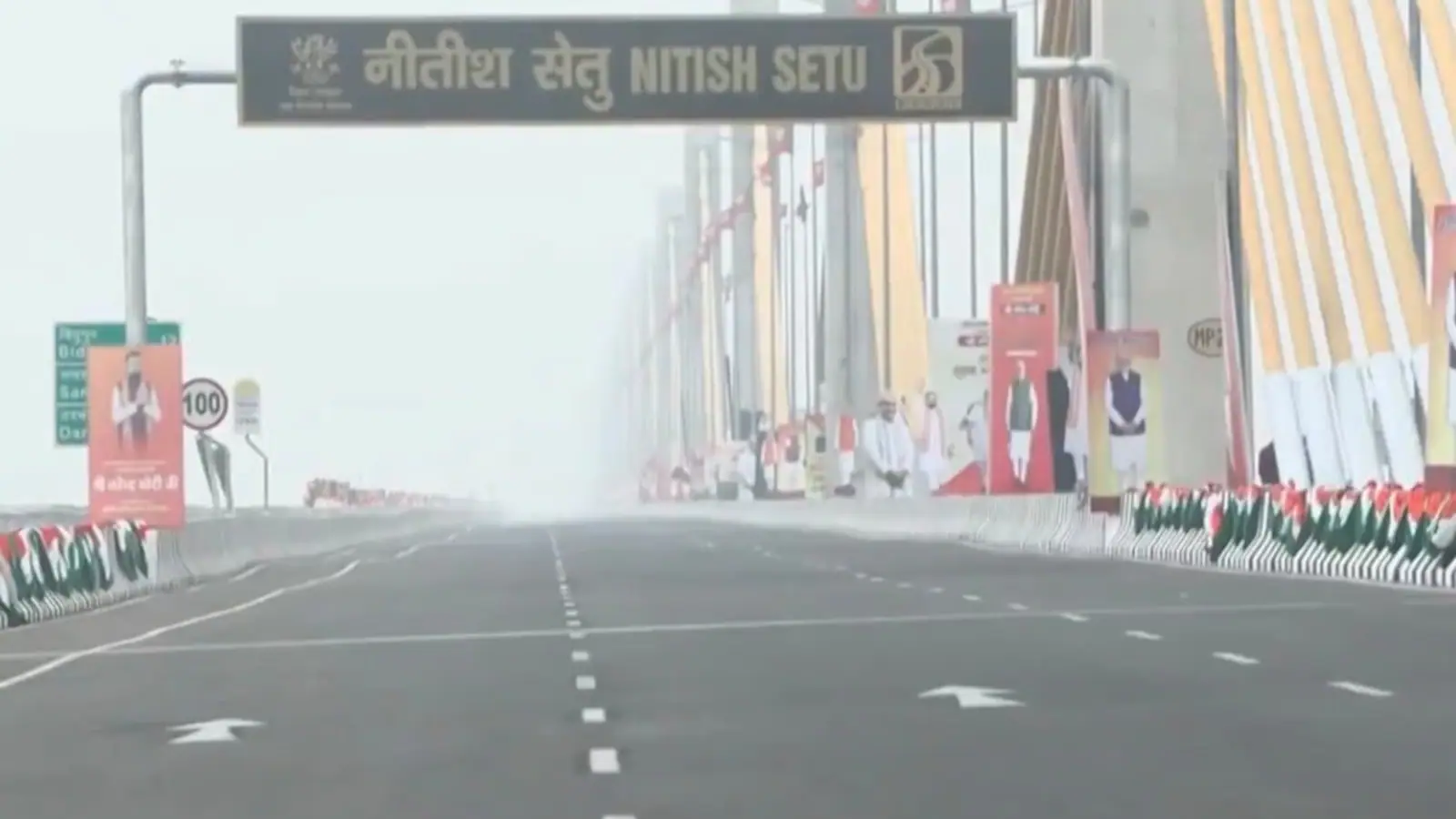
Bihar has inaugurated the Nitish Setu, an expansive six-lane bridge spanning the River Ganga that establishes a critical high-speed transit artery between North and South Bihar. The major infrastructure corridor directly links Kacchi Dargah in Patna district with Bidupur in Vaishali district. Officials expect the crossing to provide immediate relief to motorists who have faced chronic travel delays along the region's existing river links.
Originally sanctioned as the Kacchi Dargah–Bidupur Bridge project, the central river span measures 9.76 kilometers in length, placing it among the longest river bridges in India. The comprehensive corridor extends over approximately 19.76 kilometers when including roughly 10 kilometers of elevated approach roads and interchange systems. Built with an estimated outlay of 4,280 crore rupees, the project represents one of the largest capital investments in the state's transport history.
The structure incorporates an extradosed cable-stayed architectural design built to handle heavy commercial tonnage across its six vehicular lanes alongside dedicated walkways for pedestrians. Engineers designed the superstructure to withstand extreme seismic loads and intense hydrological currents during the annual Ganga monsoon swells. Its wide deck layout facilitates seamless multi-axle freight movement that previously struggled on older narrow spans.
The route begins at National Highway 22 on the eastern periphery of Patna, traverses the Ganga across the river island of Raghopur Diara, and connects directly to National Highway 322 near Bidupur. This alignment effectively creates a bypass around dense municipal areas in Patna and Hajipur, cutting transit times significantly. Travelers moving toward northern centers like Samastipur, Darbhanga, and Sitamarhi now benefit from a streamlined bypass that eliminates hours of urban bottlenecking.
For decades, road connectivity across the river in central Bihar was concentrated on the aging Mahatma Gandhi Setu, which frequently faced severe structural strain, ongoing maintenance closures, and gridlock. Even with recent rehabilitations and the presence of the JP Setu, traffic volumes routinely exceeded capacity during peak freight and festive periods. Nitish Setu provides an alternative heavy-transit conduit that redistributes regional traffic flows and protects inner-city streets from vehicle emissions and congestion.
The opening delivers a transformative breakthrough for the residents of Raghopur Diara, a massive riverine island long isolated from mainland municipal services. The island's agrarian population historically relied on seasonal pontoon crossings and wooden country boats, leaving them cut off whenever water levels rose during the monsoon. With permanent elevated bridge ramps now reaching the island, local residents gain uninterrupted year-round access to healthcare, education, and administrative offices in the state capital.
Beyond easing passenger travel, economic planners anticipate substantial long-term gains for regional trade, agricultural supply chains, and warehousing logistics. Northern Bihar's fertile agrarian districts produce extensive volumes of perishables, vegetables, and maize that require swift market delivery to consumption hubs in Patna and further south. Lower transit durations and reduced logistics overheads are expected to incentivize commercial investment and reduce supply-side waste across the central belt.
The infrastructure initiative was spearheaded under the long-running administration of former Bihar Chief Minister Nitish Kumar, who prioritized river bridges as central pillars of state economic integration. The crossing was named Nitish Setu to honor his leadership in driving modern civil engineering projects and expanding Bihar's highway grid. State officials have hailed the project as a milestone in bridging the geographic divide created by the Ganga.
Looking ahead, authorities are focused on completing surrounding access arteries and secondary interchanges to fully link the corridor with national expressway networks. Transport agencies will monitor operational vehicle densities as long-haul truckers and interstate bus lines progressively reroute over the river. The corridor stands poised to serve as a cornerstone of Bihar's transport landscape, cementing closer economic ties between the northern and southern halves of the state.
Primary source: Google News Bihar. Newzly rewrites and structures source reporting for clarity; verify critical details at the original.