Bitcoin Closes Worst October Since 2014 as ‘Uptober’ Hopes Falter
Bitcoin dropped 7.32 percent in October 2026, marking its weakest monthly performance in twelve years after a massive $6.3 billion Binance hack disrupted markets and dashed seasonal rally expectations.
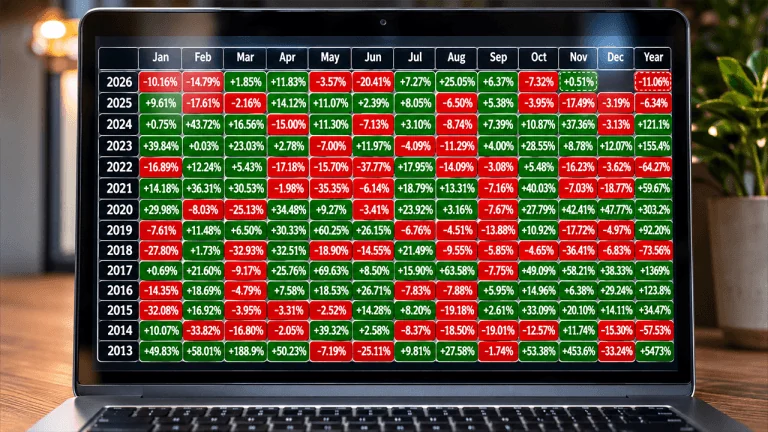
Bitcoin closed October with a 7.32 percent decline against the U.S. dollar, cementing its weakest monthly performance for October since 2014. The sharp downturn abruptly halted the cryptocurrency sector's widely anticipated seasonal rally, leaving digital asset markets facing renewed uncertainty as the monthly candle closed in the red.
Over the final seven days of the month, the benchmark cryptocurrency traded within a volatile range between $76,337 and $81,840, according to pricing data cited by Bitcoin.com News. Market sentiment deteriorated sharply during this period following reports of a staggering $6.3 billion hack involving cryptocurrency exchange Binance, an event that sent immediate shockwaves through the broader digital asset ecosystem.
In digital asset market lore, October has long been celebrated under the 'Uptober' moniker due to its historical tendency to generate strong positive returns for investors. Traders and speculative participants routinely look to the month as an early catalyst for year-end rallies, frequently positioning portfolios to capture historical seasonal tailwinds.
The 7.32 percent drop recorded in October 2026 broke that optimistic pattern decisively, delivering the cryptocurrency's worst performance for the calendar month in twelve years. For an industry that frequently relies on cyclical trends, the steep monthly drawdown underscores the persistent risks of relying on seasonal adages in the face of unforeseen market catalysts.
The revelation of the $6.3 billion security compromise at Binance served as the central catalyst behind the sudden shift in investor posture. Massive exploits involving major digital exchange infrastructure historically trigger immediate risk-off behavior, prompting institutional and retail participants alike to scale back exposure across spot and derivatives markets.
The compressed yet turbulent weekly trading span between $76,337 and $81,840 reflected aggressive tug-of-war dynamics between dip buyers and risk-conscious sellers. Heightened volatility and defensive hedging quickly capped recovery attempts near the upper boundary, preventing the asset from regaining meaningful upward momentum before the monthly close.
Beyond the immediate balance-sheet impact on prices, the setback highlights persistent vulnerabilities surrounding centralized exchange security and counterparty risk. When high-volume trading hubs experience severe breaches, the resulting uncertainty typically tightens market liquidity and forces traders to reassess custody practices across the digital financial landscape.
Market analysts frequently emphasize that while historical tendencies like 'Uptober' offer popular reference points, they offer no guarantee against severe headline-driven disruptions. The sharp contrast between seasonal optimism and October's ultimate outcome serves as a stark reminder of the market's sensitivity to sudden, external operational shocks.
Moving into November, market participants will closely monitor whether Bitcoin can establish durable support above its recent low of $76,337 or whether lingering fallout from the Binance hack will prompt further declines. The speed and transparency of ongoing recovery efforts from the breach are expected to play a decisive role in determining near-term market stability.
Primary source: Bitcoin.com News. Newzly rewrites and structures source reporting for clarity; verify critical details at the original.