BJP and Shiromani Akali Dal Reunite to Form Seat-Sharing Alliance in Punjab
The Bharatiya Janata Party and Shiromani Akali Dal have officially renewed their alliance ahead of the Punjab Assembly elections, ending a six-year rift triggered by contentious agricultural laws.
In this piece
The Bharatiya Janata Party and Shiromani Akali Dal have revived their historic alliance for the upcoming Punjab Assembly elections, agreeing to contest all 117…
The Bharatiya Janata Party and the Shiromani Akali Dal have officially renewed their alliance ahead of the upcoming Punjab Assembly elections, marking the end of a six-year estrangement between the long-time regional partners. The two parties announced that they will contest all 117 assembly constituencies jointly in a bid to unseat the incumbent administration and rebuild their traditional political footing in the border state.
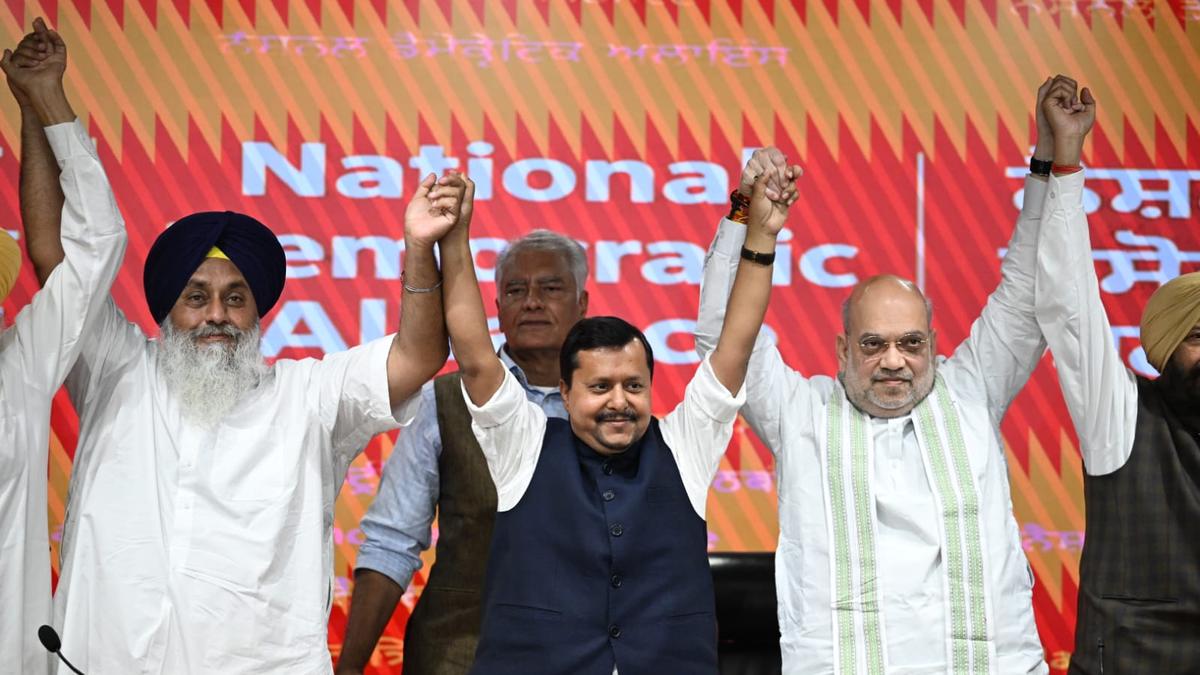
Announcing the reunification at a joint press conference in New Delhi, Union Home Minister Amit Shah made clear that the Shiromani Akali Dal would assume the position of senior partner in the coalition. When asked about leadership responsibilities, Shah stated that the elder partner would lead the government, indicating that the chief ministerial candidate will come from the Akali Dal ranks.
Shiromani Akali Dal chief Sukhbir Singh Badal joined central leaders from the Bharatiya Janata Party to formalize the seat-sharing framework and cement the pact. Notably absent from the high-profile announcement was former Punjab Chief Minister Captain Amarinder Singh, who had reportedly advocated strongly behind the scenes for the revival of the alliance following his own entry into the national party.
The political rapprochement ends a split that originated in 2020 amid widespread farmer agitations across northern India. At that time, the Shiromani Akali Dal walked out of the National Democratic Alliance after nearly a quarter-century of collaboration, protesting three controversial agricultural reform laws enacted by the central government.
Although the central government subsequently repealed the farm legislation following protracted demonstrations on the borders of Delhi, the rupture left both parties navigating recent state and national elections independently. In the 2022 assembly elections, both suffered severe setbacks as the Aam Aadmi Party swept to power with an overwhelming majority, capitalizing on voter disillusionment with traditional coalitions.
During the joint briefing, coalition leaders framed the revived alliance as essential for fostering communal harmony, social stability, and economic revival in Punjab. Shah underscored that the partnership between the two parties historically served as a bridge between rural Sikh communities and urban Hindu electorates, arguing that joint governance would tackle pressing challenges including economic stagnation, border security, and substance abuse.
Political analysts note that the renewed partnership alters the electoral landscape of Punjab from a fragmented multiparty contest back toward traditional coalition dynamics. By combining the Akali Dal's rural cadre network with the national party's urban base, the alliance hopes to consolidate opposition votes and counter both the ruling state government and the Congress party.
The two parties are expected to finalize detailed constituency allocations and establish joint campaign coordination committees across all districts in the coming weeks. Party strategists from both sides will now work to reconcile local cadre rivalries that developed during their six years of separate contesting, as leadership prepares to unveil a unified campaign manifesto.
While the formal announcement restores one of northern India's oldest political alliances, the coalition faces the immediate challenge of regaining trust among rural agricultural voters who remain sensitive to central policies. The coming months of campaigning will determine whether this reconstituted alliance can effectively persuade the electorate and regain power in Punjab.
Primary source: Google News India. Newzly rewrites and structures source reporting for clarity; verify critical details at the original.