BJP brands Rahul Gandhi, Congress opponents of women’s reservation
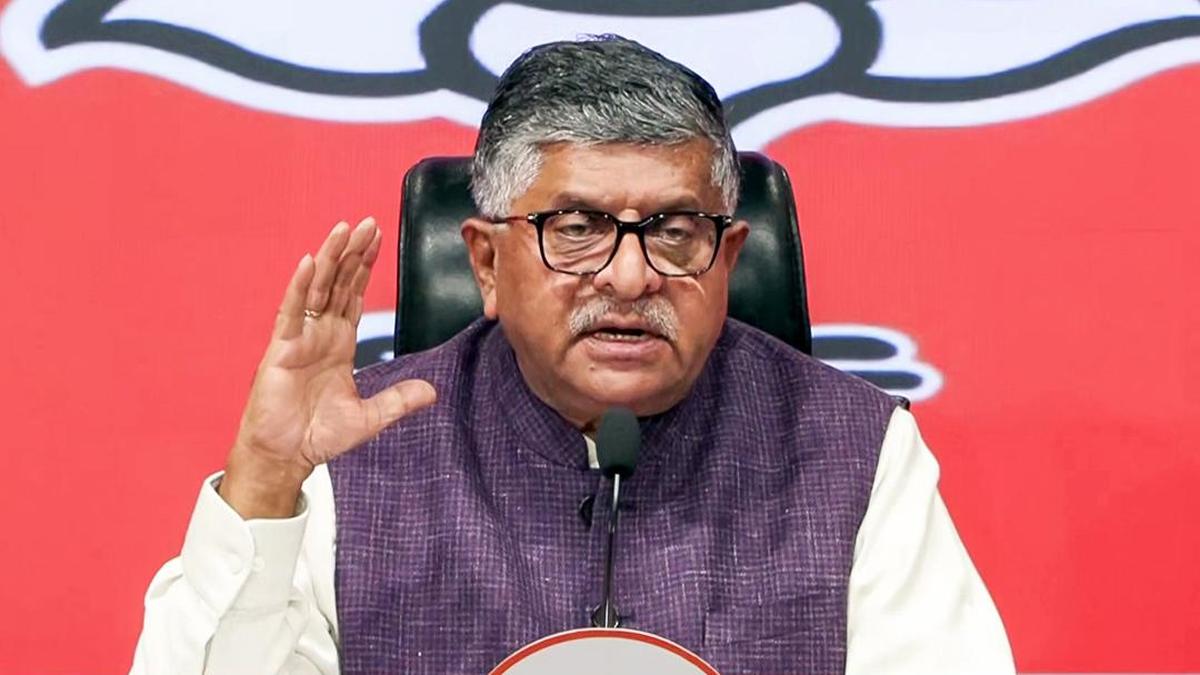
BJP MP Ravi Shankar Prasad accused Rahul Gandhi of seeking the prime minister’s post while consciously opposing women’s reservation, and said he expects the bill to pass with other parties’ support.
In this piece
The Hindu reported that BJP MP Ravi Shankar Prasad described Rahul Gandhi as desperate to become prime minister and a conscious opponent of women’s reservation.…
The Bharatiya Janata Party has labeled Rahul Gandhi and the Congress opponents of women over the Women’s Reservation Bill, according to The Hindu. BJP MP Ravi Shankar Prasad described Gandhi as desperate to become prime minister and as a conscious opponent of women’s reservation. He also said he is confident the bill will be passed because other parties support it.
The Hindu’s account centers on that political characterization. The “anti-women” label is attached to both Gandhi and the Congress in connection with the bill. The newspaper presents the charge as the BJP’s framing of the opposition’s stance.
As summarized in the report, Prasad joins two claims: that Gandhi is intent on the prime minister’s office, and that he knowingly stands against reservation for women. The item does not set out a longer speech, a venue, or a point-by-point reply from Congress. Any response from Gandhi or the Congress is not part of the material available here.
Women’s reservation — the proposal to set aside a share of elected seats for women — has been a recurring question in Indian parliamentary politics. Parties have long argued over timing, the share of seats, and how such a change should be carried out. Those arguments are the backdrop to Prasad’s comments, which The Hindu ties to the bill and to Congress.
The exchange matters because a measure of this kind would change who sits in law-making bodies if it is enacted, and because each side is competing to define the other’s record. By calling Gandhi a conscious opponent, Prasad casts the dispute as one of intent. Readers have only his characterization, as reported, on which to judge that claim.
His confidence that the bill will pass rests, in the report, on support from other parties. That formulation treats passage as likely and treats wider backing as the reason it can succeed. The Hindu item does not name the parties he counts as supportive, and it does not give a timetable.
The “anti-women” phrasing is a sharp political label. It personalizes a structural debate by fixing it on one opposition leader and his party. It should be read as an allegation from a BJP MP, reported by The Hindu, rather than as an agreed description of Congress policy.
The source material is brief. It does not include the full text of Prasad’s remarks, a Congress reply, the bill’s clause-by-clause status, or the next parliamentary step. Those gaps limit how far the exchange can be reconstructed beyond the newspaper’s summary.
What happens next, on the terms Prasad set out, is whether other parties’ support is enough to carry the bill. He expects passage if that support holds. The outcome still depends on how the legislature acts.
Until a fuller account or an on-record response is available, the story remains a partisan charge about women’s reservation and about Rahul Gandhi’s ambitions, as The Hindu reported it. The bill’s fate will be settled by votes and procedure, not by the label alone.
Primary source: The Hindu. Newzly rewrites and structures source reporting for clarity; verify critical details at the original.