world·Delhi·New Delhi District
Rahul Gandhi Opposes Delimitation Plan as DMK Backs Centre
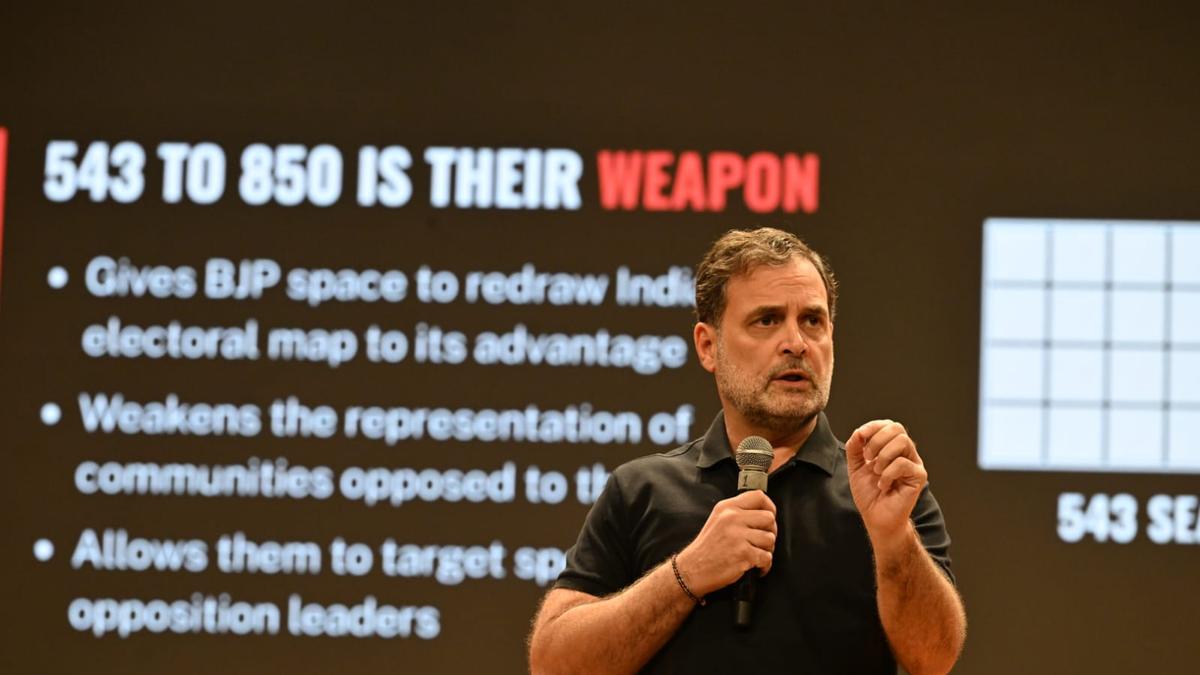
Rahul Gandhi termed a proposed 850-seat delimitation plan a 'murder of democracy,' while the DMK announced support for the Centre's proposal during special parliamentary discussions.
In this piece
Congress leader Rahul Gandhi criticized the Centre's proposed Delimitation Bill, alleging it aims to alter India's democratic foundations. The remarks come as…
Congress leader Rahul Gandhi sharply criticized the central government over a proposed Delimitation Bill, characterizing a reported legislative target of 850 seats as the "murder of democracy," according to coverage by The Hindu. The remarks came as political parties convened to address the Centre's legislative plans during special parliamentary deliberations in New Delhi.
According to The Hindu, Gandhi alleged that the move to introduce the bill represents a strategic effort by the ruling Bharatiya Janata Party to alter the foundational principles of the nation. The Congress leader warned that restructuring parliamentary representation on such a scale poses fundamental challenges to India's established federal framework.
At the same time, the proceedings revealed notable strategic divisions within the broader opposition, with the Dravida Munnetra Kazhagam announcing its support for the central government's proposal, The Hindu reported. The Tamil Nadu-based party's endorsement marked a major shift in parliamentary alignments, highlighting how regional priorities can diverge from national coalition strategies on matters of constitutional governance.
The proposed figure of 850 seats points toward a substantial expansion of the Lok Sabha, the lower house of India's Parliament, designed to adjust constituency boundaries in accordance with modern demographic realities. Proponents of the measure maintain that expanding seat counts is essential to ensuring fair and proportional representation for expanding voter populations across different parts of the country.
Advocates within the central government and allied parties argue that legislative seat allocations must eventually reflect demographic growth to maintain parity in the value of each citizen's vote. Under this viewpoint, a comprehensive delimitation process modernizes electoral administration and provides elected representatives with manageable constituency sizes to better serve their constituents.
Conversely, political opponents and regional commentators have raised significant concerns regarding the balance of federal power between northern and southern states. Critics, including Gandhi and other opposition figures, express apprehension that population-weighted redistricting could inadvertently penalize states that achieved greater success in population stabilization policies over past decades.
The DMK's declared backing of the Centre's proposal introduces a pivotal element into the debate, underscoring the nuanced considerations that regional parties face when evaluating federal reforms. While the wider INDIA bloc has sought to maintain common legislative positions, individual state-level mandates and party platforms continue to produce varied responses to structural parliamentary reforms.
As parliamentary sessions continue, attention remains focused on the draft mechanisms that will guide the delimitation commission's eventual implementation timeline and seat distribution criteria. Lawmakers and legal observers are scrutinizing the statutory details to understand how constitutional protections and regional equity will be balanced within the proposed framework.
The political outlook suggests sustained debate between the ruling coalition and opposition parties as the legislation progresses through further legislative scrutiny. Observers note that reaching broad institutional consensus will be crucial for the government as it navigates complex negotiations over federalism, electoral representation, and national unity.
Primary source: The Hindu. Newzly rewrites and structures source reporting for clarity; verify critical details at the original.