Brazil's Famed Spix's Macaw Revival Stalls in Controversy
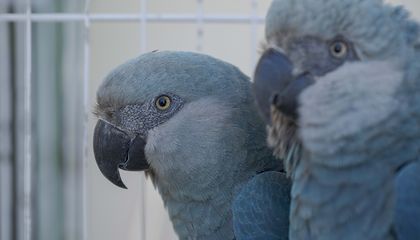
An ambitious multi-million-dollar effort to reintroduce Brazil's famous Spix's macaw to the wild has fallen into controversy, stalling the revival of the bird that inspired the animated film 'Rio.'
In this piece
More than three decades after disappearing from South American skies, Brazil's Spix's macaw has faced a troubled reintroduction effort. What began as a historic…
An ambitious international campaign to resurrect Brazil's iconic Spix's macaw in the wild has descended into confusion and controversy, jeopardizing one of the world's most high-profile wildlife recovery projects. More than three decades after disappearing from South American skies, the rare blue parrot—famed globally as the inspiration for the animated film "Rio"—is once again mired in crisis amid deep institutional fractures and unexpected setbacks.
The Spix's macaw, native to the semi-arid Caatinga scrublands of northeastern Brazil, was driven to the edge of oblivion through decades of intense deforestation and aggressive poaching for the international exotic pet trade. By 2000, wildlife researchers confirmed that the species was officially extinct in the wild after the last known solitary male vanished from its historical range in Bahia.
For over two decades, the critically endangered species existed solely in captivity, kept alive through specialized breeding programs managed by private collectors, zoos, and avicultural facilities around the world. Scientists and aviculturists worked meticulously to reconstruct a viable genetic pool from fewer than one hundred captive individuals, laying the foundation for an eventual repatriation to the Brazilian wild.
That long-cherished dream gained momentum through a partnership between Brazilian conservation authorities and international breeding groups, primarily the Germany-based Association for the Conservation of Threatened Parrots. Together, they coordinated the complex logistical operation of flying dozens of captive-bred macaws back to Brazil, housing them in a dedicated release and research center designed to acclimate them to their ancestral habitat.
Initial release efforts generated global excitement and marked several historic milestones, as the vivid blue birds adapted to the harsh dry-forest canopy and successfully integrated with local flora. The initiative achieved what appeared to be a crowning success when paired macaws produced wild-born chicks, signaling that captive-bred birds could survive and reproduce outside human enclosures.
However, the initial triumph soon gave way to bitter discord, as disagreements mounted over administrative transparency, scientific data sharing, and decision-making authority. Tensions between international breeders and Brazilian conservation regulators escalated into public disputes, severely straining the coalition required to sustain such an intricate, long-term conservation blueprint.
The organizational conflict was further exacerbated by critical veterinary challenges, including the detection of contagious circovirus, the pathogen responsible for avian beak and feather disease. The risk of disease transmission raised alarming biosecurity questions, threatening to derail releases and endangering both the fragile macaw flock and neighboring endemic bird species.
The turbulence surrounding the Spix's macaw underscores the intricate challenges facing modern de-extinction and captive-release initiatives across the globe. Conservationists point out that biological breakthroughs alone cannot guarantee success without robust regulatory oversight, transparent management, and steadfast international diplomacy among stakeholders.
With official partnerships fractured and ongoing releases paused, the immediate trajectory of the species' return to Brazilian skies remains fraught with uncertainty. Conservation observers warn that resolving diplomatic standoffs and establishing rigorous sanitary oversight will be imperative before the charismatic blue macaw can truly reclaim a secure foothold in the wild.
Primary source: Smithsonian Magazine. Newzly rewrites and structures source reporting for clarity; verify critical details at the original.