world·Tamil Nadu·Madurai District
'Brought Disgrace to Tamil Nadu': Stalin Slams State Government Over Supreme Court's Karthigai Deepam Rebuke
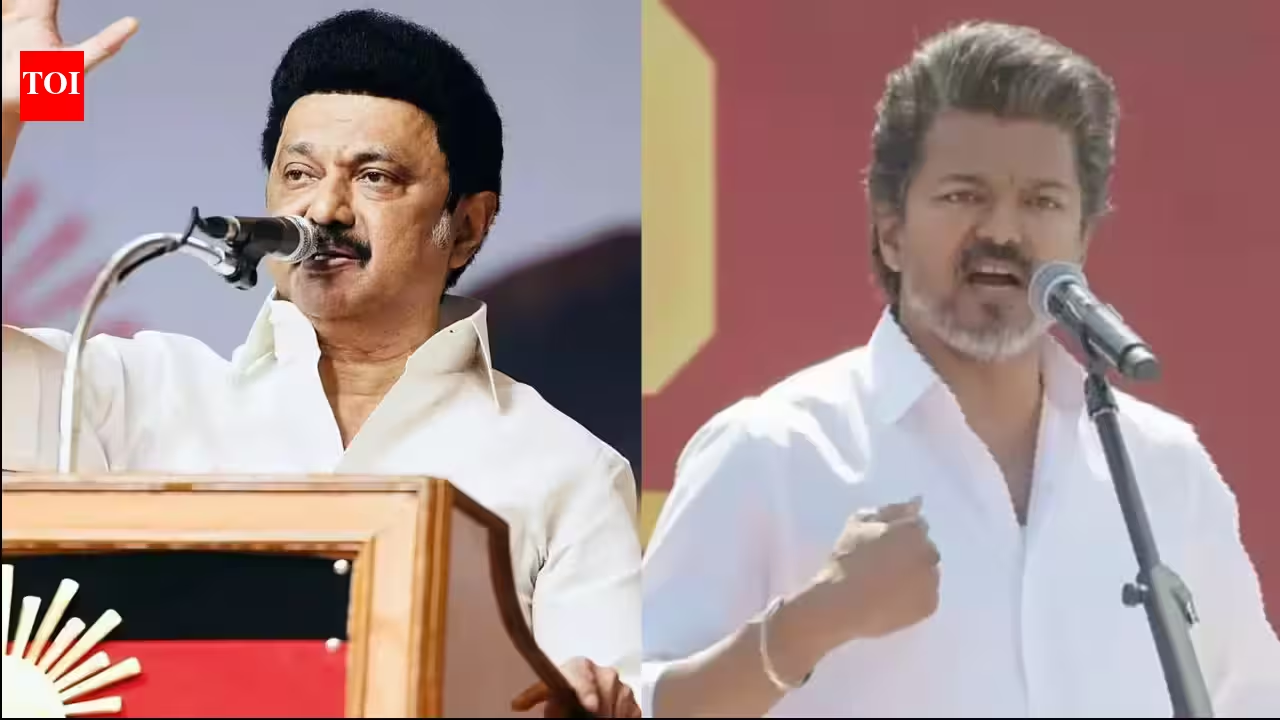
DMK chief M.K. Stalin criticized the Tamil Nadu government after the Supreme Court issued contempt notices and ordered central forces to secure Thiruparankundram hill over the Karthigai Deepam lighting dispute.
In this piece
DMK leader M.K. Stalin has accused the Tamil Nadu government of bringing disgrace to the state following the Supreme Court's reprimand over the Karthigai Deepam…
Dravida Munnetra Kazhagam chief M.K. Stalin launched a blistering political attack on Tamil Nadu's ruling administration, asserting that the government has brought disgrace to the state following sharp rebukes and sweeping directives from the Supreme Court. The top court intervened over administrative failures surrounding the lighting of the sacred Karthigai Deepam lamp atop Thiruparankundram hill in Madurai. Stalin accused the leadership of demonstrating gross legal and administrative incompetence in managing the sensitive dispute.
The controversy escalated dramatically after the apex court pulled up state authorities for failing to comply with its interim order permitting the ceremonial flame to be lit at a disputed stone pillar higher up the hill. Observing prima facie contempt of court, the bench issued formal show-cause notices to top officials, including the Chief Secretary and the Director General of Police. The court also took the extraordinary step of superseding the temple's Board of Trustees and appointing former judges to oversee administration.
In a move that further rattled the state administration, the Supreme Court directed the Central Reserve Police Force to assume charge of security on Thiruparankundram hill. The judges expressed profound dissatisfaction with local law enforcement, remarking that executive officials appeared to have acted under political influence rather than fulfilling their legal duties. The bench emphasized that judicial directions cannot be willfully ignored under the pretext of local administrative convenience.
Seizing on the judicial backlash, Stalin contended that the administration led by Chief Minister C. Joseph Vijay failed to mount a robust legal defense, effectively compromising Tamil Nadu's administrative autonomy. He argued that allowing central paramilitary forces into a prominent state shrine sets a troubling precedent that weakens state rights. According to the opposition leader, the government’s missteps have directly invited federal encroachment into temple governance.
At the center of the dispute is the annual lighting of the Karthigai Deepam, traditionally carried out at the Uchi Pillaiyar Deepa Mandapam on the hill. A legal petition had sought permission to illuminate the flame at an ancient stone pillar, known as the Deepathoon, situated further up the hill in close proximity to an existing dargah. The proposal sparked deep local contention regarding longstanding religious customs and communal sensitivity.
Despite the Supreme Court’s interim clearance for lighting the lamp at the elevated site, local authorities chose not to carry out the order during the festival, citing customary practices and board deliberations. That defiance triggered immediate legal challenges from the petitioners, who alleged willful disobedience by state functionaries. The ensuing hearing prompted the Supreme Court’s stern reprimand against the executive machinery.
The episode has rapidly evolved from a localized ritual contention into a high-stakes political battle in Tamil Nadu. With temple administration and religious governance serving as highly sensitive issues in regional politics, the Supreme Court's intervention has handed the opposition significant ammunition. Stalin and his party colleagues maintain that the current dispensation has demonstrated an inability to safeguard both communal harmony and institutional dignity.
Legal observers note that the appointment of an external judicial committee and central security deployment represent a severe institutional setback for the state’s Hindu Religious and Charitable Endowments administration. Such measures are rarely invoked unless the judiciary concludes that local administrative mechanisms have collapsed. The rulings have placed the state’s executive leadership under intense public and legal scrutiny.
The state government must now respond to the Supreme Court's contempt notices and coordinate with the newly appointed judicial panel to restore orderly administration at the shrine. Senior officials are expected to submit detailed explanations outlining why the interim directions were not executed. Meanwhile, political debate over the Thiruparankundram controversy is set to intensify across Tamil Nadu.
Primary source: Google News Tamil Nadu. Newzly rewrites and structures source reporting for clarity; verify critical details at the original.