Burnham says climate consensus ‘gone’ as he pledges renewed UK leadership
Andy Burnham told the COP31 summit in Turkey that Britain would strengthen its climate leadership, announcing a security envoy and backing an initiative to attract private clean-energy investment.
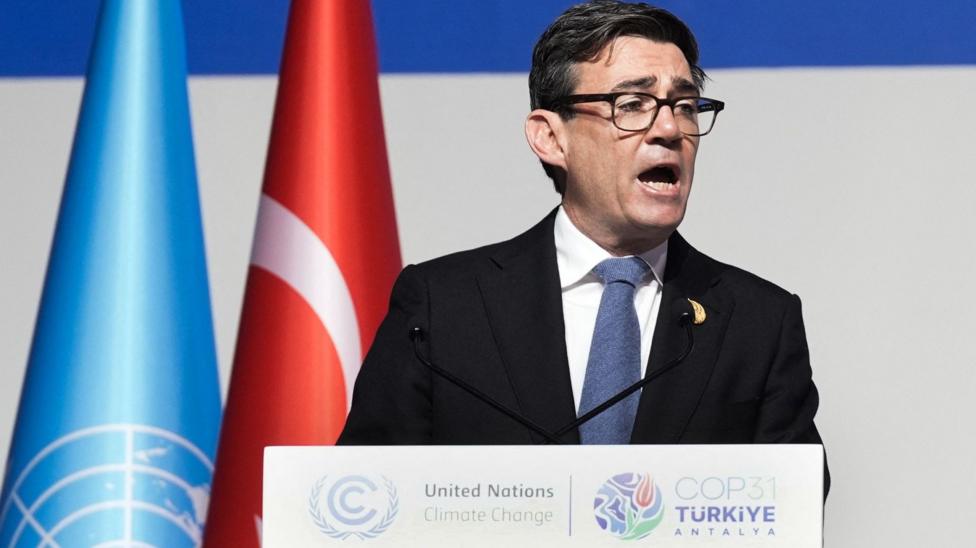
ANTALYA, Turkey — British Prime Minister Andy Burnham warned that the international consensus on climate action had fractured as he addressed the COP31 United Nations summit on November 12. He pledged renewed British leadership, presenting climate change as a security challenge as well as an environmental and economic threat.
“The consensus we once enjoyed on science and climate has gone,” Burnham told delegates, according to the government’s published transcript. He argued that worsening climate impacts and instability in international energy markets made action more urgent, rather than grounds for retreat.
Burnham announced the appointment of Dame Madeleine Alessandri as Britain’s first special representative for climate security. The appointment places climate-related risks explicitly within the government’s security agenda, reflecting his warning that environmental disruption is already affecting lives and livelihoods.
He also announced British support for the Amplify programme, which aims to attract £5 billion in new private investment for clean-energy projects worldwide. That figure is a fundraising ambition, not an announcement that the money has already been secured or that Britain will provide the entire sum.
Alongside those announcements, Burnham reaffirmed Britain’s commitment to reaching net-zero emissions by 2050, Sky News reported. He supported the summit’s emphasis on electrification, arguing that shifting energy use towards electricity could reduce exposure to international fossil-fuel shocks while supporting jobs and lowering household bills.
The speech came during the leaders’ segment of COP31, which the UN climate secretariat says runs in Antalya from November 9 to 20. The conference brings together governments, negotiators and observers to advance collective climate action, with implementation and the global energy transition among its central themes.
The distinction between political promises and delivery is particularly important at these negotiations. The UN climate secretariat describes the conference as a forum for advancing solutions that connect emissions reductions with economic growth, affordable energy, food security and public safety, rather than an event capable of resolving climate change on its own.
Burnham’s message also faced scrutiny from environmental campaigners. The Associated Press reported that Greenpeace UK questioned the gap between his government’s policies and the urgency expressed in his address, underscoring that diplomatic leadership will also be judged against decisions taken at home.
Looking beyond Antalya, Burnham said Britain would put climate resilience on the agenda when it assumes the G20 presidency next year. Debt, development and insurance would be priorities, connecting the climate debate with the financial pressures faced by countries trying to protect their populations and economies.
The immediate test is how those commitments translate into investment and diplomatic follow-through. Negotiations in Antalya are scheduled to continue until November 20, while the financing initiative and Britain’s forthcoming G20 agenda provide further opportunities to assess the leadership Burnham promised.
Primary source: BBC Science. Newzly rewrites and structures source reporting for clarity; verify critical details at the original.