Byron Donalds Backs Government Bitcoin Holdings and Questions Federal Oversight
Florida Rep. Byron Donalds advocated for government bitcoin holdings, rejected a Federal Reserve digital currency, and weighed in on his gubernatorial bid against David Jolly in an interview with Bitcoin.com News.
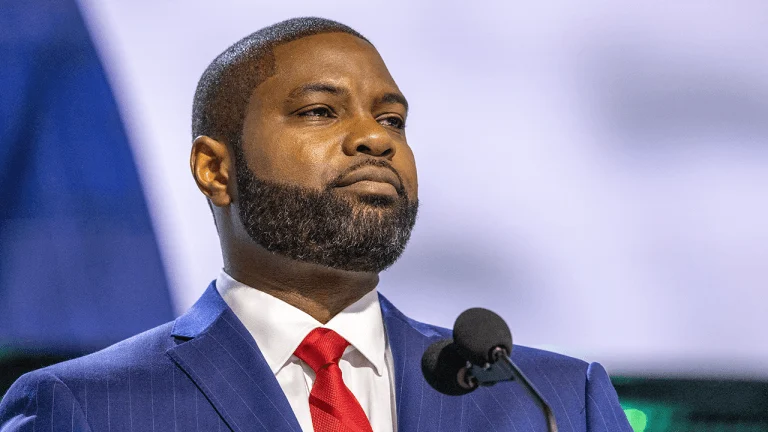
U.S. Representative Byron Donalds, a Florida lawmaker running for governor, voiced strong support for government bitcoin holdings and reiterated his firm opposition to a Federal Reserve-issued digital currency in an interview published by Bitcoin.com News on Oct. 17. The congressman also voiced sharp skepticism regarding whether traditional federal agencies possess the institutional agility needed to keep pace with rapidly evolving decentralized markets. His remarks highlight an intersection of national digital asset policy and state-level electoral politics as the race for Florida's executive office takes shape.
During the interview, Donalds argued that public institutions should examine the utility of strategic reserves that include bitcoin rather than relying solely on conventional sovereign holdings. At the same time, the lawmaker drew a strict boundary against the development of a central bank digital currency, warning against the potential consolidation of financial surveillance under federal authorities. That duality—embracing decentralized cryptocurrency while rejecting central bank alternatives—reflects a defined legislative philosophy favoring private capital sovereignty over state-administered digital tokens.
Donalds also directed scrutiny toward federal administrative bodies, questioning whether standard rulemaking processes can adapt to the speed of modern financial innovation. Highlighting the challenge of establishing formal regulatory standards, Donalds noted that achieving clarity in such a complex technical environment represents a rare and difficult goal, remarking that solid baseline rules are about as good as market participants can hope to get. The observation points to widespread dissatisfaction among industry participants who argue that agency guidance frequently lags behind market developments.
The debate surrounding national reserve assets and central bank digital currencies has steadily gained traction across congressional hearings and campaign trails. Critics of central bank tokens have consistently warned that government-administered payment systems could imperil user privacy and grant monetary authorities undue leverage over private transactions. Conversely, advocates of government-held bitcoin present the asset as a modern hedge against monetary inflation, though institutional adoption at the sovereign and state levels remains largely untested and controversial among mainstream economists.
The interview also turned toward the political dynamics within Florida, where Donalds is actively campaigning for governor against former representative David Jolly. The gubernatorial contest has drawn significant national attention, serving as a proving ground for competing visions of economic governance, regulatory restraint, and public-sector management. Donalds' willingness to spotlight cryptocurrency policy in major discussions underscores Florida's longstanding positioning as a hub for financial technology and crypto-friendly commerce.
Another key focus of the discussion involved the emerging role of prediction markets, which have seen surges in public attention and trading volume during major political election cycles. Donalds discussed the platforms in the context of his own campaign, as speculative traders and automated markets increasingly place odds on political matchups and state races. The growth of event-based contracts has sparked broader debate within Washington and the financial sector regarding whether prediction exchanges serve as reliable forecasting instruments or speculative venues requiring tighter administrative oversight.
Why these positions matter reaches well beyond individual campaign messaging, touching on the future architecture of both state and federal financial regulation. Lawmakers advocating for digital asset integration often face institutional resistance from regulators concerned with consumer protection, market volatility, and systemic liquidity risks. Donalds' combined advocacy for strategic reserves and pushback against agency overreach illustrates how political candidates are attempting to balance crypto industry enthusiasm with broader conservative principles of limited federal intervention.
Looking ahead, the policy stances outlined by Donalds are likely to remain central talking points throughout his race against Jolly and within ongoing debates over digital assets. As federal agencies deliberate on future rulemaking frameworks and state officials explore independent economic initiatives, the viability of government bitcoin reserves will depend on forthcoming legislative proposals and regulatory developments. Observers will be monitoring both the Florida campaign and broader federal discussions to see whether proposals favoring digital reserve assets gain tangible momentum in the coming year.
Primary source: Bitcoin.com News. Newzly rewrites and structures source reporting for clarity; verify critical details at the original.