world·Delhi·New Delhi District
CAQM asks Delhi-NCR states to prepare district-level plans to cut pollution 15–20%
The Commission for Air Quality Management has asked Delhi-NCR states to draw up district-level plans aimed at reducing pollution by 15 to 20 percent, The Indian Express reported.
In this piece
The Indian Express reports that CAQM has directed Delhi-NCR states to prepare district-level plans to reduce pollution by 15 to 20 percent. The move pushes…
The Commission for Air Quality Management has asked states in the Delhi-National Capital Region to prepare district-level plans to reduce pollution by 15 to 20 percent, The Indian Express reported. The direction places the next stage of the clean-air effort with district administrations rather than with a single region-wide document.
The account, published by The Indian Express, frames the request as a call for plans that can be carried out locally. The published summary available with this report does not set out a baseline year, name a specific pollutant, or give a deadline for the 15 to 20 percent reduction. Those details, if they were fixed in the commission’s communication, are not established here and should not be read into the headline figure.
CAQM is the statutory body charged with coordinating air-quality management across the National Capital Region and adjoining areas. Delhi’s air problem does not stop at the city’s boundary. The wider NCR takes in the national capital and neighbouring districts in Haryana, Uttar Pradesh and Rajasthan, so a measure in one district can be undercut by emissions next door.
District plans are a response to that geography. Traffic, industry, construction dust, waste burning and household fuel use are not distributed evenly. A district dominated by freight corridors faces a different mix from one where construction or small industry is the larger local source. A single template can set the goal; it cannot, by itself, decide which controls belong in which place.
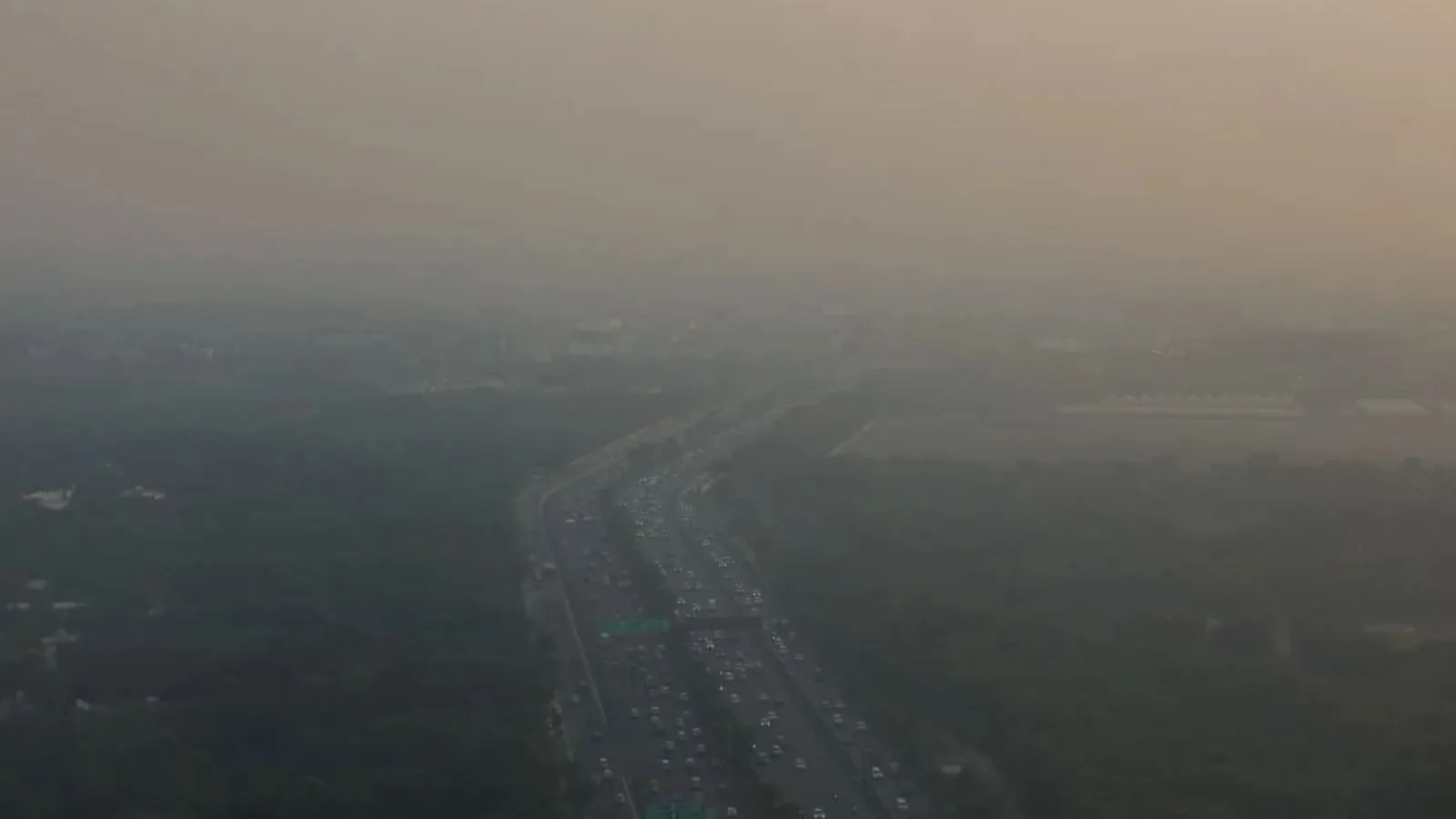
The percentage target matters because it gives states a common scale for a problem that residents experience as a seasonal public-health emergency. Each winter, stagnant weather and regional emissions combine to produce prolonged smog over Delhi and its suburbs. Schools, outdoor workers, hospitals and daily commutes absorb the cost long before annual averages are published.
Moving the work to districts also tests administration. Preparing a plan is not the same as enforcing one. Construction bans, dust control at sites, checks on vehicles and industrial units, and action against open burning all depend on local staff, coordination with municipal bodies, and follow-up when violations continue. The Indian Express report does not describe penalties or a monitoring timetable attached to the request.
The 15 to 20 percent range leaves room for districts that start from different pollution loads. It also leaves open how progress would be judged. Without a shared baseline and a clear pollutant, two districts could claim movement that is not comparable. That uncertainty is a feature of the limited public account, not a finding that the target is informal.
For residents, the practical question is whether district plans change what happens on the road, at construction sites and at the edge of the region during the smog season. Direction from CAQM can align states. It still has to be translated into inspections, public reporting and measures that hold when pollution peaks.
What happens next sits with the Delhi-NCR state governments and the districts they oversee. The Indian Express report indicates that they have been asked to prepare the plans. Further specifics on timelines, approved measures and how the commission will review compliance would have to come from those authorities or from a fuller account of the communication.
Until those documents are public, the firm news is narrow and significant: CAQM wants district-level plans, and the stated aim is a 15 to 20 percent reduction in pollution across Delhi-NCR. How that aim is measured, and how quickly it is pursued, remains to be set out.
Primary source: The Indian Express. Newzly rewrites and structures source reporting for clarity; verify critical details at the original.