Central Review Team Commends Tripura’s Digital Health System
Federal officials with the 18th Common Review Mission commended Tripura’s digital health progress in Agartala, highlighting the creation of more than two lakh electronic patient records.
In this piece
A central Common Review Mission delegation praised Tripura for modernizing its public healthcare infrastructure through the Integrated Health Management…
The central Common Review Mission has commended Tripura for significant strides in modernizing its public medical infrastructure through the state's Integrated Health Management Information System. Speaking at a formal review in Agartala, senior federal health officials recognized the northeastern state for accelerating digital adoption across hospitals and health sub-centres. The mission noted that systematic digital transitions are reshaping how medical staff manage patient registries, diagnostics, and everyday clinical workflows.
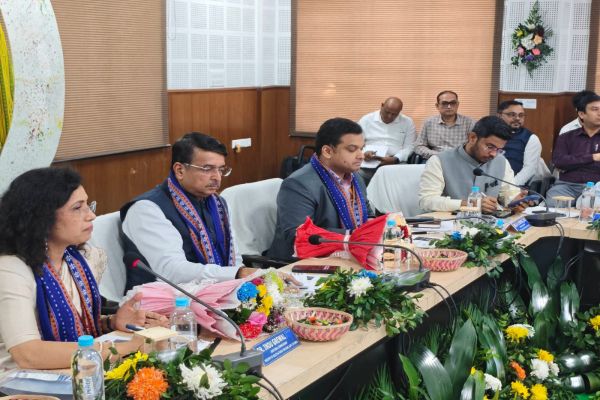
The observations were shared during the state-level debriefing session of the 18th Common Review Mission convened at the Sonar Tori State Guest House. The central delegation was led by Dr. Indu Grewal, Additional Commissioner at the Union Ministry of Health and Family Welfare, alongside senior representatives including National Health Authority Director Dr. Piyush Singla. Tripura Health Secretary Kiran Gitte and senior state medical directors participated in the detailed assessment of health programs.
A standout achievement highlighted during the review was Tripura surpassing the milestone of two lakh digital health records created through the Integrated Health Management Information System. Officials emphasized that digitizing medical documentation establishes organized longitudinal health records for patients visiting public facilities. This transition reduces dependence on handwritten paper slips that are frequently lost, damaged, or unavailable during follow-up visits.
The central evaluation covered the comprehensive rollout of core software modules across participating healthcare institutions in the state. Public facilities have integrated digital outpatient registration, electronic prescriptions, digitized laboratory reporting, pharmacy stock tracking, and computer-assisted admission and discharge management. State teams demonstrated how these modules connect administrative desks with examination rooms and diagnostic laboratories.
Visiting review delegates noted that real-time digital recordkeeping has noticeably reduced administrative bottlenecks and waiting times for outpatient consultations. By linking laboratory results and prescription histories directly to patient identification numbers, doctors can access vital health data without requiring patients to repeat basic tests. The digital tracking of pharmacy inventories has also helped health directors monitor medicine stocks and minimize supply interruptions.
Tripura's digital health expansion aligns directly with the nationwide objectives of the Ayushman Bharat Digital Mission, which seeks to construct an interoperable digital health architecture across India. Creating secure, standards-compliant digital registries enables public hospitals to exchange patient summaries and diagnostic data across different levels of the public healthcare hierarchy. Federal delegates praised the state's alignment with national digital architecture standards.
For a northeastern state characterized by hilly terrain and dispersed rural settlements, digital integration provides practical advantages for healthcare accessibility. Electronic connectivity allows medical officers at primary health centers and community health facilities to share patient histories seamlessly when referring complex cases to tertiary hospitals in urban centers. This continuity of information strengthens diagnostic accuracy and patient monitoring in historically underserved pockets.
State health authorities outlined ongoing efforts to support hospital employees and medical professionals as they transition away from conventional record-keeping routines. Continuous training sessions have been instituted for doctors, nursing staff, pharmacists, and administrative clerks to ensure smooth operational adoption. Authorities have also worked to address local data connectivity requirements across peripheral health centers to maintain uninterrupted server access.
The debriefing concluded with central officials urging Tripura to sustain its rollout velocity and systematically extend the integrated system to remaining primary health centers and rural wellness clinics. State administrators affirmed their commitment to deepening digital health adoption, confirming that upcoming phases will expand coverage and further integrate local records into the broader national digital health network.
Primary source: Google News Tripura. Newzly rewrites and structures source reporting for clarity; verify critical details at the original.