Chhath Puja: Yamuna Remains Heavily Polluted in Delhi Despite Political Sparring
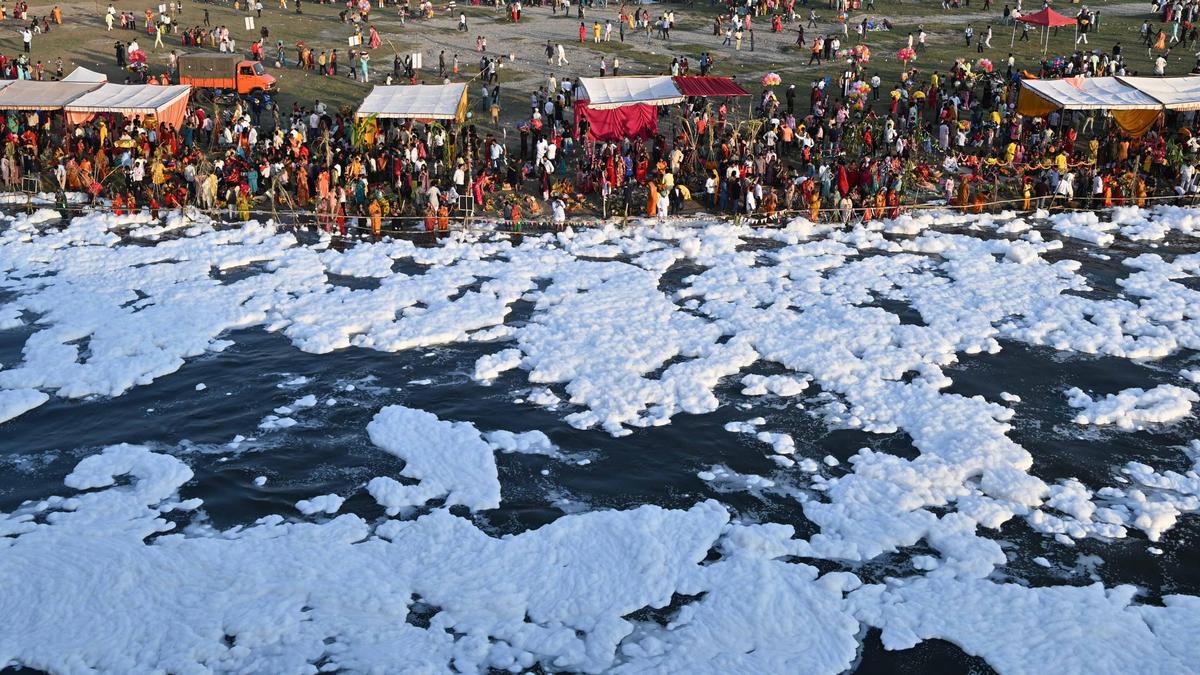
Toxic foam and heavy pollution continue to afflict the Delhi stretch of the Yamuna river during Chhath Puja, highlighting persistent environmental deficits despite ongoing political debate.
In this piece
The Delhi stretch of the Yamuna river remains heavily contaminated with toxic foam during the Chhath Puja festival. Despite ongoing political friction and…
The Delhi stretch of the Yamuna river continues to grapple with severe pollution during the annual Chhath Puja celebrations, even as recurring political debates surround the waterway's condition. Devotees arriving at the riverfront have once again encountered contaminated waters and floating layers of toxic foam, casting a shadow over the four-day festival. The situation highlights the persistent gap between administrative pledges and ground reality across the capital's primary river corridor.
Chhath Puja is one of the most significant cultural observances in northern India, requiring worshippers to stand waist-deep in open water to offer prayers to the Sun at dusk and dawn. In Delhi, thousands traditionally gather along the Yamuna's banks to perform these sacred immersion rites. However, the visible deterioration of the river has turned what should be a serene spiritual ritual into an annual environmental flashpoint.
The Yamuna enters the National Capital Territory relatively clean near Wazirabad, but its ecological health deteriorates sharply as it courses through the urban core. Massive volumes of untreated or partially treated domestic sewage, alongside industrial effluents from numerous stormwater drains, enter the river daily. The resulting buildup of phosphates and surfactants causes thick, frothy foam to accumulate on the water surface, particularly during periods of low natural flow.
The river's unremitting degradation has remained a core subject of political friction between competing factions in Delhi. Political leaders frequently trade sharp accusations regarding sluggish project execution, budgetary oversight, and administrative accountability for river cleanup programs. Despite extensive exchanges between civic agencies and political representatives, tangible progress in restoring the water quality remains limited.
Ahead of major gatherings, civic authorities and water utility departments frequently resort to temporary mitigation strategies to manage visual pollution. Measures have included spraying chemical defoaming agents onto the river surface, erecting mesh barriers near ghats, and releasing additional water upstream to dilute the foam. Environmental commentators and community advocates have repeatedly pointed out that such ad-hoc measures address only aesthetic symptoms rather than underlying pollution sources.
To mitigate health hazards, municipal authorities have also constructed hundreds of artificial bathing ponds and makeshift ghats throughout residential neighborhoods. These localized installations are designed to provide devotees with cleaner, managed water supplies away from the main riverbed. Nevertheless, many worshippers continue to seek access to the natural banks of the Yamuna, citing long-held cultural traditions associated with flowing rivers.
Public health practitioners and ecological experts have continued to warn about the immediate health implications of river water contact. Prolonged exposure to high levels of fecal coliform bacteria, industrial chemicals, and toxic surfactants poses substantial risks of skin allergies, eye infections, and respiratory discomfort. These recurring warnings place observant families in the difficult position of balancing religious obligations with physical health concerns.
The sustained crisis reflects broader structural and governance hurdles in regional river rejuvenation efforts across the broader watershed. Effective remediation demands comprehensive upgrades to existing sewage treatment infrastructure, the connection of unauthorized colonies to sewer networks, and strict enforcement against illegal industrial discharges. Achieving meaningful turnaround requires prolonged, coordinated action across municipal, territorial, and federal bodies rather than seasonal attention.
As festive activities conclude, environmental advocates and local residents continue to call for sustained institutional accountability and measurable water quality milestones. The ecological revival of the Yamuna is expected to remain a prominent civic and political issue, testing the resolve of authorities to address urban sanitation, environmental governance, and the protection of essential public waterways.
Primary source: Google News Delhi. Newzly rewrites and structures source reporting for clarity; verify critical details at the original.